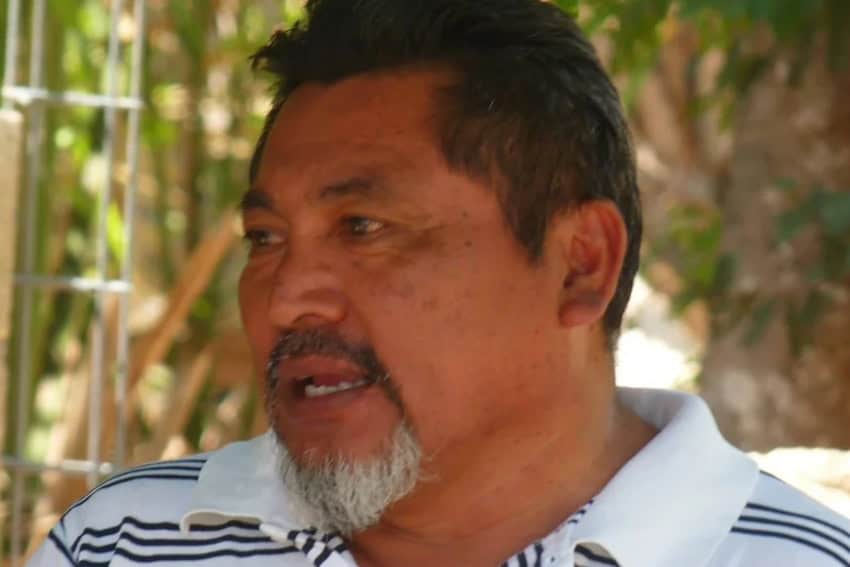
When Maya poet and activist Pedro Uc Be begins to speak about why he writes, he starts not with romance or beauty but with destruction.
Across the Yucatán Peninsula, forests have vanished overnight, cenotes have been polluted and communal lands have been carved up by waves of megaprojects. For Uc Be — who writes primarily in the Maya language — poetry has become a tool not only of artistic expression but of territorial defense.

“I didn’t come to poetry thinking about love but thinking about the pain that all of this caused us,” he told a packed salon in December at the prestigious International Book Fair (FIL) in Guadalajara, where he was honored for his lifetime of work.
Land under siege
The first of these assaults, Uc Be recalls, came from industrial agriculture. Mennonite agribusinesses cleared vast tracts of jungle to plant monocultures, leaving behind what the poet describes as a “noisy silence” where birds once thrived.
This was followed by transgenic soybean cultivation and aggressive aerial fumigation that devastated local apiaries and native bees. And then, before communities could respond, industrial pig farming appeared on the horizon.
“They began to build large facilities over our cenotes,” he said. “The putrid waste from the vast hog farms began flowing into these ancient, sacred pools, interconnected in a complex system that flows into one of Mexico’s largest freshwater aquifers.”
“Today, there are 250 pig farms that produce more than 100,000 hogs each year, and only 20 of those farms are legalized; the rest are operating illegally,” said Uc Be. “Therefore, they do whatever they want.”
Just as the community had finished filing a series of lawsuits against the pork facilities, said the poet, even more projects came along, introduced to residents as clean energy projects.

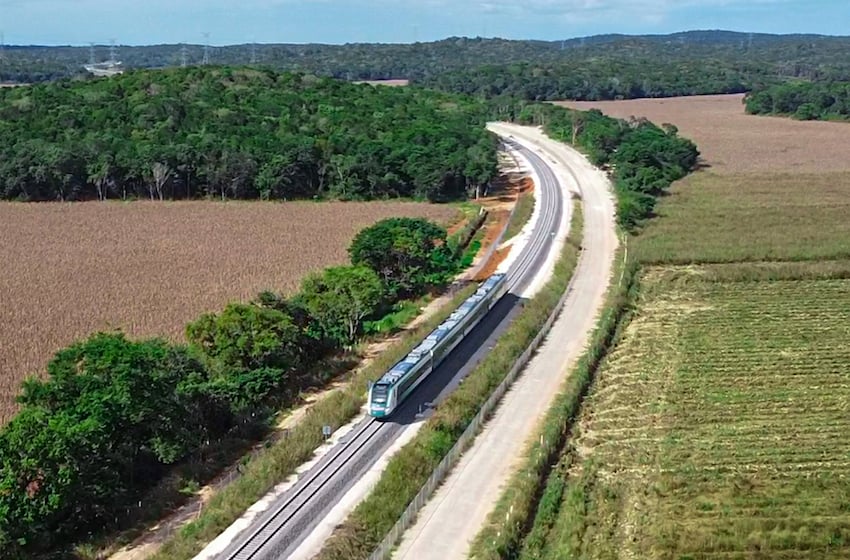
The Maya Train
“We were happy when we heard they were clean, but when we realized they were taking away our land, we said, ‘I don’t think they’re so clean after all,’” he said.
Many of the communal landholders targeted for dispossession were illiterate and not fluent in Spanish, and so were easily deceived, and their land was taken from them.
But the most devastating blow, he says, came from their own government with the announcement of the Maya Train.
“They announced a train to us that we had never asked for, that we had never requested,” he said. “And today, that train has become the greatest destroyer of the Maya jungle and its cenotes. In Section Five alone, something like two hundred cenotes and caves have been destroyed.”
In the milpa, in the maize: Roots of a writer
Uc Be learned to love the earth in the milpa, the traditional Mesoamerican system of maize cultivation that integrates corn, beans, squash, a plethora of native plants and the rhythms of the rain and sun.
“I was born in the milpa,” he said. “That contact with the earth, with the water, with the herbs, with the jungle … made me sensitive.”

That sensitivity — born of tending the land — informs everything he writes. Faced with legal harassment, criminalization and political isolation, he chose to turn his observations into verse and story.
“What do you do in the face of all that?” he asked. “One of the things that occurred to me was to write.”
Maize as metaphor and origin story
His writing is deeply grounded in Maya cosmology and collective memory. In one of his most studied lines, he invokes the Popol Vuh creation story to articulate both origin and belonging:
“According to the ‘Popol Vuh’, we were made of corn.”
To Uc Be, maize is not merely a symbol but a philosophical anchor. It is through corn — its cycles, its rituals, its metabolic intimacy with land and water — that he understands the larger political struggles faced by Maya communities.
His writing also draws from the Maya’s understanding of life, death and ecological responsibility. In other poetry collections, he explores the Maya Day of the Dead — a time when, he says, ancestors return to eat, drink and walk with the living.
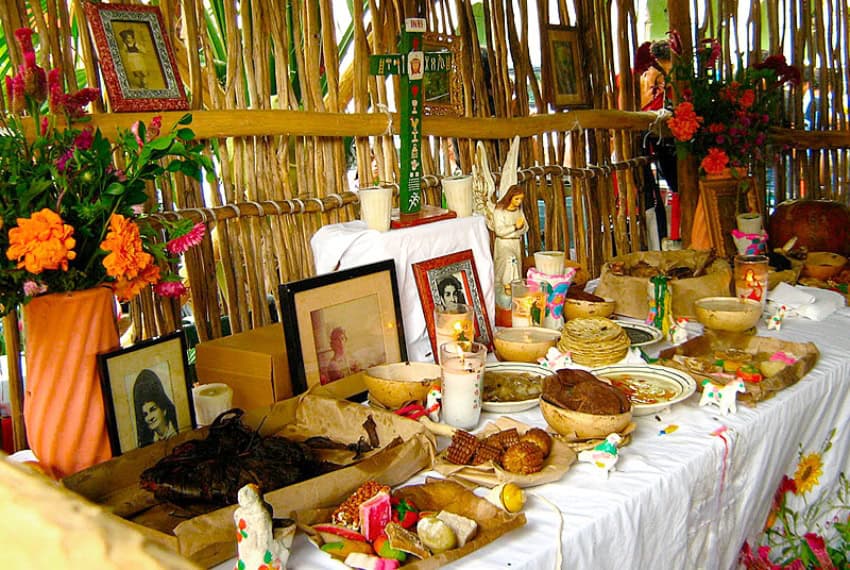
“For us, death is not definitive,” he said. “It is only passing to a greater plane of life.”
At the FIL in December, Uc Be was joined onstage by Mexican film star and activist Ofelia Medina, a longtime advocate for Indigenous rights.
Medina framed his work as a bridge between word and struggle.
“Pedro’s work shows us how language, culture and territory are not separate things but a single living cause that we must defend, transmit and celebrate.”
Her presence — standing with him as both witness and ally — underscored a larger truth: that Uc Be’s poetry transcends aesthetics and occupies a space of moral urgency.
Resistance in print
Uc Be’s literary output is prodigious. He has authored multiple books, written primarily in the Mayan language, including “The Resistance of the Mayan Territory in the Face of Dispossession” (“La Resistencia del Territorio Maya Frente al Despojo“). He’s also received awards for both poetry and narrative.
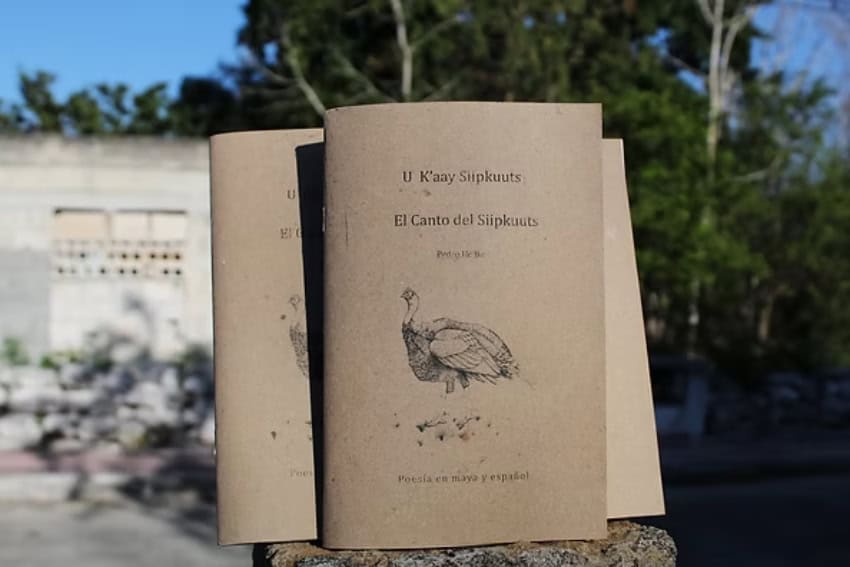
His work blends storytelling, verse and the rhythms of oral tradition as tools of collective memory and political resistance.
Human rights organizations such as Front Line Defenders have documented how his sustained territorial defense has led to stigmatization and targeted attacks on his reputation. Uc Be has been labeled by some political interests as an obstacle to development — a charge his supporters, including veteran Mexico correspondent and poet Hermann Bellinghausen, reject as unjust.
“He has been repeatedly singled out … in an absolutely unjust way,” said Bellinghausen.
At the same time, Bellinghausen praised the sheer force of his creative work.
“His literary productivity, fortunately, is quite torrential,” Bellinghausen said.
A cultural legacy continued
Uc Be developed his body of work not in isolation but in dialogue — through long conversations with elders, farmers and organizers and through community workshops, where stories, memories and concerns are shared and shaped collectively.
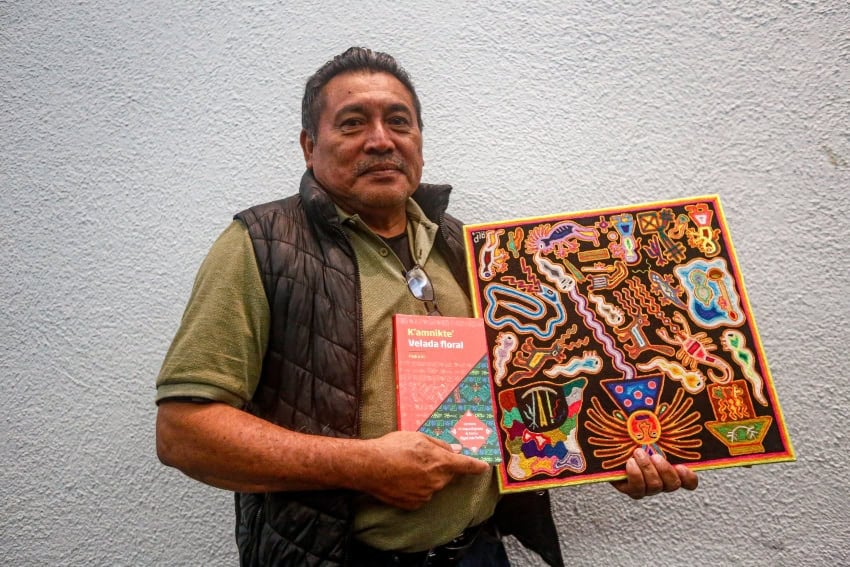
“The words of this book are not mine,” he said, referring to books like “Red Corn Ears” (“Espigas de Maíz Rojo“), which was written not just about the community but with it. His other books are likewise informed by his deep conversations, his reporting and his activism.
“They come from the community, from the elders, from what we have lived and shared,” he said. “They reflect our life.”
Tracy L. Barnett is a freelance writer based in Guadalajara. She is the founder of The Esperanza Project, a bilingual magazine covering social change movements in the Americas.