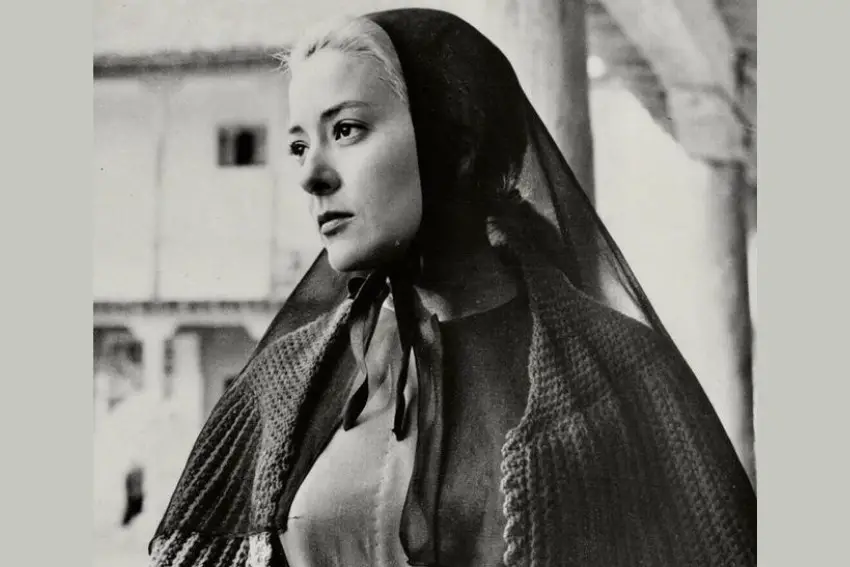
Mexican actress Silvia Pinal, a diva from the Golden Age of Mexican cinema who went on to become a TV host and politician, died Thursday at the age of 93.
The native of Guaymas, Sonora, starred in films alongside Cantinflas, Pedro Infante and Tin Tan and had her most iconic role as a distressed nun-to-be in Luis Buñuel’s 1961 Cannes-winning film “Viridiana.”
She went on to star in two more Buñuel masterpieces of surrealist cinema — “The Exterminating Angel” (1962) and “Simón of the Desert” (1965) — just as the Época de Oro (Golden Age) was fading out after more than two decades.
Though she peaked toward the end of the era, many would rank Pinal, whom muralist Diego Rivera immortalized in a 1956 portrait, as one of the most iconic actresses from the Golden Age. Moreover, she was one of the few who adapted to a subsequent career in TV.
“We regret the passing of the leading actress Silvia Pinal Hidalgo, whose cinematic and theatrical talent is part of Mexico’s cultural memory,” President Claudia Sheinbaum wrote on her X account. “Many generations of Mexicans grew up admiring her. Our sincere condolences to her family and friends.”
Born in 1931, Pinal moved to Mexico City with her family when she was still a child. She began acting at a very early age in theater and radio, and at 17, landed her first film role in 1948’s “Bamba.”
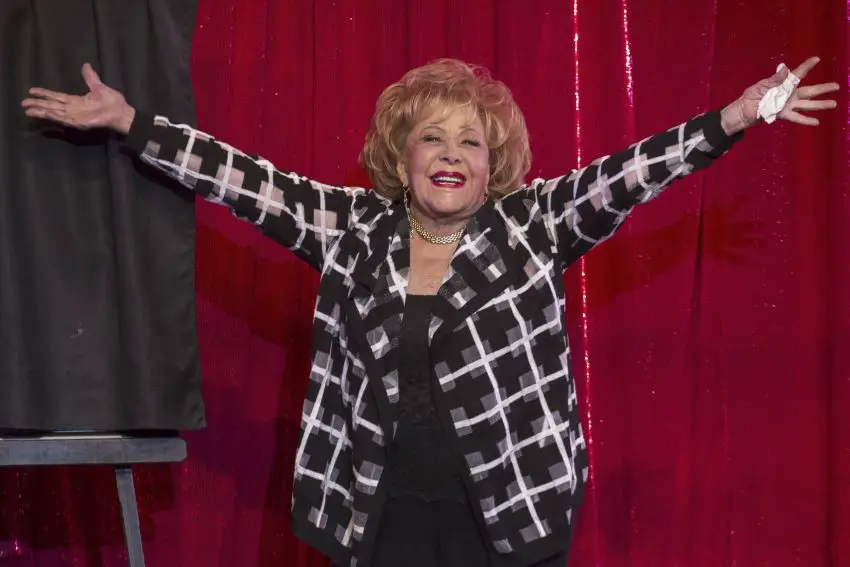
Over the next six decades, she appeared in more than 60 films, and in the 1960s, she began an equally prolific TV career in which she hosted two programs and had roles in no fewer than five telenovelas (soap operas).

One of her shows, “Mujer, casos de la vida real” (“Woman, Real-Life Cases”), aired for more than 20 years after starting as a way to help people looking for relatives after 1985’s deadly 8.1-magnitude Mexico City earthquake. The iconic show dramatized real-life stories submitted by viewers.
“It was a program that gave me great satisfaction,” Pinal once said. “It spoke without censorship about such difficult topics as abortion, homosexuality, racial discrimination, AIDS, violence against women, machismo, child abuse, street children, prostitution.”
Pinal was also a theater producer, and was leader of the National Actors Association between 2010 and 2014. She was awarded Spain’s Order of Isabel La Católica in 2006 and two years later received the Golden Ariel for her film career.
In the 1980s, she delved into politics with the Institutional Revolutionary Party (PRI), serving as a member of Mexico’s lower house of Congress, the Chamber of Deputies, then as a federal senator. From 1991 to 1994, she was an assemblywoman in Mexico City’s legislature.
Her life was not without misfortune, such as the 1982 death of her daughter Viridiana at age 19 in a car accident and a long estrangement from her eldest daughter, Pasquel, who got romantically involved with an ex-lover of Pinal.
She was also accused of fraud by the National Association of Theatre Producers, and in 2000, she left Mexico for a time after being accused of not having paid taxes for the broadcast of “Mujer” for years.
Pinal was married four times, including from 1967 to 1976 to famous singer and actor Enrique Guzmán, now 81. Her descendants involved in the entertainment industry include daughters Sylvia Pasquel (actress) and Alejandra Guzmán (rock singer); granddaughters Stephanie Salas (singer-actress) and Frida Sofía (model-businesswoman); and great-granddaughter model Michelle Salas (model).
Earlier this month, Pinal’s family said she had been hospitalized for a urinary tract infection. In her later years, she also suffered from COVID-19 and pneumonia.
With reports from Proceso, AP, Infobae and Aristegui Noticias