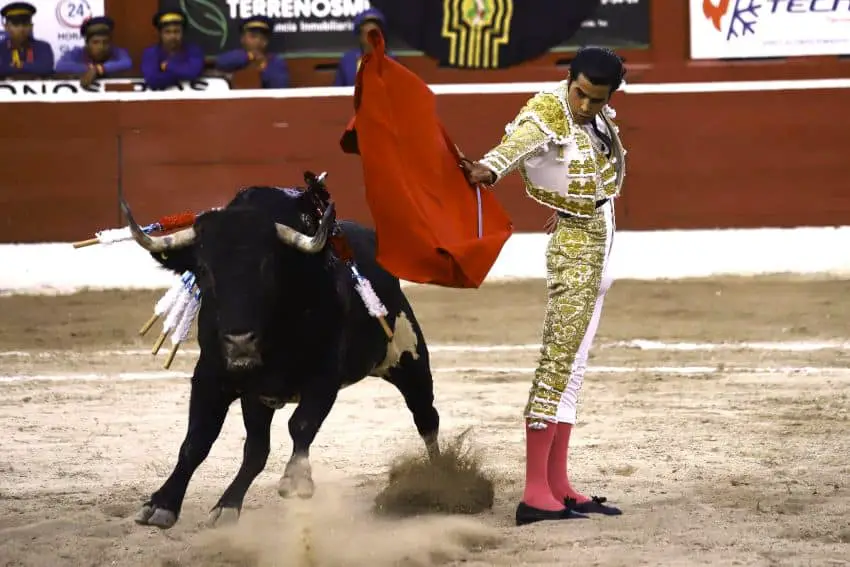
The Mexican Supreme Court (SCJN) has overturned a temporary suspension on bullfighting in Mexico City amidst protests both for and against the bloody traditional sport.
On Wednesday, the panel of judges ruled to strike down a temporary suspension handed down in May 2022 during an amparo suit presented by the NGO Justicia Justa against two laws: the Bullfighting Regulation of the Federal District and Mexico City’s Law on Staging Public Shows.
The amparo is a mechanism in Mexican law through which citizens can seek protection for their human rights when these are violated by authorities; in this case, Justicia Justa argued that bullfighting violated Mexicans’ constitutional right to a healthy environment and a life free from violence.
Lower court judge Jonathan Bass Herrera granted the organization a temporary injunction, suspending the two laws in question. This injunction was appealed to the Supreme Court, which ruled that Mexico City must continue to enforce its existing bullfighting regulations until the lower court rules on whether or not bullfighting violates human rights.
Crowds of demonstrators gathered outside the Supreme Court to express their opinions on the suspension, which forced the end of shows at Mexico City’s 42,000-seat Plaza de Toros.
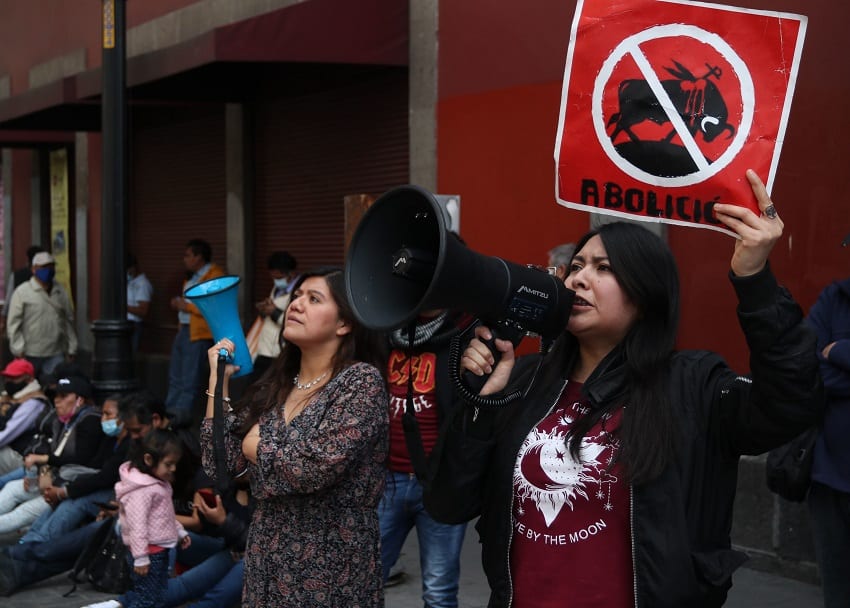
Bullfighting proponents chanted “bulls yes, bullfighters too!” while one fan demonstrated bullfighting passes with a cape. They argued that bullfighting has been part of Mexican culture for centuries and that individuals should be able to choose whether to watch it.
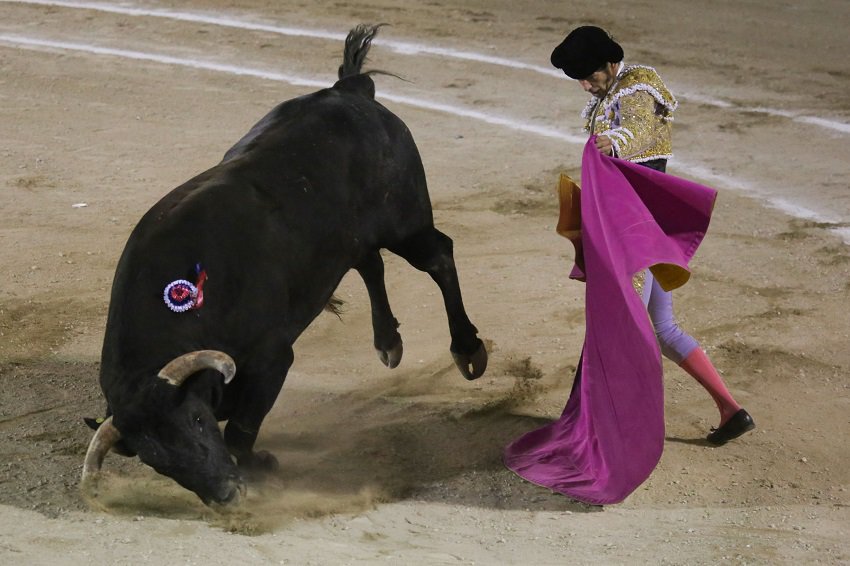
“This is not an issue of animal welfare; it’s a matter of freedoms,” José Saborit, director of the Mexican Bullfighting Association, told the Associated Press. “A small sector of the population wants to impose its moral outlook, and I think there is room for all of us in this world, in a regulated way.”

The National Association of Fighting Bull Breeders also pointed to the economic benefits of the sport, which they claim generates 80,000 direct jobs, 146,000 indirect jobs and around US $400 million of annual revenue in Mexico.
On the other side, animal rights activists held up signs saying “Mexico says NO! to bullfighting,” arguing that the sport, which in almost every case involves the death of the fighting bull, is inherently cruel.
“Animals are not things, they are living beings with feelings, and these living, feeling beings deserve protection under the constitution of Mexico City,” said city councilor Jorge Gaviño, who has been unsuccessful in trying to pass legislation permanently banning the sport.
The Supreme Court must now officially notify the local court of its judgment, after which the Plaza de Toros can resume bullfights, possibly as soon as mid-December.
“This resolution sets a great precedent in favor of the freedoms and constitutional rights to self-determination, culture, free competition and decent work, as well as values such as tolerance and respect,” the stadium said in a statement on its social networks.
The ruling comes just days after a federal judge suspended bullfighting in the municipality of Guadalajara, in response to an injunction by an animal rights organization. Many observers believed that if the Supreme Court had upheld the suspension of bullfighting in Mexico City, it could have paved the way for a nationwide ban on the sport.
Bullfighting has long been a hot-button topic throughout Mexico. Five states – Sinaloa, Quintana Roo, Coahuila, Guerrero and Sonora – currently have bans in place, while seven – Aguascalientes, Tlaxcala, Hidalgo, Querétaro, Zacatecas, Michoacán and Guanajuato – have formally declared bullfighting a cultural asset.
With reports from Associated Press, Sin Embargo and Reforma