At 18, Anselma Margarito had spent her entire life waiting outside government offices.
Her Otomí family, originally from Santiago Mexquititlán, Querétaro, lived in one of several precarious properties occupied by Indigenous migrants in central Mexico City. Their home was made of corrugated metal sheets riddled with holes.
“When it rained, we had to cover our blankets,” she recalled. “We had to put buckets all over our little house so we wouldn’t get wet.”
For years, community members petitioned authorities for decent housing. They brought documents to the headquarters of the National Institute of Indigenous Peoples, or INPI, the federal agency charged with defending their rights.
“Only the document went inside,” Margarito said. “You stayed outside.”
On Oct. 12, 2020, they decided to go inside too.
At about 8 a.m., roughly 100 members of the Otomí community gathered near the INPI’s headquarters on Avenida México-Coyoacán. Margarito remembers being terrified.

“We could face repression. They could beat us. They could throw us out however they wanted,” she said.
The children entered first, followed by the women and then the men. With the pandemic keeping many federal employees home, Margarito said, there were relatively few workers inside. The community asked them to leave.
“The takeover of the INPI was peaceful,” she said. “We never hit any worker here.”
They expected to stay a week.
Six years later, they are still there.
Otomí Indigenous group occupies government offices in Mexico City
A federal office becomes an autonomous home
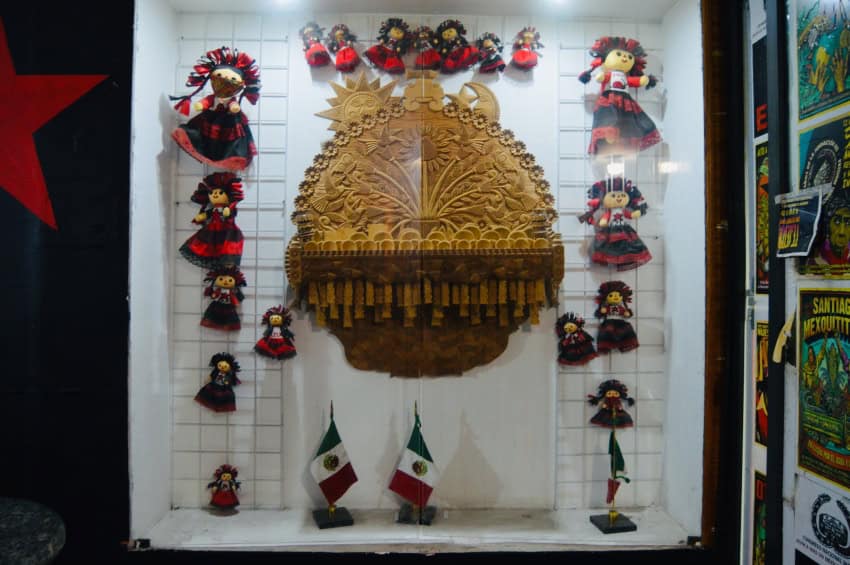
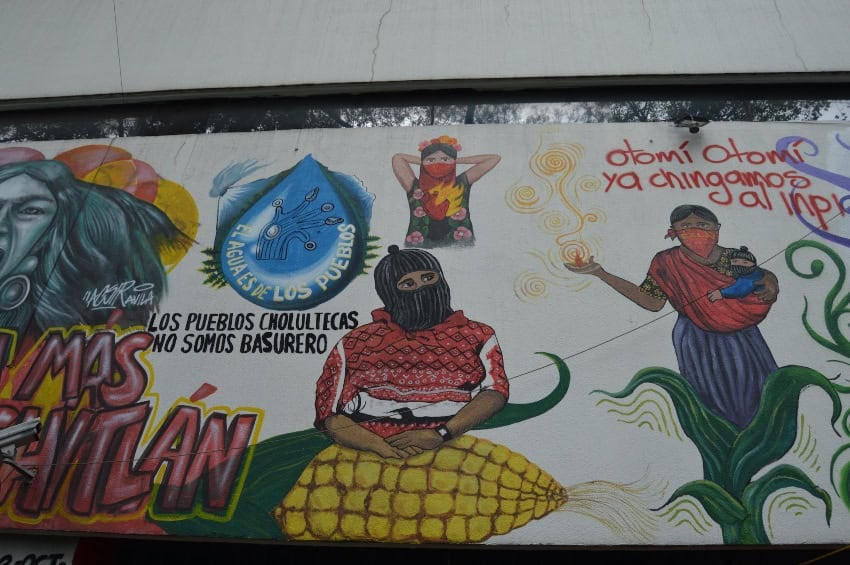
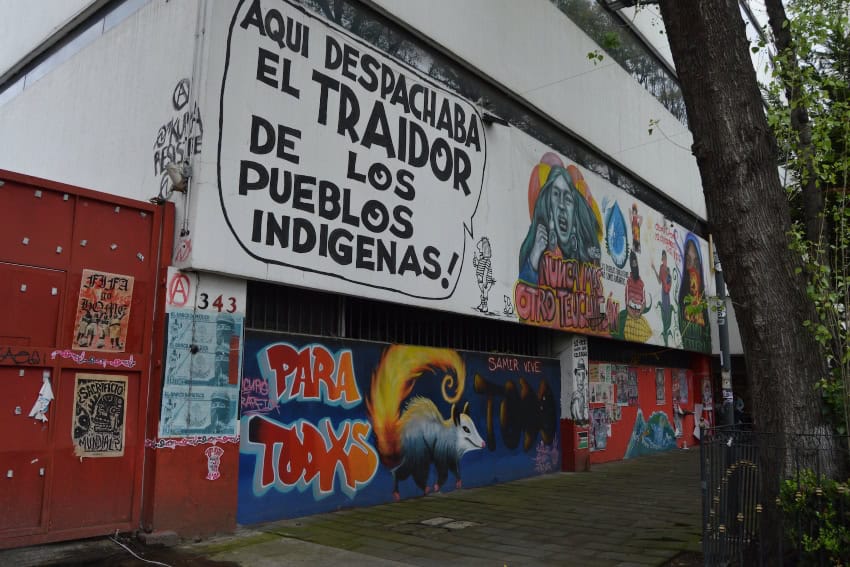
What began as an audacious protest over housing has transformed a six-story federal office building into something neither the government nor its occupiers apparently anticipated: a home, autonomous school, communal kitchen, cultural center and organizing hub for Indigenous peoples and social movements from across Mexico.
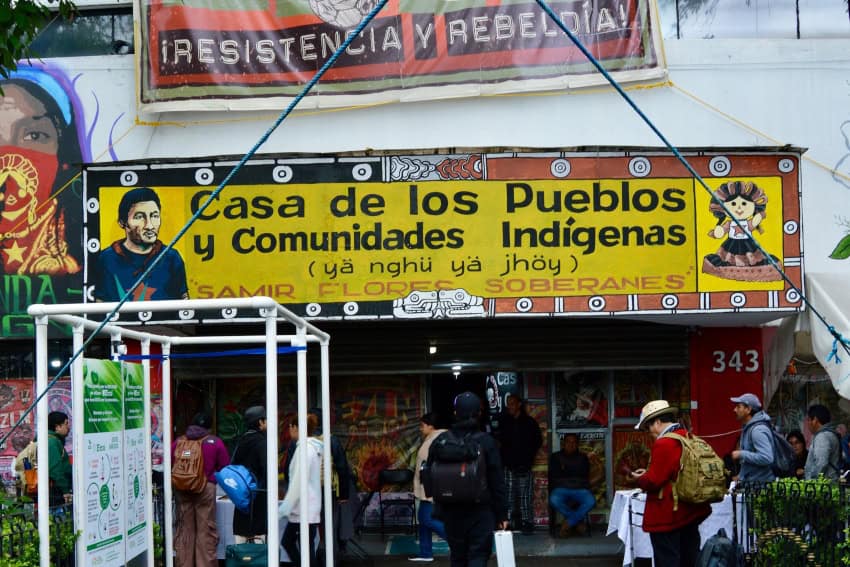
The former INPI headquarters is now called the Casa de los Pueblos y Comunidades Indígenas “Samir Flores Soberanes,” honoring the Indigenous land and water defender assassinated in Morelos in 2019.
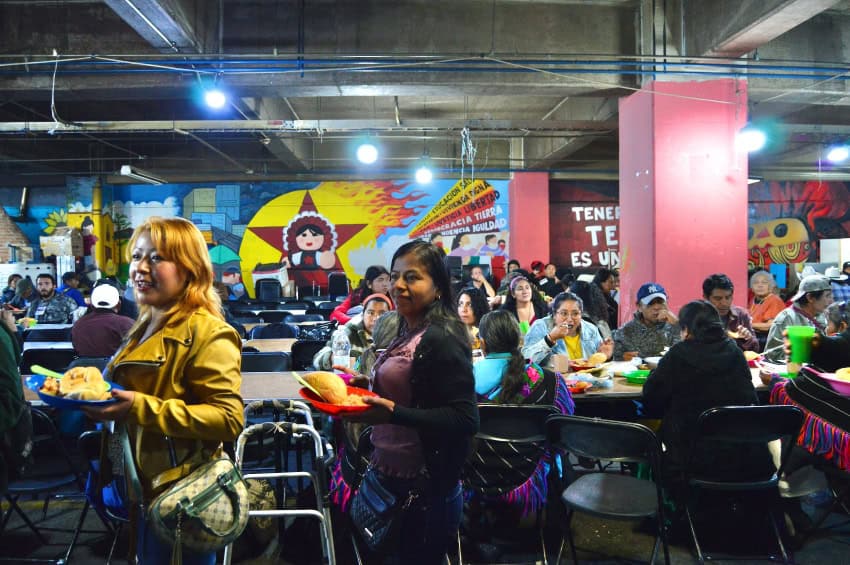
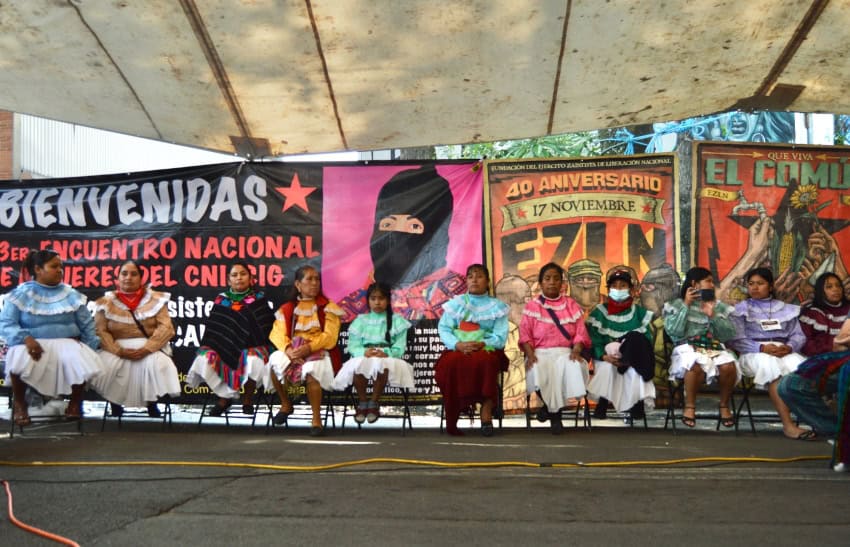
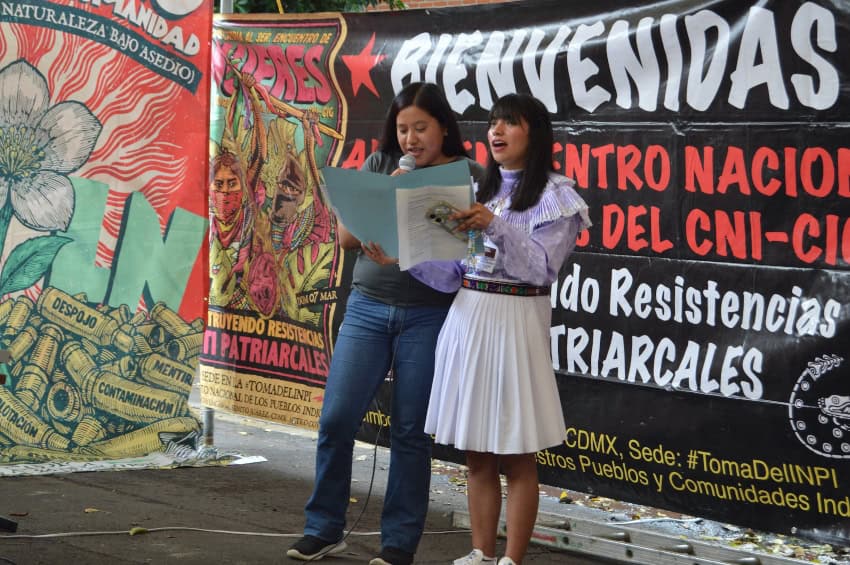
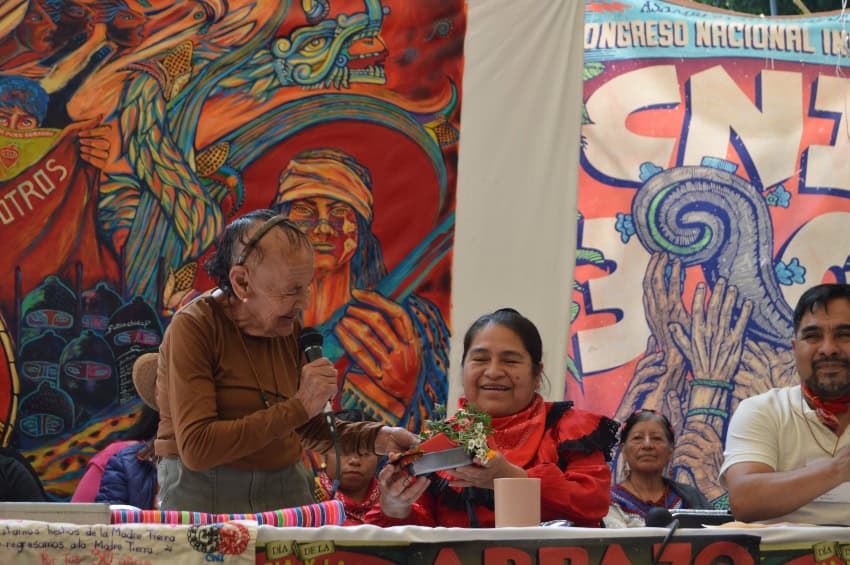
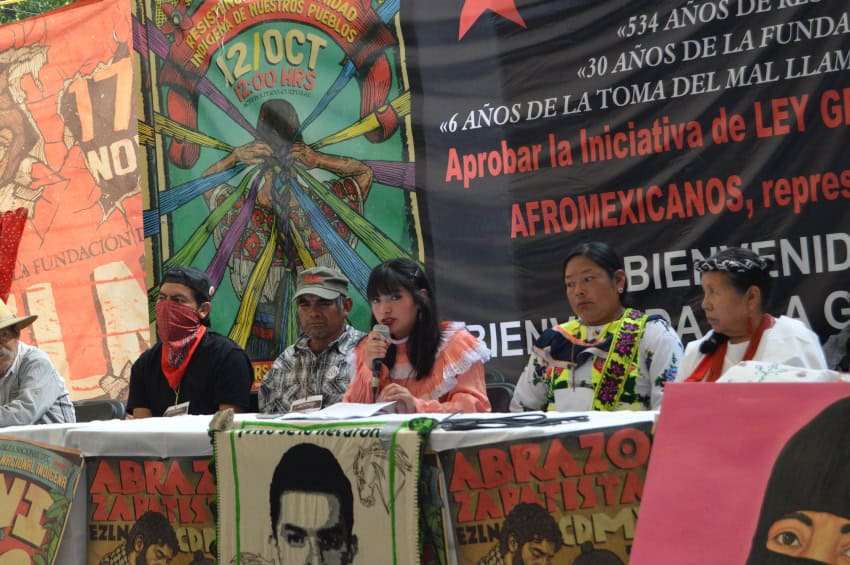
Its transformation was on display last month when more than 600 Indigenous delegates and invited allies from across Mexico and beyond gathered there for the 30th anniversary of the Congreso Nacional Indígena, or CNI. Otomí women cooked for hundreds in a former parking garage converted into a colorful dining hall adorned with resistance-themed murals, while delegates gathered under a gigantic tent outside, taking over a section of Avenida México-Coyoacán, a major city thoroughfare that had been blocked off for the event.
From Santiago to Mexico City
For Isabel Valencia, 59, the story of how the community arrived here began more than half a century ago.
Valencia was born in Santiago Mexquititlán and came to Mexico City as a small child. Her memories are fragmentary: traveling back and forth between the city and the village, and eventually a camp of Otomí families in Mexico City. They settled in Pedregal de Santo Domingo, a lava-rock expanse on the edge of Coyoacán that was occupied by landless families in the 1970s and gradually built into a working-class neighborhood.
Her parents, she said, came looking for work.
“Everyone who is in the city is here in the same way,” Valencia said. “To survive because there is no work in the communities.”
The migration had deeper roots. Researchers trace a major exodus from Santiago Mexquititlán to the 1940s, when the community lost much of the irrigation water that had supported subsistence farming. Anthropologists Regina Martínez Casas and Guillermo de la Peña link that loss to the canalization of the Lerma River toward regional reservoirs, particularly the Solís dam in Guanajuato.
Valencia remembers elders saying that “they stole our water,” and recalling a time when the Lerma ran clean enough to irrigate crops.
In Mexico City, her family did not find stability.
Valencia’s memories of Pedregal de Santo Domingo are harsh. “There was no water, there was no electricity; it was pure stone,” she recalled. Her parents constructed “a little house of cardboard, black cardboard sheets,” where the family lived for years.
As Valencia’s generation grew up and started families of its own, space ran out.
After the 1985 earthquake, Otomí families began occupying damaged or abandoned properties in Roma and Juárez, central neighborhoods that would later become some of Mexico City’s most heavily gentrified.
At Zacatecas 74, where Valencia lived, almost nothing remained but rubble.
“We went in looking for a place to stay, somewhere we wouldn’t get wet,” she said. They sheltered with cardboard, plastic sheets and whatever materials they could find. Later they received recycled galvanized sheets that rusted and developed holes.
“In the cold, the sheets absorb all the cold. It’s like a refrigerator,” Valencia said. “And when it’s hot … it’s like an oven.”
Other community families faced eviction. Margarito recalled residents of Roma 18 being forced out while their clothing, identification and other possessions remained inside. When officials later demanded documents from them to access services, she said, the contradiction was infuriating: their papers had been lost in the eviction itself.
Housing was not the only grievance.
Over time, members of the community and their allies in the CNI increasingly came to see the INPI as aligned with a federal government pushing megaprojects through Indigenous territories.
Particularly painful was the role of then-INPI director Adelfo Regino, who had emerged from Indigenous organizing circles but now represented an administration defending projects fiercely opposed by the CNI.
At a press conference shortly after the occupation, Valencia put the break bluntly: “This institute does not represent us.”
25 years knocking on doors
By 2020, the housing struggle itself had already stretched across decades.
Valencia says her community spent 25 years “knocking on doors,” fulfilling requirements and pursuing the expropriation of Zacatecas 74.
They went from one agency to another.
“In the end, we realized they were just passing the buck,” she said. “Go there; it’s not my responsibility anymore.”
Some documents had expiration dates. As the years passed, Valencia feared the community would be forced to start the entire process again.
“We went to every government office that corresponded to an expropriation,” she said. “We never skipped an agency. But in the end they never paid attention to us.”
The government’s response after the takeover was more complicated than simple confrontation.
Three days later, the INPI announced that it would seek dialogue, saying the federal government was committed to addressing Indigenous peoples’ “legitimate aspirations.” Regino and Mexico City officials later met with community representatives and recognized their demand for dignified housing as legitimate.
But negotiations did not end the occupation.
By February 2022, the INPI and Mexico City government were publicly asking the community to vacate the building, arguing that the takeover impeded services to Indigenous people nationwide and threatened the institute’s 23,000-piece Indigenous art collection, one of the country’s most important of its kind. Regino also filed a complaint over possible damage to the property and collection.
From occupation to Casa de los Pueblos
Meanwhile, life inside the building took on a momentum of its own.
When authorities did not quickly remove them, the Otomí families created committees for food, security, cleaning and communications. Supporters brought rice and beans. Eventually they opened the space to other Indigenous peoples.
“We saw that our struggle, our demands, were the same as those of other peoples,” Valencia said.
They began inviting communities to hold meetings and conferences there, she said, “to make use of this building, to give the information that this building never gave.”
That evolution gave birth to the Casa de los Pueblos.
An autonomous school followed, along with spaces for visiting delegates, artists, organizers and social movements.
‘A living example of dignity’
By the sixth anniversary this October, the occupation had acquired a meaning far beyond housing.
Carlos González, an Indigenous-rights attorney and CNI founding member, recalled the Otomí families sleeping on sidewalks after the 2017 earthquake.
They had migrated from Santiago Mexquititlán “to seek the life that was denied to them there,” he told the anniversary gathering, only to encounter more poverty and rights violations in Mexico City.
In taking over the building, González said, they were exercising fundamental rights. He called the six-year occupation “a living example of dignity” and praised the community for filling the former bureaucracy “with color, voices and dignity.”
María de Jesús Patricio Martínez, better known as Marichuy, the CNI spokeswoman and first Indigenous woman to seek Mexico’s presidency, praised the community’s “resistance, organization and permanence,” particularly in the face of repeated pressures and attempts to remove them.
“They have shown us, with organization and courage, how to defend dignity as a people, as an autonomous community,” she said.
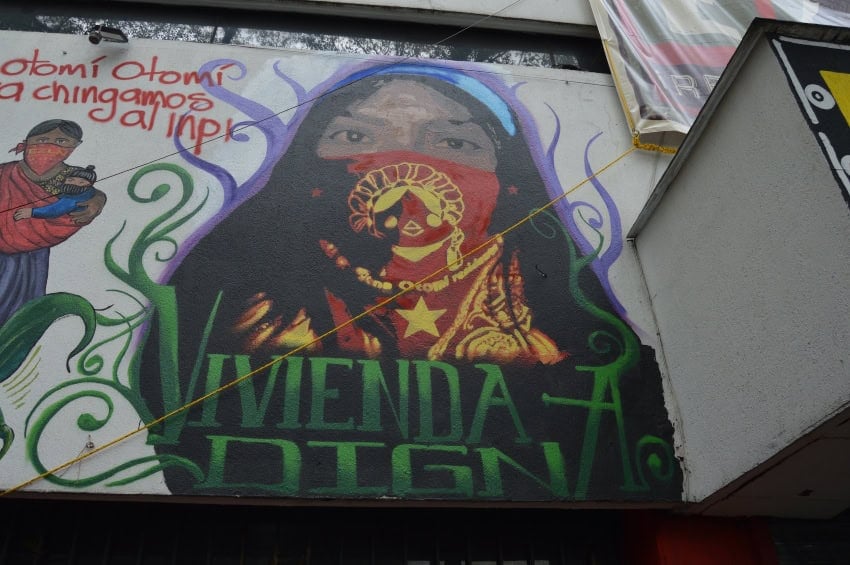
The occupation has produced one concrete housing victory.
Mexico City expropriated Zacatecas 74 in 2021 after community members staged another protest, this time occupying Avenida México-Coyoacán around the clock for seven days. Housing is now under construction there, and Valencia says residents have been told the apartments could be ready by March.
After roughly 30 years of struggle, however, she finds the prospect bittersweet.
“I expected it 25 years ago,” she said. She is approaching 60 now, her children already grown.
“I’m going to accept it because it is my struggle, because I have fought for it for 30 years,” she said. But the proposed apartment, at roughly 41 or 42 square meters, still does not represent dignified housing to her.
“No one asked us, as Indigenous peoples, what dignified housing is or what we need.”
She paused over what those decades had cost. Her children had already grown up in the conditions she had spent her adult life trying to change.
“That can’t be recovered,” she said.
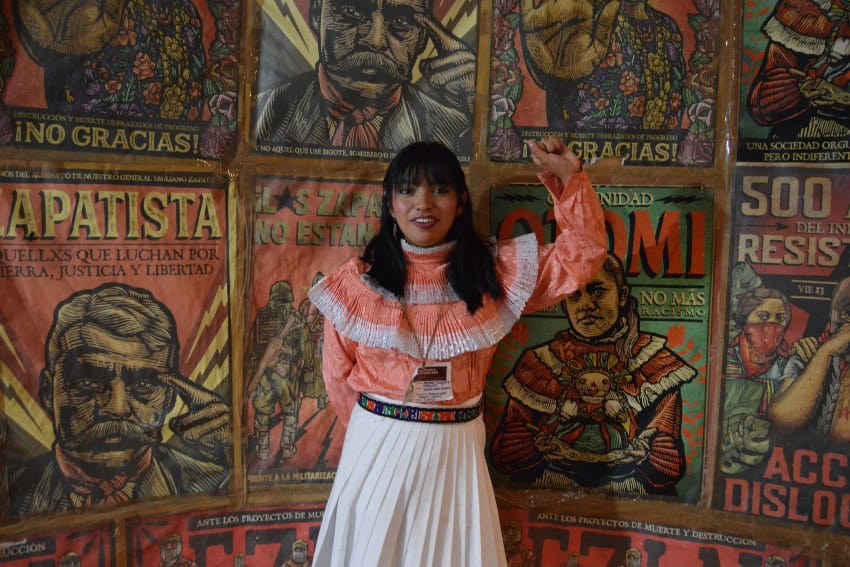
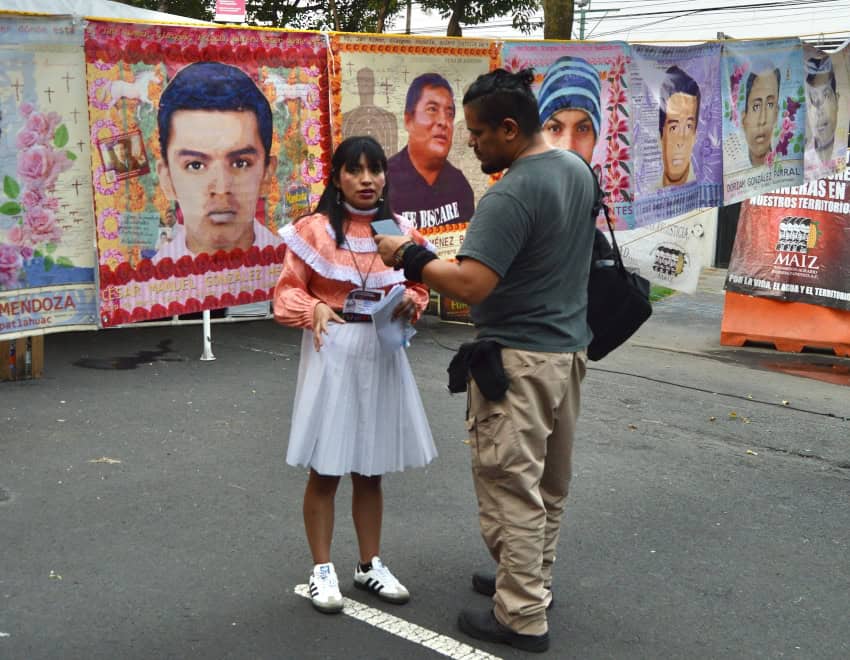
For Margarito, now 24, another generation is already being shaped inside the struggle.
She speaks of children who have grown up attending demonstrations, witnessing confrontation and watching their parents organize.
“They too have resisted these six years,” she said. “Our children are the strength that allows us to keep holding on.”
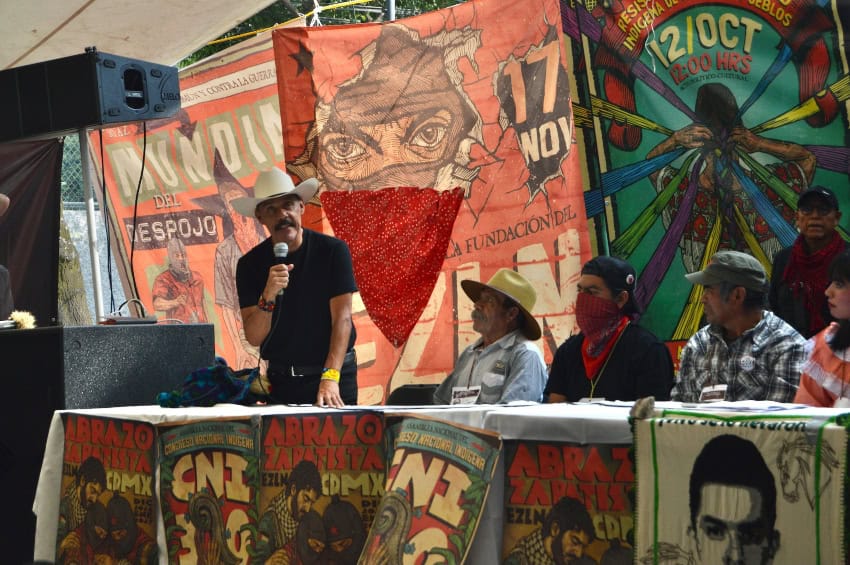
On Oct. 12, six years to the day after walking into the INPI, the Otomí community made its boldest declaration yet.
The Casa de los Pueblos, Margarito announced, would become patrimony of the CNI and the Zapatista Army of National Liberation.
Thirty years after Comandanta Ramona came to Mexico City demanding “never again a Mexico without us,” Indigenous activists had turned the headquarters of the federal agency created to serve them into something of their own.
For Margarito, it is no longer primarily a government building under occupation.
It is the place where, she says, Indigenous people stopped waiting outside.
Tracy L. Barnett is a Guadalajara-based freelance writer and the founder of The Esperanza Project.