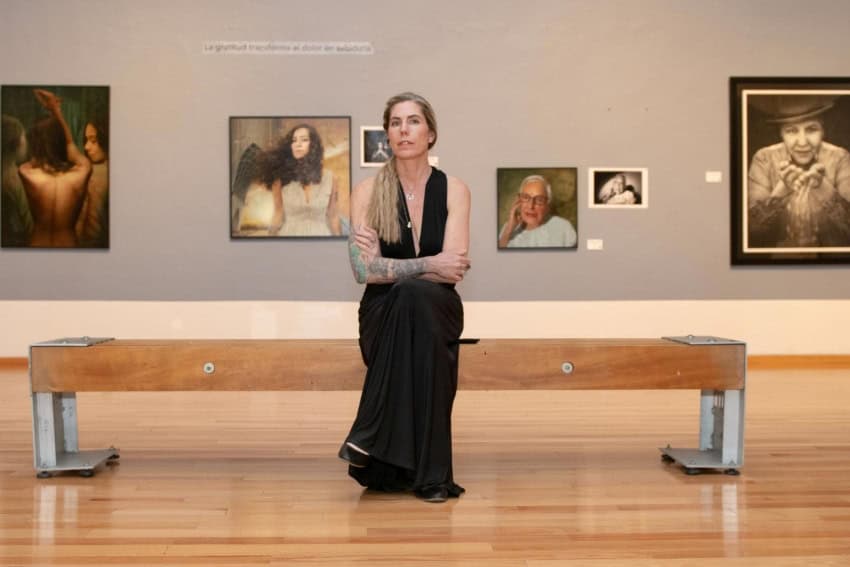
On March 6, artist Kate Van Doren welcomed nearly 500 curious attendees to the opening night of her new solo exhibition at the Museo de Arte de Querétaro (MAQRO), which runs through June 6.
Filling three huge galleries, “The Healing Words Project” is a living body of work composed of hundreds of women’s deeply compelling stories of survival, displacement, grief, resistance and healing — expressed through Van Doren’s arresting photographic, drawn and painted portraits, as well as video installations.
The ‘Healing Words Project’
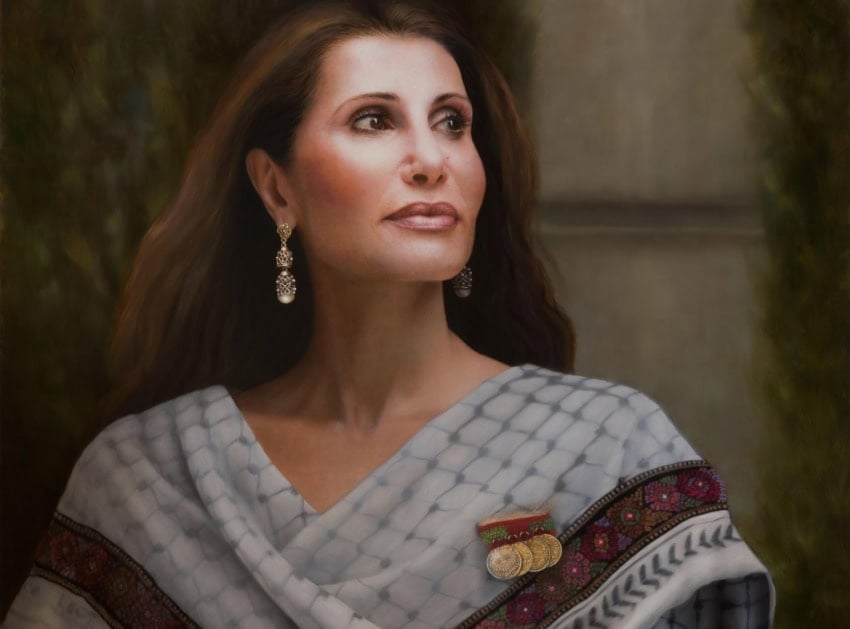
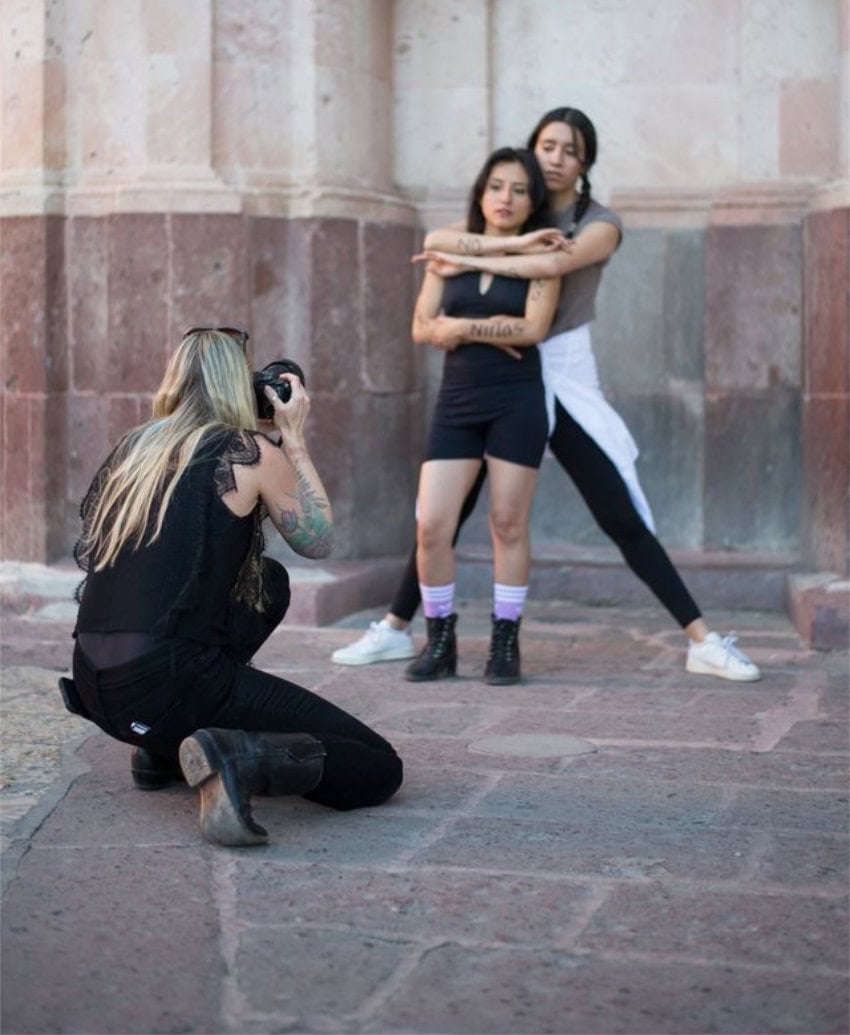
Van Doren, a registered art therapist, centers self-authored narratives in this project. Each participant contributes her own words — often a mantra, prayer or declaration — which are written directly onto her body and documented in photographic portraits. These images then become the foundation for additional artworks that reflect both individual and shared human experience.
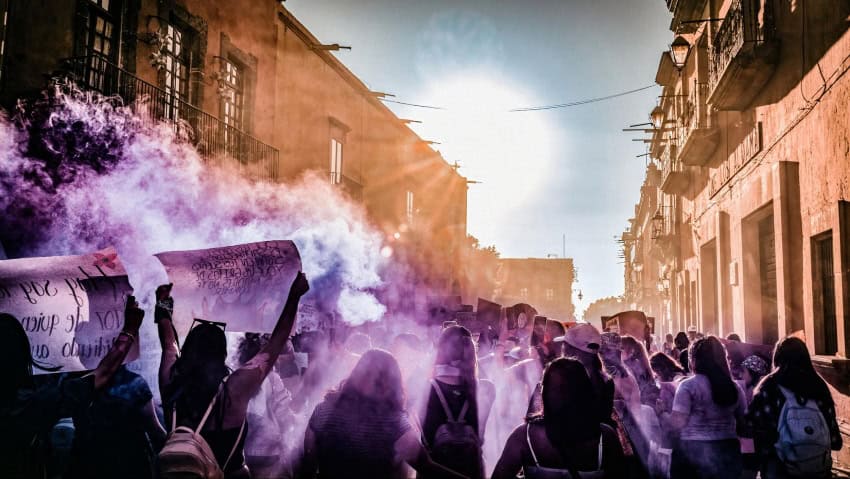
The Healing Words Project began in Mexico in 2020 during Un Día Sin Mujeres, a national day of protest initiated as a response to Mexico’s crisis of gender-based violence. Van Doren offered her photography as a form of art-based activism.
For Un Día Sin Mujeres, women wrote words on their bodies as acts of visibility, solidarity and resistance and Van Doren photographed them.
Then, as she explained, “Something inspiring happened: The photographs became conversations. Conversations became stories. And stories became healing.”
So far, she has documented the healing journeys of over 2,000 women.

Palestinian Ambassador Nadya Layla Rasheed introduces the artist
On opening night, MAQRO Director Antonio Arelle and Ana Paola López Birlain, Secretary of Culture for the state of Querétaro, welcomed the crowd of attendees and discussed the significance of the exhibition. Van Doren was introduced by Palestinian Ambassador to Mexico Nadya Layla Rasheed, who was also a participant in the project.
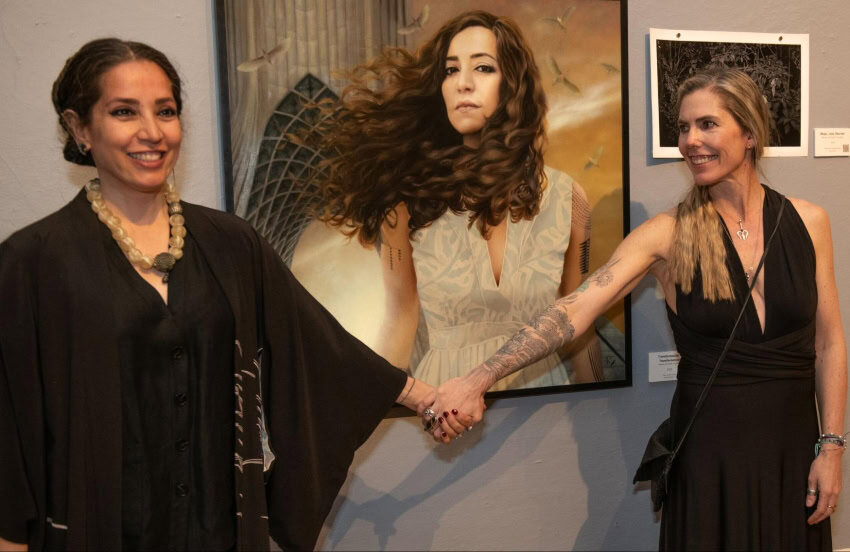
“To be Palestinian is to carry memory in the body and responsibility in the heart,” Rasheed said. “For us, art is never simply creativity; it is memory, resistance and survival … That is why the “Healing Words Project” matters so deeply to me. It plants something our world desperately needs today: humanity. And when humanity is planted with care, it grows — in communities, in movements and in the hearts of those who choose to listen.”
Van Doren is donating proceeds from the sale of each portrait to a charity designated by the woman in that picture. Proceeds from Ambassador Rasheed’s painting, for example, support the Noor Gaza Orphan Care Program for children in Gaza who have lost one or both parents. The program provides care for Gaza orphans to grow with stability, safety and dignity. In the case of several other women in the project who are living in conflict zones, the money has gone to their families to help ensure their survival.
Participants were among the attendees
Many of the women featured in the “Healing Words Project” portraits attended the opening of the exhibition, some of them traveling great distances with their families to do so.
“I have looked in a mirror and not seen myself as clearly as I see myself in this portrait,” said Alzenira Quezada. “This art show is one of the best things I have been a part of. I will never forget that my portrait was in an important place, one of the most important museums in Mexico.
“Every one of us was chosen for our unique strength — by an artist with eyes powerful enough to see our truth.”
Over the years, explained Van Doren, she’s worked with survivors of violence, with activists, and with mothers, daughters, elders and young people “learning the language of self-worth for the first time.”
Navigating trauma, displacement and recovery
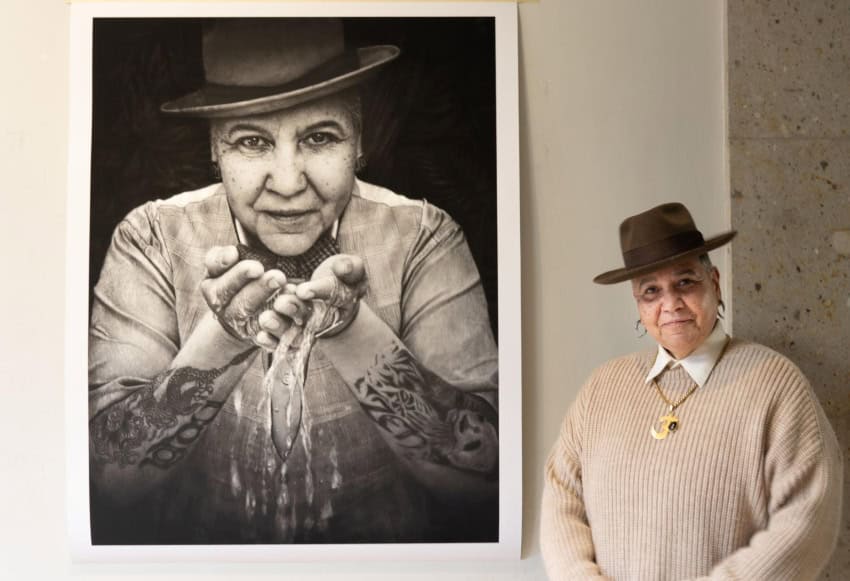
“I have worked with communities navigating trauma, displacement and recovery,” Van Doren says. “But just as importantly, I have worked with individuals who simply wanted to grow — to redefine themselves, to mark a transition and to honor healing already underway.”
“The most profound thing I have learned is this,” Van Doren continues. “Healing is rarely solitary. When one person speaks honestly, others recognize themselves. The courage of one becomes permission for many.”
“This project exists to amplify voices that have been silenced or misrepresented, but also to remind us that every person carries a story worth witnessing — including our own,” she says.
“Her work evokes perseverance and the depth we carry as women: creators with our bodies, minds, hearts and souls,” said Michelle Wedderburn, the director of “Peace Not Pieces” healing retreats for women at Casa ELM in San Miguel de Allende.
Another participant at the event, Gabriela Osorio, shared her story of rebuilding herself after a series of violent and complicated events.
“The ‘Healing Words Project’ provided a reminder that my daughter and I once were wounded and lost, but we never stopped believing in ourselves,” Osorio said. “We kept up the fight. We learned to hear our hearts louder than ever, stronger than ever.”
What happens when women are believed?
Van Doren’s exhibition arrives at a moment of global reckoning around gender-based violence as well as around issues of migration, displacement and other forms of collective trauma. Some of the women represented in the exhibition are refugees, activists, survivors, mothers, artists and leaders. Some have been impacted by war and displacement, some by economic instability. Others are navigating systems that have long silenced them.
Rather than framing these stories through a lens of victimhood, the “Healing Words Project” centers agency. The women are not merely subjects of the artwork; they are collaborators and coauthors.
At its heart, the project asks a radical question: What happens when women are believed? And further, what becomes possible when their stories are not edited, interpreted or extracted but honored exactly as they are offered?
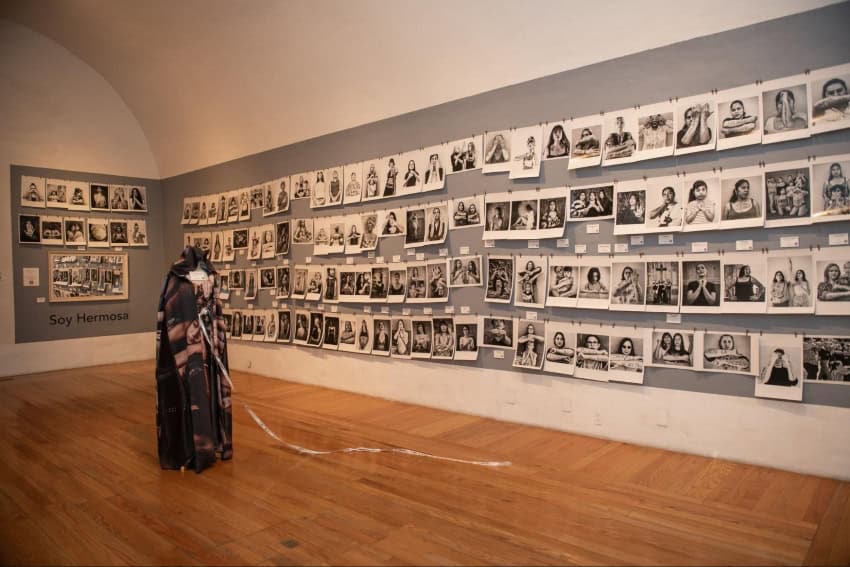
An entire gallery wall, for example, is dedicated to the work of Sorroras y Rebeldes, a group of feminist activists whom Van Doren has documented for the past five years. An impactful article by Irene Fuentes, a member of the feminist collective, accompanies their photographs.
The exhibition also includes several videos capturing the stories of women from around the world, such as Citlalli Parra, a textile artist preserving the art of Indigenous communities in Mexico and Lee Asheroff, a 98-year-old Jewish woman whose mantra is “trust yourself and go forward,” and Ambassador Rasheed, who participated with her mother, Hanan Rasheed.
Van Doren’s ‘empathic realism’ invites collaboration
Van Doren describes her approach as empathic realism — a socially engaged form of realism rooted in ethical collaboration and deep listening. Her paintings and drawings are technically precise and emotionally complex, showing grief and strength, anger alongside tenderness, vulnerability coupled with power.
The exhibition unfolds across three rooms, inviting viewers into an immersive encounter. The cumulative effect is intimate and expansive at once — each woman’s story stands on its own while also contributing to a collective chorus. The repetition of words, faces and gestures becomes a form of visual testimony.
And, for a deeper encounter, QR codes near the images connect viewers to the personal stories of hundreds of women on the project website, giving them greater context for what they’re seeing.
Healing moments
Van Doren hopes that visiting the exhibition will be a healing moment for many women, and the exhibit includes interactive elements to enhance that experience. For example, visitors are invited to write their own words on strips of cloth and tie them to a graceful metal sculpture, where hundreds fluttered already by the end of opening night, creating its own collective work of art. The sculpture was created by Van Doren’s husband, Alex, of Van Doren Metal Art.
Museumgoers will also encounter a mirror inscribed with the sentence “I am beautiful,” a declaration difficult for many women to own. The mirror is positioned so that when a person looks into it, they are framed by a powerful sisterhood — the faces of dozens of Van Doren’s participants. Another particularly impactful work on display is a dress made of fabric printed with Van Doren’s images of the women, sewn by local seamstress Inés Trujillo Chávez.
The exhibition does not promise resolution or closure; instead, it offers an invitation to feel, to listen and to recognize the core of one’s own story in that of another person.
Learn more at healingwordsproject.com and katevandoren.com and follow the artist on Instagram: @catvandoren.
Ann Marie Jackson is a book editor and the award-winning author of “The Broken Hummingbird.” She lives in San Miguel de Allende and can be reached through her website: annmariejacksonauthor.com.