Most people think of Tijuana as a place you pass through, a blur of traffic signs and waiting. President José López Portillo, who led Mexico between 1976 and 1982, set out to challenge that notion by commissioning a bold arts and culture center just five minutes from the border. Inaugurated in 1982, Centro Cultural Tijuana (CECUT) quickly became one of Baja California’s most important cultural institutions.
Spearheaded by a visionary first lady
The creation of CECUT was led by Carmen Romano, the wife of President López Portillo. As Mexico’s first lady from 1976 to 1982, Romano played an active role in the country’s cultural life and firmly believed that access to the arts should extend far beyond the capital.
Designed by architects who helped shape modern Mexico
The project was entrusted to architect Pedro Ramírez Vázquez, one of the most influential architects in modern Mexico. Known for integrating pre-Hispanic motifs with modernist principles, he created many of the nation’s most emblematic civil landmarks. Through the National Border Program, for example, he had already designed the Museo de Arte in Ciudad Juárez.
However, his most celebrated work is the Museo Nacional de Antropología in Mexico City, inaugurated in 1964. With its monumental courtyard and iconic concrete umbrella, the building transformed how history and identity were presented, placing Indigenous cultures at the core. Ramírez Vázquez also designed the Estadio Azteca and multiple venues for the 1968 Mexico City Olympic Games. His way of showcasing Mexico to the world even reached the Vatican when he designed the Chapel of Our Lady of Guadalupe inside St. Peter’s Basilica.
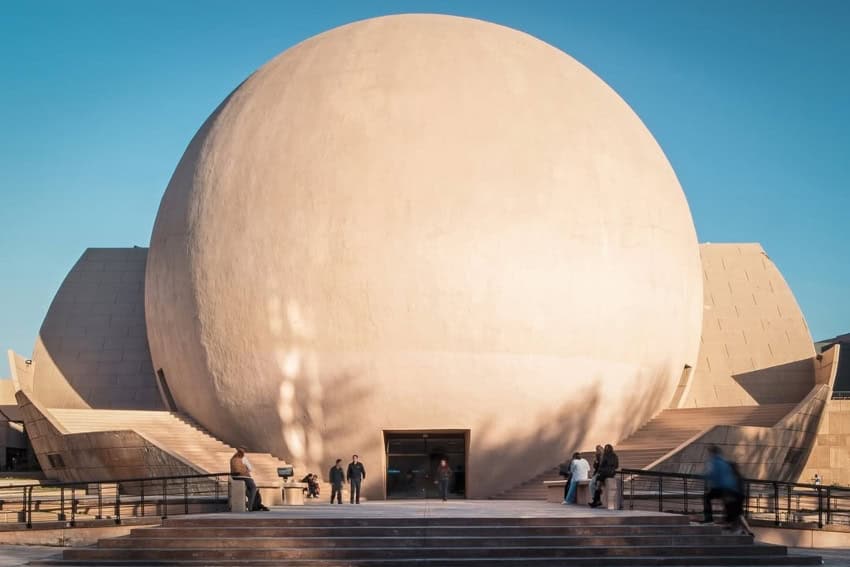
Manuel Rosen Morrison, an innovator already recognized for designing the beautiful Japanese Embassy in Mexico, was also a designer on the project. He approached CECUT with a bold idea: the building itself should announce that it housed an IMAX theater. By adding color directly into the concrete mix, he gave the structure its warm tone and sculptural presence. The choice was both forward-thinking and practical. Without paint or coatings, the dome ages naturally and requires less maintenance, allowing time itself to become part of its character.
The iconic dome
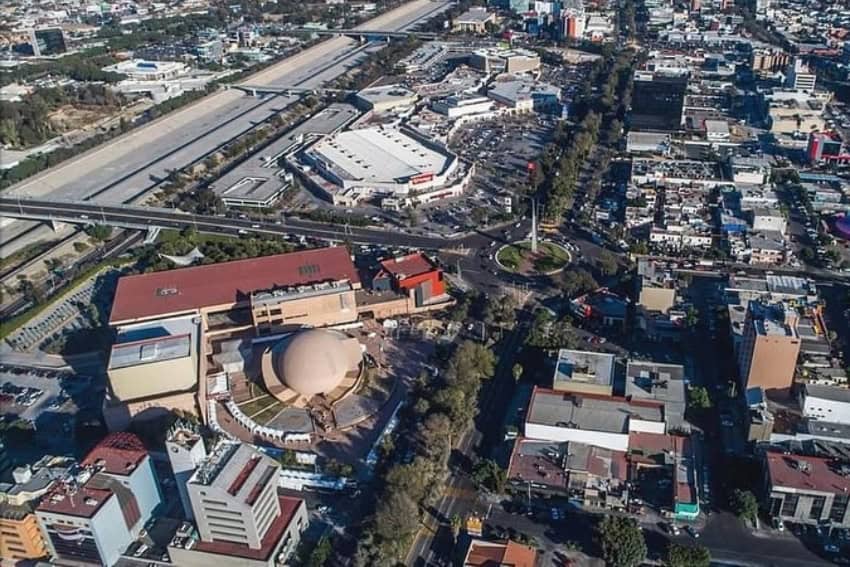
CECUT unfolds across 3.5 hectares (nearly 9 acres) in one of Tijuana’s most modern districts, functioning less like a single museum and more like a cultural ecosystem. At its center is La Bola, the complex’s most visually striking feature.
The massive sphere was built to house one of the country’s most advanced movie theaters at the time. It originally operated as an Omnimax theater, using a curved screen to create a fully immersive experience, and was later rebranded as IMAX Dome. The first film shown there was created especially for the space and celebrated Mexico’s landscapes and cultures.

An unexpected look at the surrounding seas
Another main attraction is the Tijuana Aquarium, the only facility of its kind in Baja California. Opened in 2012, the 300-square-meter space offers a close-up look at marine life from the Pacific Ocean and the Gulf of California. Around 500 animals live here, including native regional fish, species from other parts of the world, Australian corals, jellyfish, turtles and freshwater creatures. Designed as an educational space, the aquarium aims to connect visitors with the sea and ocean that border the peninsula.
The history that blurs the borderline
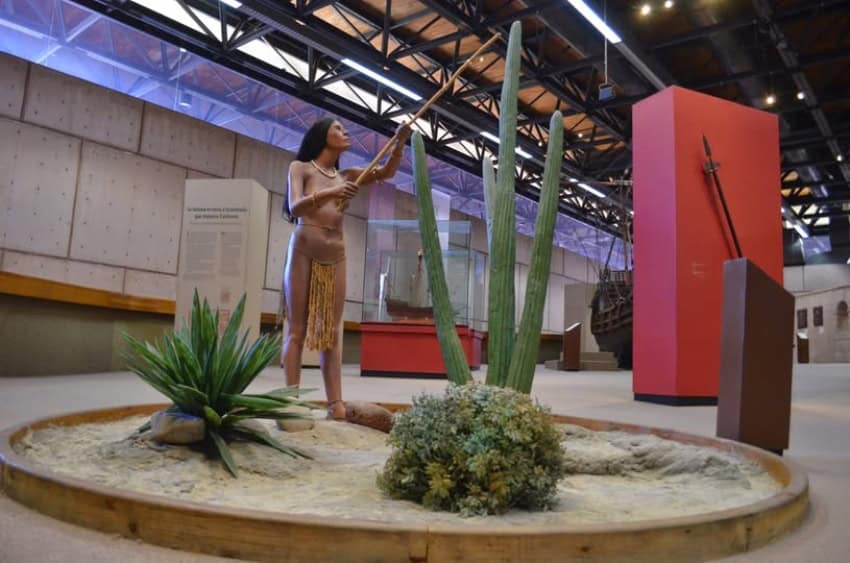
The Museo de las Californias guides visitors through the region’s complex history. The journey begins before California had a name and moves steadily toward the present day. Along the way, Indigenous cultures, Spanish colonization, missionary routes, migration, shifting borders, revolutions and environmental change are woven into a continuous narrative, showing how Baja California and the U.S. West evolved together.
El Cubo is Tijuana’s venue for contemporary art
The sense of evolution continues at El Cubo, a space devoted to contemporary art. It hosts exhibitions that meet international standards, from large-scale installations to photography, sculpture and painting. El Cubo’s more than 1,500 square meters are spread across several exhibition halls, a mezzanine and outdoor terraces, giving curators room to experiment and visitors space to linger. It has hosted exhibits featuring Mexican and international artists, with themes that range from cutting-edge visual trends to deeply local stories shaped by border life and migration.
Where Tijuana’s cultural energy takes the stage
The Sala de Espectáculos is a modern performance hall with a thousand seats. It hosts a wide range of events throughout the year, from theater and contemporary dance to concerts, film presentations and multimedia productions. Its design allows for professional staging and acoustics. On busy nights, the energy spills outside to the adjacent esplanade, where festivals and open-air events turn the surrounding plazas into an extension of the stage.
CECUT also serves as a gathering point for creative communities through events like FotoFilm Tijuana, an annual photography and film festival that brings together local and international creators. Screenings, workshops, and panel discussions turn the center into a meeting place for visual storytellers and curious audiences alike.
A powerful presence at the border
Just steps from one of the busiest border crossings in the world, CECUT invites visitors to pause and see Tijuana not as a place you pass through, but as a city with a strong cultural pulse. It has a way of reshaping first impressions and reminding you that some of the most meaningful stories live right at the edge.
Sandra is a Mexican writer and translator based in San Miguel de Allende who specializes in mental health and humanitarian aid. She believes in the power of language to foster compassion and understanding across cultures. She can be reached at: sandragancz@gmail.com.