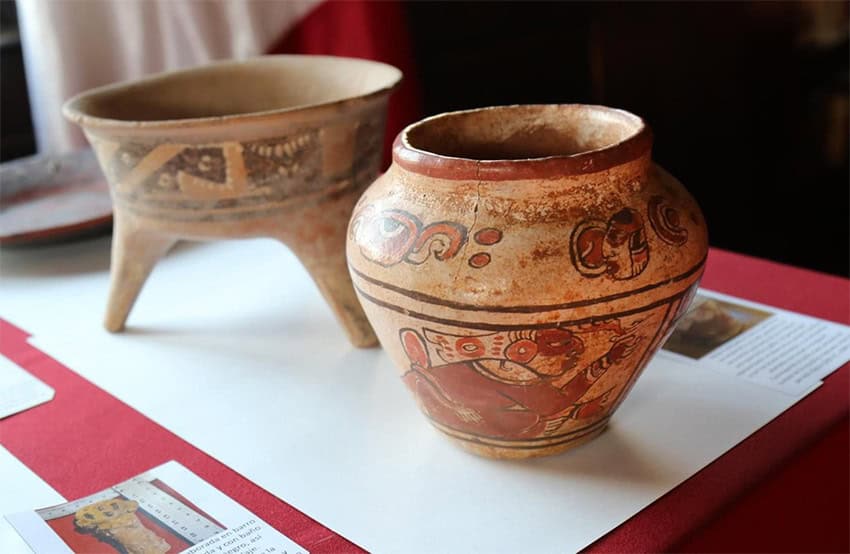
An ancient Maya vase, bought for US $3.99 at a thrift store in Maryland, is among 20 archaeological artifacts being repatriated to Mexico, thanks to a U.S. woman who discovered its true value years after purchasing it.
Anna Lee Dozier stumbled upon the ceramic vase on a clearance shelf by the checkout at a thrift store about 10 minutes from her Washington, D.C., home. “In my work, I travel a lot to Mexico, and this item caught my eye because it looked different than the things on the shelf, but it also was recognizably from Mexico,” Dozier recounted on the Canadian Broadcasting Corporation (CBC) radio show “As It Happens.”
“Since it’s a country that I work [in] and it’s really important to me, I thought it would be just a nice little thing to take home and put on the shelf and to remind me of Mexico,” she added on the National Public Radio (NPR) show “All Things Considered.”
Believing it was a 20- or 30-year-old tourist souvenir, she displayed the piece in her home library.
Dozier works for the human rights organization Christian Solidarity Worldwide and is often in Mexico. On a visit earlier this year to Mexico City’s National Museum of Anthropology, Dozier began to suspect the vase’s true age and significance.
“As I was walking through, it just occurred to me that some of the things that I was looking at looked very similar to what I had at home,” she said.
Following advice from museum staff, she contacted the Mexican embassy upon her return to the United States.

After an authentication process, the National Institute of Anthropology and History (INAH) in Mexico confirmed that the vase was indeed an ancient artifact from the Maya Classic period.
Experts dated it between 200 and 800 A.D. — a period that historians widely regard as the height of the Maya civilization, which declined after drought, infighting and eventually European conquest, among other factors.
“Congratulations, it is real. And we would like it back,” read the email from the embassy.
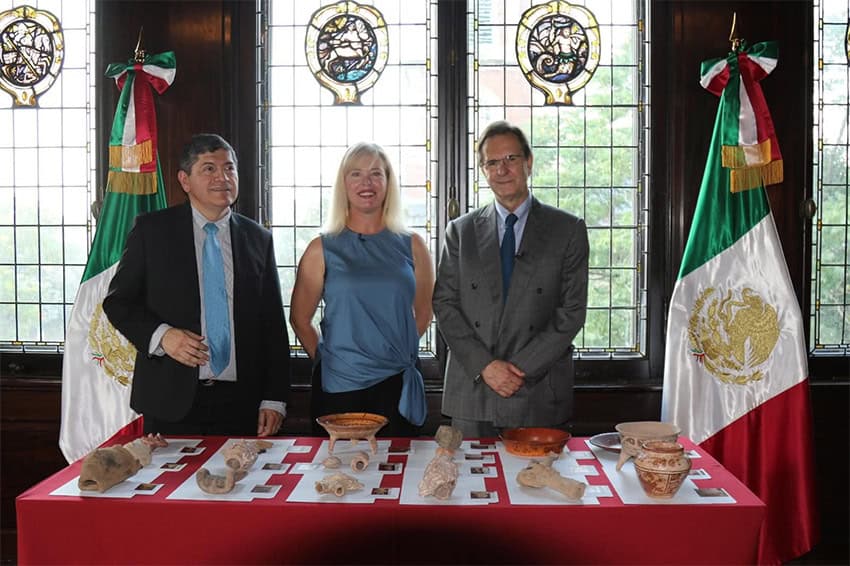
The vessel was handed over to Esteban Moctezuma Barragán, Mexico’s ambassador to the U.S., at a ceremony last week at the Mexican Cultural Institute in Washington, D.C.
In recent years, the Mexican government has intensified efforts to recover its cultural heritage, resulting in the retrieval of over 13,500 objects from abroad — including 35 artifacts from the Seattle area two weeks ago and 22 items from a Philadelphia family last month.
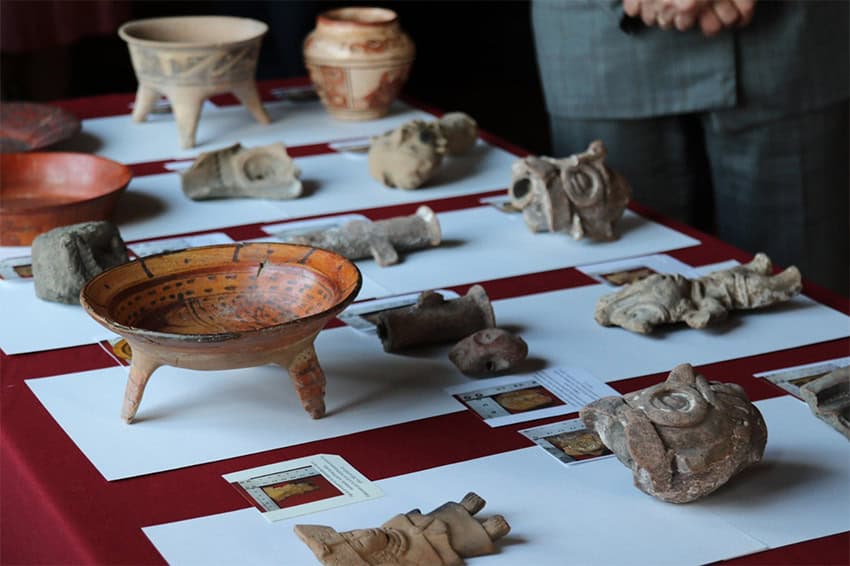
Along with the vase, the other 19 archaeological pieces coming back to Mexico this time are from various anonymous sources. They span multiple periods and pre-Columbian cultures, such as the Mexica, Teotihuacán and Totonac.
For Dozier, returning the vase was never about monetary gain.
“Giving it back feels so much better than it would if I put it on eBay and got a bunch of money,” she said.
In Mexico, the vase will undergo further examination to determine its specific use and significance before potentially being displayed in a museum.
With reports from NPR, CBC and The Guardian