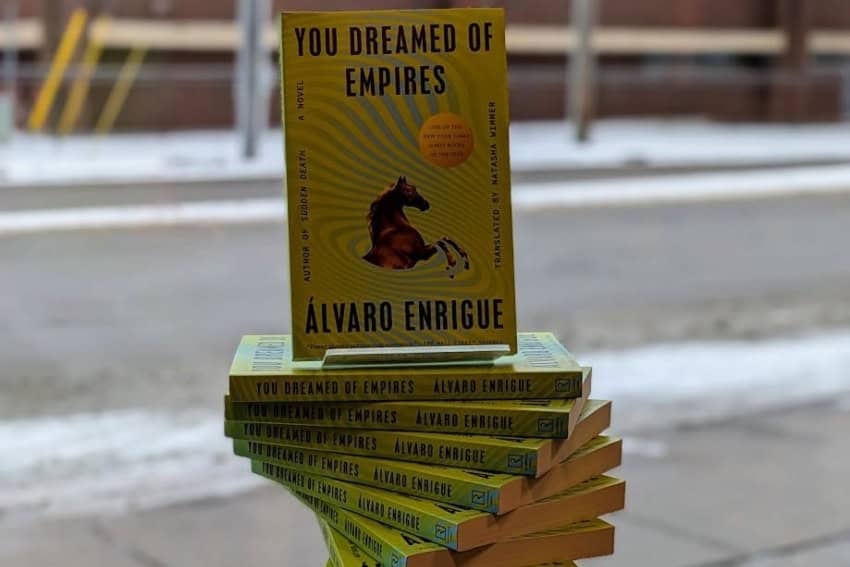
In this second installment of Mexico Well-Read, Ann Marie Jackson reviews Álvaro Enrigue’s ‘You Dreamed of Empires.’ Against the vast arc of conquest and colonization, Enrigue offers the reader a fleeting, electric day in which everything might still have been otherwise.
History, we are often told, is written by the victors. In “You Dreamed of Empires,” author Álvaro Enrigue proposes something even more unsettling: History is written by the improvisers, the intoxicated, the confused, the frightened, the vain.
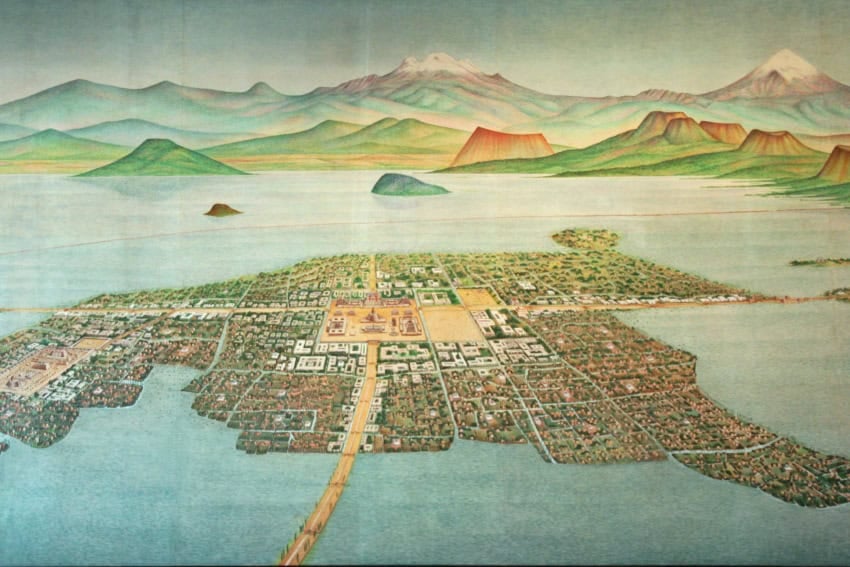
The conquest of Mexico becomes in Enrigue’s hands a daylong fever dream in which no one — including the supposed masterminds, Cortés and Moctezuma — fully understands what is happening.
Yes, “You Dreamed of Empires” came out two years ago, stretching to its limits this column’s self-imposed definition of “new and newish” books to review, but the acclaimed novel offers such a unique and fascinating take on this infamous historical encounter that you shouldn’t let it pass you by unread.
Moctezuma and Cortés: The infamous encounter reframed
The novel narrows our focus to a single day: Nov. 8, 1519, when Hernán Cortés and his small band of Spaniards were welcomed into Tenochtitlán by the Mexica emperor. That fateful interaction has long been embalmed in legend: steel and gunpowder confronting obsidian and prophecy, the outcome — from our perch in the present — seen as inevitable.
Enrigue, however, reimagines the encounter on a very human level. The fate of continents is compressed into an elaborate and awkward meal, mandatory nap, hallucinogenic snacks, inaccurate translations and mounting suspicions.
The New York Times called the book “short, strange, spiky and sublime,” praising its “humane comedy of manners” unfolding under the constant threat of decapitation — which perfectly captures the novel’s paradoxical tone: It is at once tartly funny and saturated with dread.

While heads may not roll immediately, everyone senses the looming blade. The conquistadors do not at all understand the codes of conduct governing their hosts, just as the Colhua-Mexica court cannot for the life of themselves decipher the Spaniards’ behaviors and intentions. Each side regards the other with a mixture of disgust and pity.
Guests or captives? In a Borges-worthy labyrinth

Enrigue’s Tenochtitlan (rendered by the author in a Nahuatl-inflected spelling, Tenoxtitlan) is a marvel: a vast, orderly, high-tech imperial capital. The Spaniards, accustomed to thinking of themselves as representing the pinnacle of civilization, wander blindly through its palace corridors like baffled, bumbling provincials. For most of the book, they cannot truly tell whether they are guests or captives. The palace itself becomes a labyrinth worthy of Jorge Luis Borges, one of Enrigue’s acknowledged influences. Corridors narrow and repeat, while doors refuse to lead where expected.
The novel opens with a ceremonial meal so grotesque that it tips into farce. Priests wearing capes of flayed skin sit across from the smelly, bearded men whose boots track mud on the pristine palace floors. The Spaniards are repelled by the odor of sacrificial blood; their hosts are disgusted by the guests’ own odors as well as their table manners. The Wall Street Journal praised the author’s use of such “sublime absurdities.”
Viewing history as not a fixed record but a shifting dream
All the while, everyone awaits the presence of the emperor, Moctezuma, who is freshly portrayed by Enrigue not as the dithering mystic of colonial lore but as a volatile, politically astute ruler under extraordinary pressure — who happens to rely heavily on hallucinogenic mushrooms.
Enrigue does not treat this as mere color: The emperor’s drug use shapes the novel’s structure and style. Time softens; visions intrude; past and future bleed together. In one of the book’s boldest moves, Moctezuma glimpses centuries yet to come and even catches sight of the novelist himself at work. The effect is dizzying, comic and strangely moving. History is no longer a fixed record but a shifting dream.
The Washington Post called the novel an “alternate history of Mexican conquest with a Tarantino-ready twist,” praising its “deliciously gonzo” style.
That style oscillates between earthy detail and high-minded speculation. While, yes, we are told about bleeding fingers and unwashed bodies, at the same time, we are also invited to consider the theological foundations of sacrifice. The sacred and profane coexist comfortably.

The impact of translation — and mistranslation — on history
The often underappreciated role of translation is critical to the story. Every diplomatic exchange must pass through two intermediaries: the friar Aguilar — translating from Maya into Castilian — and Malinalli, La Malinche, who is translating from Maya into Nahuatl. Of course, meaning is filtered, adjusted, softened or sharpened at each stage.
Enrigue is himself well translated by Natasha Wimmer. He uses Nahuatl terms without explanation — rather than footnoting them into submission, he allows their meanings to emerge through context, giving the reader a taste of both the excitement of exposure to new meanings and also the resulting confusion.
Enrigue’s humor is relentless but not glib. While the Spaniards squabble amongst themselves like investors in a dubious startup, Moctezuma alternates between grandeur and petulance. The fictional Captain Jazmín Caldera, one of the few characters who seems capable of imagining defeat, watches events with mounting alarm.
The Spaniards, he tells us, “were making things up as they went along, with extraordinary results” and “ultimately they came to believe in their own ruses.”
Bringing the past “to vivid, brain-melting life”
The novel’s hallucinatory episodes intensify as the day progresses. In one notable sequence, Moctezuma hears strains of 1970s glam rock — specifically a T. Rex song — bleeding into the sixteenth century. The anachronism is a declaration: Time is porous.
By the time Cortés and Moctezuma finally face each other, the air is electric with possibility. The scene carries the weight of five centuries. We all know, of course, what followed: siege, smallpox, devastation, the birth of New Spain. Enrigue does not deny that history. Instead, he pauses for reflection, inviting us to reconsider the far-from-certain moments that preceded the final outcome. When the conquest proceeds, it is less through strategic brilliance than mutual miscalculation.
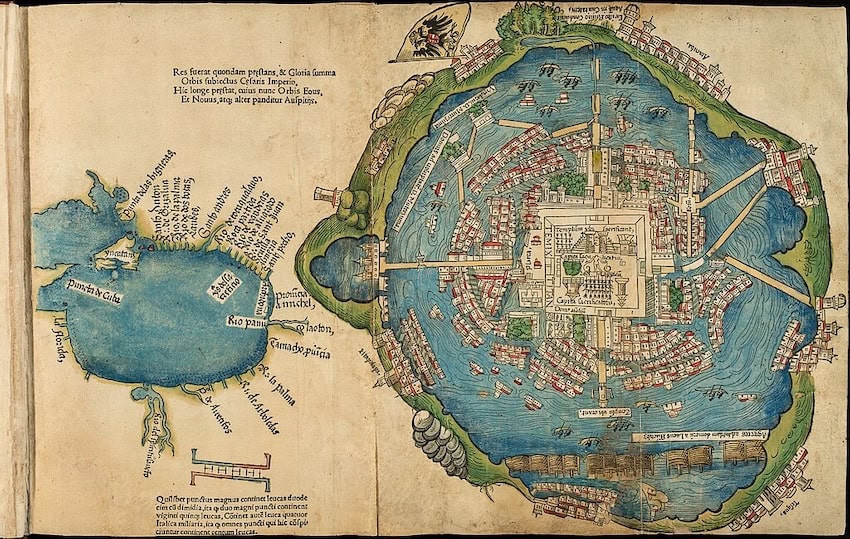
As one reviewer noted in Publishers Weekly, Enrigue brings the past “to vivid, brain-melting life,” culminating in a climactic scene that offers a startling alternative to the historical record.
The book has been described as a kind of “colonial revenge story,” but Enrigue seems less interested in revenge than he does in possibility: What if Moctezuma had chosen differently? What if Cortés had made different mistakes at different moments? What if empires are less inevitable than they appear in hindsight?
Join the conversation about ‘You Dreamed of Empires’
What are your thoughts on this fascinating reimagining of a history-defining day? Do you have suggestions of recent and forthcoming titles to review? Let us know in the comments.
Ann Marie Jackson is a book editor and the award-winning author of “The Broken Hummingbird.” She lives in San Miguel de Allende and can be reached through her website: annmariejacksonauthor.com.