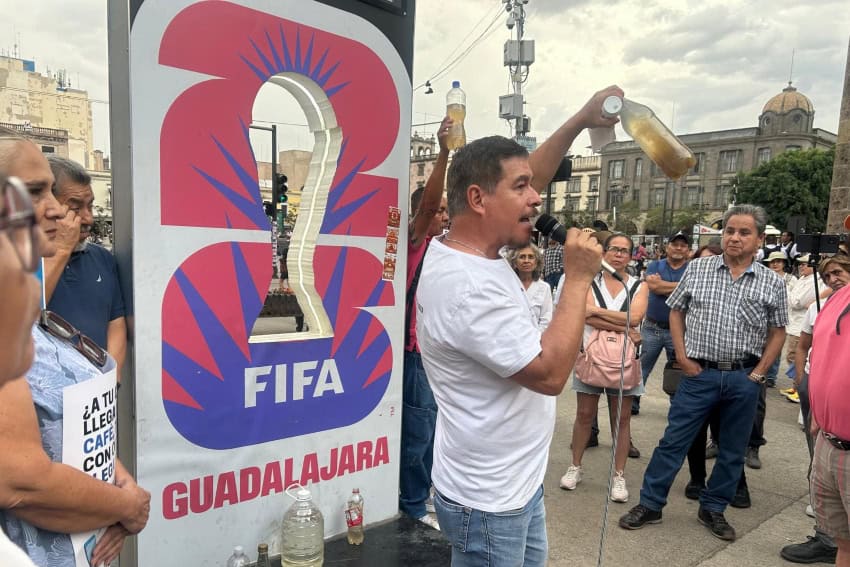
Authorities in Jalisco removed the head of Guadalajara’s water agency on Monday, March 23, amid a surge of complaints about foul-smelling, sediment-laden tap water, prompting citizen groups to demand a full corruption investigation and structural overhaul of the system.
Citizen groups have documented more than 340 reports of contaminated tap water in 12 days, framed within the citizen campaigns #SiapaCorrupto and #SiapaQueQueremos: Water for Life, NOT for Business.”
New director of SIAPA named amid protests
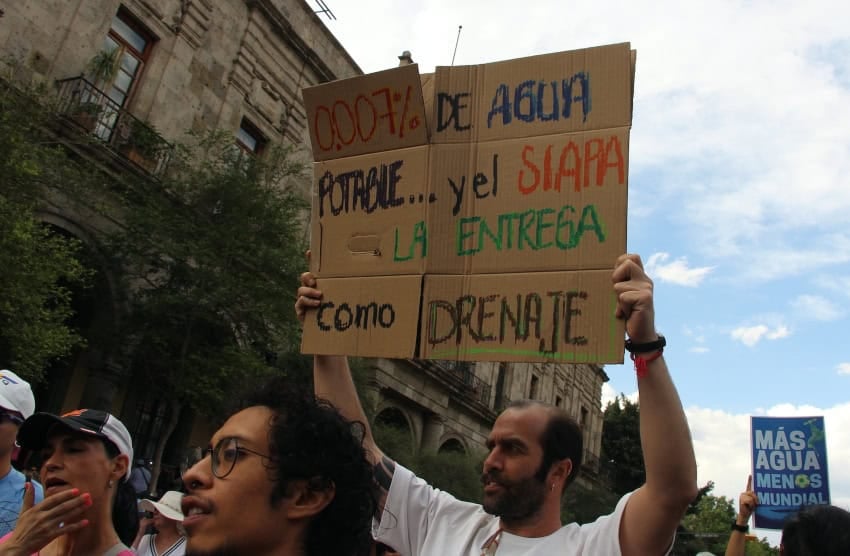
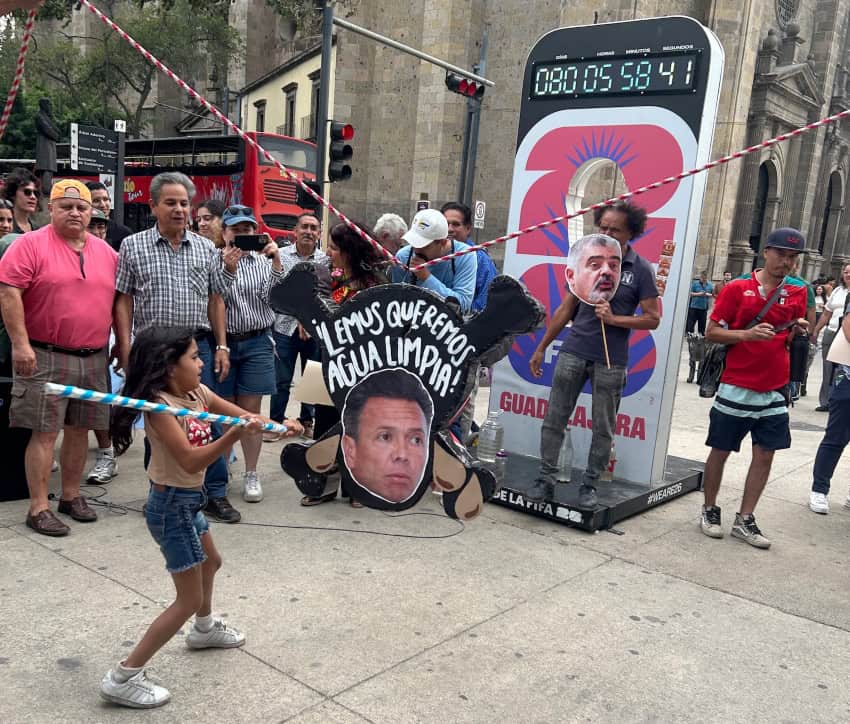
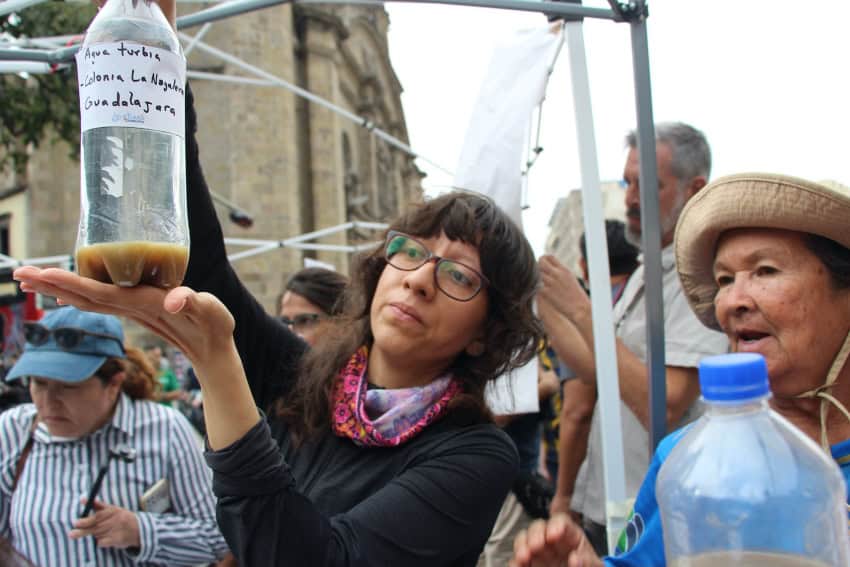
The removal of Sistema Intermunicipal de los Servicios de Agua (SIAPA) director Antonio Juárez Trueba came on the heels of an animated protest in the historic center, where hundreds of participants gathered on Sunday beside the city’s official World Cup countdown clock and chanted “Más agua, menos Mundial (More water, less World Cup). Some hoisted cutouts of Trueba’s face and called for his firing, battered a piñata of Gov. Pablo Lemus and lined up to have their water tested by a citizen water monitoring group.
With less than three months until the 2026 World Cup— when Guadalajara is expected to host thousands of international visitors — the crisis is raising concerns about Mexico’s second-largest city’s readiness on a global stage.
Lemus responded quickly on Monday, announcing Trueba’s replacement. Citizen groups fired back with a statement calling the move “relevant — though overdue,” and warning that those responsible for the current crisis must still be investigated and sanctioned.
They also criticized the immediate appointment of a replacement, former Zapopan public works director Ismael Jáuregui Castañeda, without a public consultation process, calling for a national search for a person with the proper qualifications and experience.
Citizen groups push for community-centered water governance
Citizen groups raised concerns about the new director’s background in construction rather than water management, calling for a trial period to evaluate his performance and warning that the crisis demands specialized technical expertise. They called attention to the failure of a stormwater regulation structure constructed under his watch, leading to major flooding and the collapse of nearby infrastructure.

The current crisis results from decades of deferred maintenance and failure to address the problem systemically, they say, requiring a broader restructuring and a more transparent, community-centered model of water governance.
“The water crisis and the health and environmental emergency in Jalisco did not begin three weeks ago … they go back at least 30 years and are thoroughly documented, with both testimonial and scientific evidence of their impacts,” said María González, director of the Mexican Institute for Community Development (IMDEC).
Among their key demands are a formal health emergency declaration, immediate access to safe water for affected neighborhoods, comprehensive testing from source to household, and the release of the executive plan for the Chapala–Guadalajara aqueduct for public review, for which they filed an amparo in recent weeks to demand public access under government transparency laws and the Escazú agreement.
More funding allocated for the Guadalajara water crisis
State authorities also moved to shore up the system financially, announcing on Monday the reallocation of more than 1 billion pesos to improve water quality and distribution infrastructure in the Guadalajara metropolitan area, according to an official statement released Tuesday. Officials described the funding as an urgent response aimed at improving water quality and distribution, particularly in southern areas of the metropolitan region, where problems have been most acute.
Water expert Arturo Gleason, a professor at the University of Guadalajara, questioned the effectiveness of the funding plan, arguing that resources would be better directed toward a comprehensive water system diagnosis to identify the most urgent and appropriate actions in the short, medium and long term. He also called for greater transparency around the proposed projects and said investment decisions should emerge from a broader, multidisciplinary technical consensus.
“Society must demand a proper diagnosis of the problem, from the source to the point of use, backed by scientific evidence. Only once those failures are clearly identified can a serious water plan be built,” said Gleason. As founder of the Institute of Technical Water Research Arturo Gleason Santana A.C. (IITAAC), Gleason has researched water systems internationally and made multiple recommendations to municipal and state governments over the years, with little response.
He criticized the focus on bringing in more water from other communities at great economic, social and environmental cost rather than repairing aging infrastructure or addressing contamination — the underlying causes of the crisis.
Systemic modernizing urgently needed, says water expert
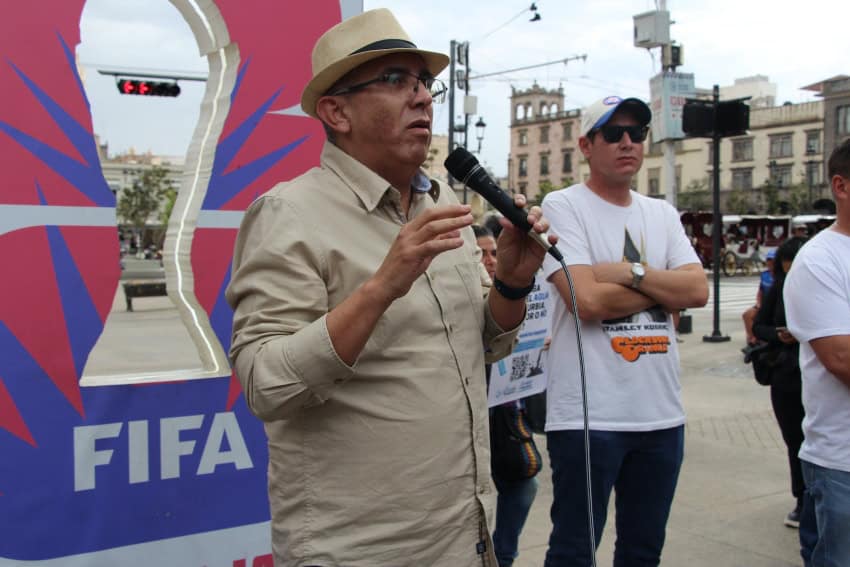
“This approach — saying ‘we need more water, give us more money’ — is exactly what has harmed us, because it has neglected the underlying infrastructure without a technical or scientific basis,” he said, referencing the long-delayed El Zapotillo dam and the proposed Chapala–Guadalajara aqueduct, both promoted as solutions to Guadalajara’s water shortages.
The city’s water network spans some 8,500 kilometers — twice the distance to Tijuana and back — and yet there is still no comprehensive plan to repair or modernize it, Gleason said. “It’s shameful … that two years into the state administration, there is no water plan whatsoever. There is no diagnosis, no evidence, nothing.”
For residents, the consequences are ongoing.
“SIAPA has known since 2023 that the water doesn’t meet the official standard … I obtained that data through a transparency request from SIAPA itself,” said citizen researcher Juan Pablo Macías. “It contained fecal coliforms and manganese above permitted levels. They haven’t shown us any laboratory analyses; the lack of transparency is insulting.”
A public health emergency
For community organizers, the issue is increasingly being framed as a public health emergency.
“If we bathe with contaminated water, the contamination also enters through the skin … and thus our body becomes poisoned little by little,” said Pepe Lira, part of a regional water monitoring collective. He urged residents to join a neighborhood-based citizen water monitoring network to track water quality independently, arguing that official data has been incomplete or lacking.
Researchers say the risks extend well beyond what comes out of the tap.
“The problem doesn’t start at our taps,” said Alicia Torres, a professor and researcher at the University of Guadalajara and a native of the Lake Chapala area, who has witnessed the gradual contamination of the lake she grew up swimming in. “It starts much earlier, in the rivers, in the watershed … where the water is contaminated every day.”
Conflict over water quality is likely to intensify
The citizen coalition announced on Monday that it will continue collecting water samples, filing legal actions and pressing for a formal health emergency declaration in the coming days, signaling that the conflict is likely to intensify rather than subside.
“Because it is not enough to have removed Antonio Juárez Trueba from office,” the coalition said in its Monday statement, “the Citizen Campaigns will continue working and demanding the transformation of the #CorruptSiapa until we achieve #TheSiapaWeWant: Water for Life, NOT for Business.”
Tracy L. Barnett is a Guadalajara-based freelance writer and the founder of The Esperanza Project.