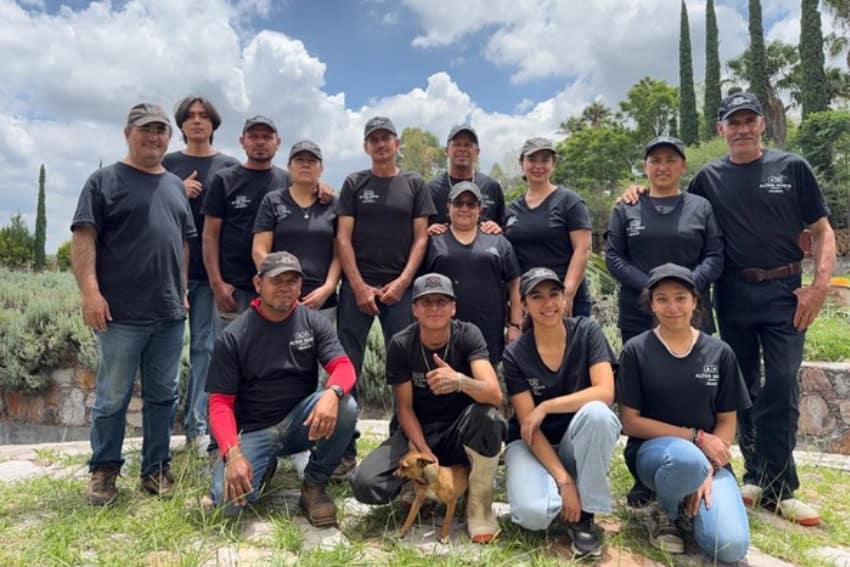
Winemaking is an industry full of deep history and family traditions. In the growing winemaking region of Jalisco, one of those families is engineer José Miguel Vega, his wife Aida Karim Hernández and their children, who together created Altos Norte Vinícola.
Located in the municipality of Encarnación de Díaz in the Altos de Jalisco region, this vineyard is yet one more example of how winemaking is expanding throughout Mexico. Altos Norte Vinícola is also an example of how some of Mexico’s most promising vineyards are also among the nation’s youngest.
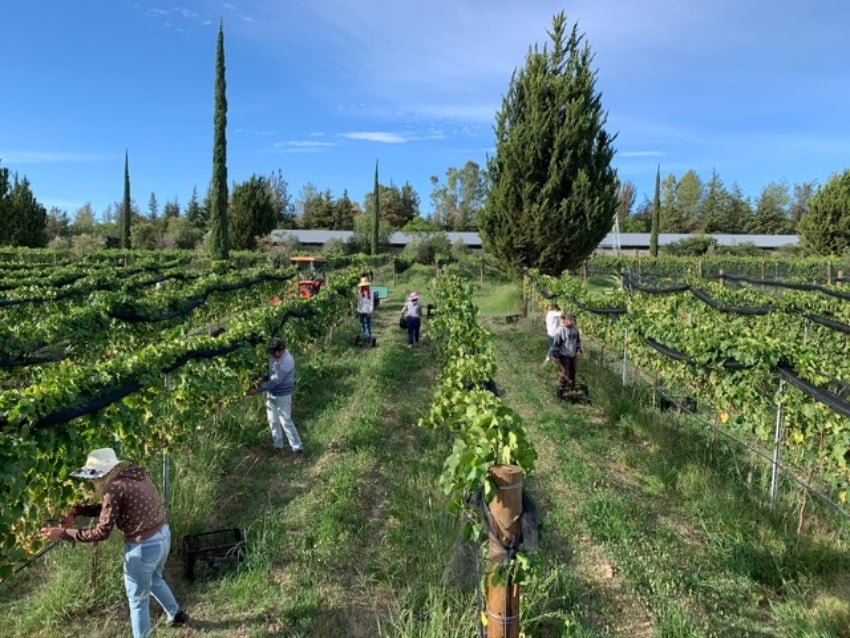
Not that the family was new to working the land. Originally, their farm — on land bought by their grandfather in 1922 — grew monoculture corn and raised livestock until 1990. Then, in 2016, after much preparation to convert the land to a vineyard, Vega and Hernández planted their first grapevines.
The switch was a challenge. But aiming high, the family sought out experts to help them achieve their vision, including viticulture specialist from Aguascalientes, Trini Jiménez, who had extensive industry experience and had studied abroad.
The first and most important step, however, came in 1994, when the family prepped the land for organic farming, using an agro-ecological model.
Altos Norte’s first harvest and first wines
At the same time, Vega began studying enology, which enabled him to serve as the winemaker in his own vineyard. The first vines were brought from France, a selection of Tempranillo and cabernet sauvignon plants. Later, Albariño and Malbec varieties were added, eventually covering an area that is a little less than 10 acres, creating a small but well-monitored vineyard.
By 2018, the vineyard celebrated its first harvest.

Even though Vega and Hernández knew that, ideally, they should wait between three and five years to make wine commercially, the high quality of their early harvests spoke for themselves, reflecting all the work that had been done over two decades to revitalize the land. So they bucked tradition and decided to bottle their first wine early.
In 2020, the vineyard produced three wines — a rosé, a red and a white — and the Altos Norte brand was officially born.
Evolving to a more natural winemaking process
The first sparkling wines at Altos Norte were made using traditional methods. For this winemaking process, they were advised by the Technological University of Northern Aguascalientes, where the selected yeasts were chosen and the wines were made.
However, as the family continued to plant more vines and the vineyard grew, Vega and Hernández began looking for new production methods, something that would better align with their philosophy of caring for the land, the crops, the environment and their workforce. They sought a process that involved less intervention.
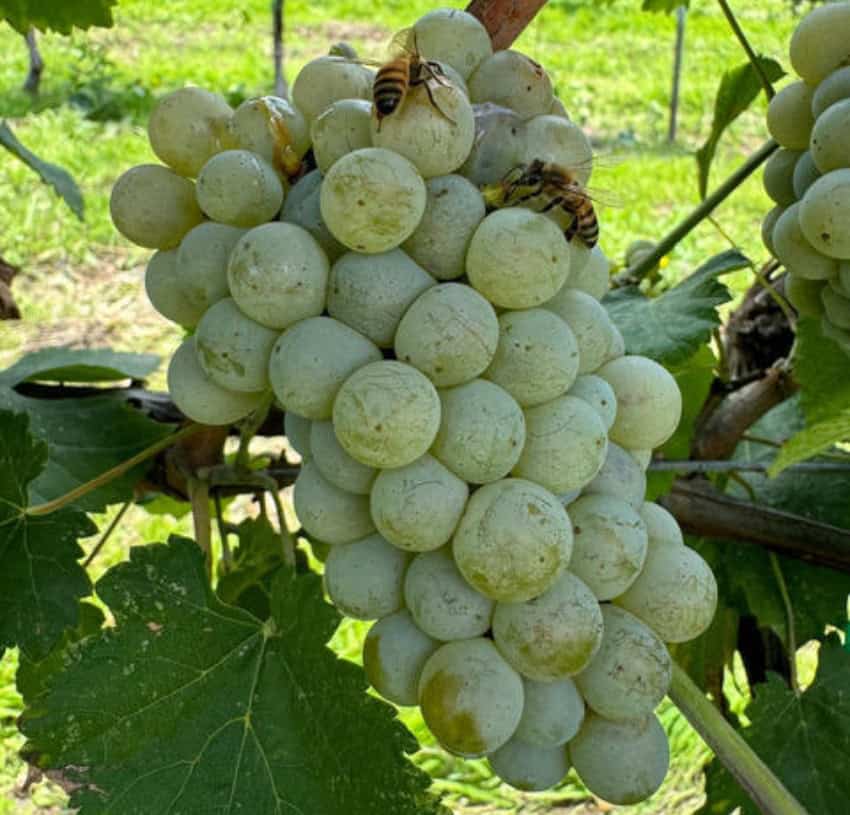
The change came in 2021. With the winery now in a position to produce its own wines, the family opted to make Pét Nat (short for Pétillant Naturel), a slightly effervescent natural wine. They began aligning their winemaking process to be as low-intervention as possible, using wild, endemic yeasts and abstaining from adding sulfites, filtering their batches and stabilizing the wines.
This is how their lines, Zafado and Bruto, were born. In Mexico, the Spanish word zafado means crazy, which was exactly what Vega’s uncle told him when he first shared that he, a man with no background in winemaking, would be making wine in Jalisco, a region not known for its viticulture.
There are three Zafado wines: a red, a rosé and an orange wine. In Mexico, few winemakers dare to make orange wine, but Altos Norte embraced the challenge using Spanish Albariño varietal grapes.
During the cultivation process, they were advised by Branko Pjanic, an expert winemaker who has been living in the country for years and consults on various projects.
Fermentation and food pairings
These include Altos Norte’s rosé, made from Tempranillo and Malbec grapes, and a red, made from cabernet sauvignon and Malbec. The process is 100% Pet Nat. The yeasts are wild or natural, meaning from indigenous microorganisms found in the grapes or in the environment. They ferment in stainless steel tanks, are monitored for 10–12 days, then continue their fermentation process in the bottle.
As sugars are consumed, sediments accumulate in the neck of the bottle. To prevent this, the bottles are constantly shaken. Additionally, there are no sulfites, no filtering and no stabilization. Once fermenting is done, it’s on to degorging, where sediments are removed from the bottles, and then the slightly effervescent wines are released onto the market.
The result is extraordinary: light, balanced wines that are easy to drink, with small bubbles that dance on the palate and open up the taste buds. A perfect pairing could include many things, but with their freshness and explosion of flavor, they perfectly accompany spicy Mexican cuisine — green enchiladas with cotija cheese, aguachiles (great with the orange wines), carnitas and tacos al pastor (a perfect pairing with the rosé). Try the red wines with roasted meat.
Et tu, Bruto?
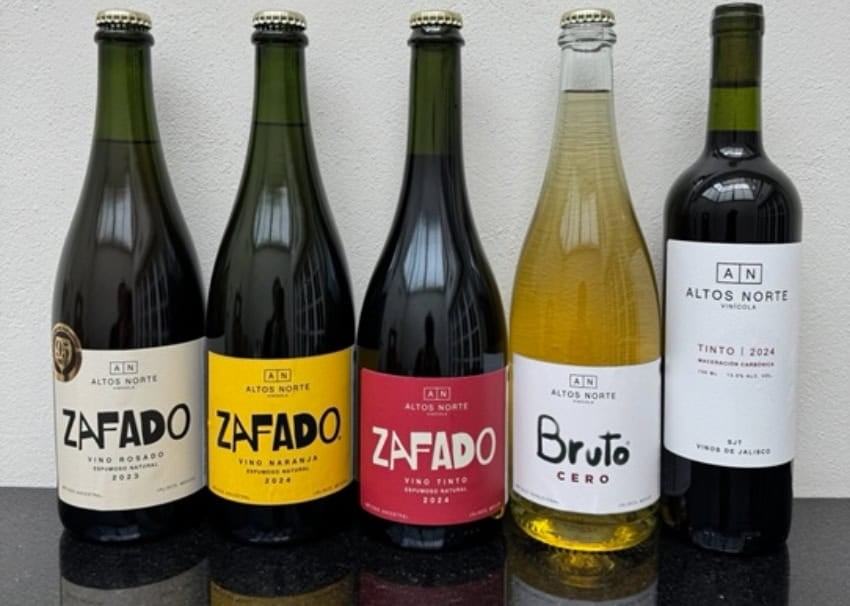
Altos Norte’s other line, Bruto, a dry sparkling brut, involves a first fermentation with wild yeasts, with the wine remaining in stainless steel tanks until it is finished. Afterward, technical tests are done to see if the fermentation is complete, and selected neutral yeasts (which do not add flavor) are added to generate bubbles for the sparkling wine. The second fermentation process then begins, and when it reaches a certain density, only then are the wines bottled. Those bottles are left for several months in cages, laid horizontally so that the wine remains in contact with its lees and yeast.
After several months, the bottles are shaken so that all the sediment goes to the top of the bottle. They remain like this for several weeks, with workers shaking the bottles two or three more times to break up the sediment until it turns to powder. After a while, the bottles are cooled, the neck is frozen, and the disgorging process is carried out to expel the lees, leaving a clean wine. No carbonated bubbles are added.
This wine is an excellent aperitif, ideal for seafood, shellfish, semi-mature cheeses and Iberian ham.
Good labor practices and environmental awareness
The philosophy that drives Altos Norte is one of care: for the land, for its wines and for its workers, whom the family recognizes make possible their vineyard’s incredible line of wines. The vineyard guarantees its workers consistent work throughout the year, and many live on the estate — a safe place to live that is just a few steps from where they work.
Work in the vineyard is also well distributed among the family members: Hernández is in charge of public relations and sales. The family’s two children, Catalina and José Manuel, manage social media. And, as mentioned above, José Miguel is a trained winemaker. Each year, as the harvest date approaches, Vega makes decisions about which wines he will produce based on the grapes, acidity, ripeness, Brix degrees, etc.
The vineyard also takes care to waste as little as possible: The residues from the winemaking process, the pomace and skins, are reused — some as compost and the best of the pomace made into a distillate known as Piqueta, or Piq Nat in French. The distillate is a fermented pomace made from cabernet sauvignon and Malbec grapes, with an alcohol content of 7%.
A growing future for Jalisco wines
The winery has won some of the most wine industry’s most prestigious awards, including at the Concours Mondial de Bruxelles wine competition in Brussels. It’s always done well at competitions in Mexico. Nor is Altos Norte resting on its laurels. By 2025, the winery had produced its first cider, which we recently discussed in our special report on cider in Mexico.
And Altos Norte is by no means the only winemaker to check out in the state of Jalisco, where viticulture has become so successful that State Secretary of Tourism Michelle Fridman Hirsch recently published a call for tenders to initiate wine routes in the state.
So the next time you’re looking for something new, look westward to Altos Norte and to the growing number of Jalisco’s other great vineyards for your next great glass of wine.
¡Salud!
Diana Serratos studied at Universidad Nacional Autónoma de México (UNAM) and UNCUYO in Mendoza, Argentina, where she lived for over 15 years. She specializes in wines and beverages, teaching aspiring sommeliers at several universities. She conducts courses, tastings and specialized training.