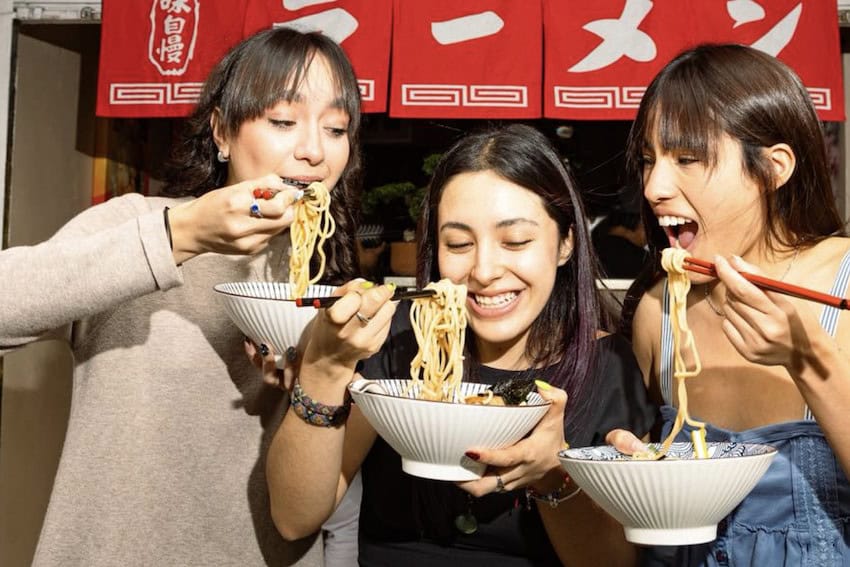
On a rainy weeknight in Xalapa, I found myself huddled inside a narrow, izakaya-style eatery across from a jungly patch of tropical trees on the corner of a busy, potholed intersection. No less than 15 other patrons were either seated along the cramped, six-person counter, or eagerly awaited their turn outside to take up a stool and to order what we all came here for: delicious, soul-nourishing ramen at one of my favorite ramenerias.
RMN Xalapa is among the best I’ve found in Mexico. As someone who grew up in the San Francisco Bay Area (a region in California known for its diverse Asian offerings, and which is a West Coast hub of Japanese culture and food) and who has traveled to Tokyo more than once (where the ramen is, as expected, mindblowingly incredible and abundant), I can honestly say that in this small, misty corner of the Veracruz mountains, I’ve found ramen that is more than worthwhile. It’s totally legit. And, somehow, it’s all run by a miniscule team of three Mexican cooks.
View this post on Instagram
Though everyone always thinks of tacos and tortas being slung throughout Mexico’s markets and food stalls, ramen has elevated itself into one of the most popular dishes in la republica mexicana, an unavoidable staple in Mexican culinary circles that cannot be avoided if you know where to look.
Here are the facts: Mexico is the second largest consumer of ramen in Latin America — behind only Brazil, a nation that is both larger and has a significantly more visible Japanese population than Mexico. Not to be outdone, Mexico has firmly established itself as the noodly epicenter of fusion ramen, taking the noodle-and-broth classic and adding an appropriately Mexicanized flair with birria ramen, elote ramen, carnitas ramen, and more.

It’s not simply ramen that Mexicans love about the Land of the Rising Sun; the connection between Mexico and Japan has historically been amicable, if not endearing, for generations. On the Japanese side, you’ll find entire subcommunities dedicated to Mexican and Mexican American cultural trends, from professional wrestling icons (see: the Japanese lucha libre legend in Mexico, Último Dragón) all the way down to Japan’s street culture (cholo fashion, lowriders, Chicano oldies). And you can’t walk a few blocks in any of Mexico’s biggest cities, or smallest pueblos, without seeing some vestige of sushi, ramen, anime, or other Japanese pop culture (my Mexican grandmother, rest in peace, couldn’t go a day without eating her beloved cacahuates japonés for as long as I can remember).
These examples of intercultural permeation, and the rich flavors that have resulted from more than a century of exchange between the two, can perhaps be best understood through the ramen scene that is currently flourishing, which is more visible and accessible than ever. Make no mistake: we are living in the golden age of Japanese ramen in Mexico. And I, for one, am totally here for it.
The origins of Japanese immigrants — and their foods
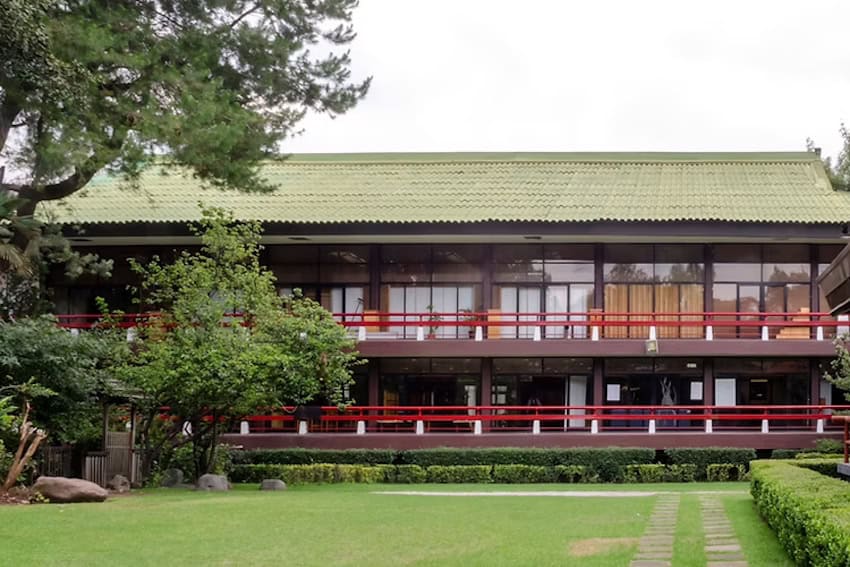
The earliest Japanese-owned restaurant in Mexico, Nichiboku Kaikan, opened in 1960 in Mexico City. Inaugurated on the southern end of the capital as part of the Asociación México-Japón cultural center (which now includes Mexico’s largest Museum of Manga, as well as a Japanese garden and a language school), it served classic Japanese food and was financially supplemented by the Mexican government, which aided Japanese immigrants post-World War II.
You have to go further back to 1888 when the two nations first established their diplomatic alliance to get to the root of this unlikely connection. Back then, Mexico was one of the first countries to recognize Japan’s sovereignty, leading to a strong relationship that has since remained. Soon after, Japanese immigrants arrived in Chiapas with the hopes of establishing a community there known as the “Enomoto Colony.”
But it wasn’t until a century after Japanese immigrants reached Mexico — much later, in the 1980s — that Mexico’s love of Japanese food became a cultural zeitgeist.
The rise of ramen throughout Mexico
Instant ramen changed everything. Specifically, Maruchan, the Toyo Suisan food company, which came to Mexico in the 80s. As reported by Japanese Mexican journalist Isami Romero, the book “Maruchan wa naze Mekishiko no kokumin-shoku ni natta no ka?” (Why Maruchan Became a National Dish of Mexico) outlines a dubious history of Maruchan’s arrival south of the border: “a Mexican man working in the United States brought the first Maruchan to Mexico when he returned to his homeland.” Though unproven, the brand undoubtedly established itself as an affordable go-to food option for Mexican families, and can be found in even the most remote parts of the country nowadays. Part of that is due to the Mexican government’s supply of Maruchan instant noodles in its Diconsa stores for rural Mexican populations.
There is no definitive record of when the first ramen shop in Mexico opened its doors, though. From memory, I don’t remember eating anything besides instant ramen noodles in Mexico as a kid visiting from California. Not until recently can I think of a time in Veracruz when one of my relatives invited me to an authentic ramen shop. It’s not until the past 15 years or so that authentic Japanese ramen has begun to spring up, with Mexican innovations abounding. In Xalapa alone, I can think of about five ramen shops off the top of my head, all within a few minutes drive of one another (and it seems that every week, another one opens).
Credited as being a pioneer in Mexico’s contemporary ramen circuit, Yamasan Ramen — which was founded by Japanese chef Shinichiro Nagata in 2012, and is now a national chain with branches in CMDX, Monterrey and Querétaro — represents the vanguard for ramen that isn’t served from a styrofoam cup with steaming water and powdered seasoning. I ate at their location in Condesa: the ramen bowls are flavorful, the venue is spacious and neon-lit, and they have an impressive variety of Japanese lagers and sake to go along with each massive portion.
In 2015, birria ramen — the drowning of Japanese ramen noodles in the rich, meaty broth of birria, an invention that has gone globally viral — was conceived by chef Antonio de Livier of Ánimo Ay Caldos! in CDMX. The concoction set the bar high for Mexican ramen lovers, which, to this day — a full decade later — has inspired other forms of ramen locuras.
View this post on Instagram
Down in Oaxaca City, Mexican chef Ricardo Arellano has experimented with chilacayote ramen, which Eater described as “translucent noodles made out of the Mexican pumpkin and served in a seaweed broth and topped with edible flowers.” At Mexico City’s Fideo Gordo, you can find ramen prepared with salsa verde and jalapeños. From the Los Mochis elote cart in Sinaloa, you can get ramen (albeit of the instant variety) mixed in with the all-time favorite Mexican corn snack.
There are now plenteous forms of ramen: Hokkaido-style at Ramen Ichi in Roma Norte (an actual Hokkaido noodle house that has now branched out to Mexico), or picante tan tan ramen at Deigo Ramen, a 24/7 ramen bar with various locations in Mexico’s ramen-saturated national capital.
If ever there was a time to slurp down a hearty serving of Japanese noodles in Mexico, this is it.
Alan Chazaro is the author of “This Is Not a Frank Ocean Cover Album,” “Piñata Theory” and “Notes From the Eastern Span of the Bay Bridge” (Ghost City Press, 2021). He is a graduate of June Jordan’s Poetry for the People program at UC Berkeley and a former Lawrence Ferlinghetti Fellow at the University of San Francisco. His writing can be found in GQ, NPR, The Guardian, L.A. Times and more. Originally from the San Francisco Bay Area, he is currently based in Veracruz.