As a longtime writer here at Mexico News Daily, I’ve often been contacted by readers interested in Xalapa. Sometimes they make trips here and want to talk. I like meeting new people, so I usually oblige.
During the pandemic, I met with a family that came from one of those Nordic countries. I don’t remember which, but you know the type — generous welfare state, police that don’t carry guns, no-nonsense sex education that starts in kindergarten.
At one point, we began discussing wages in Mexico.
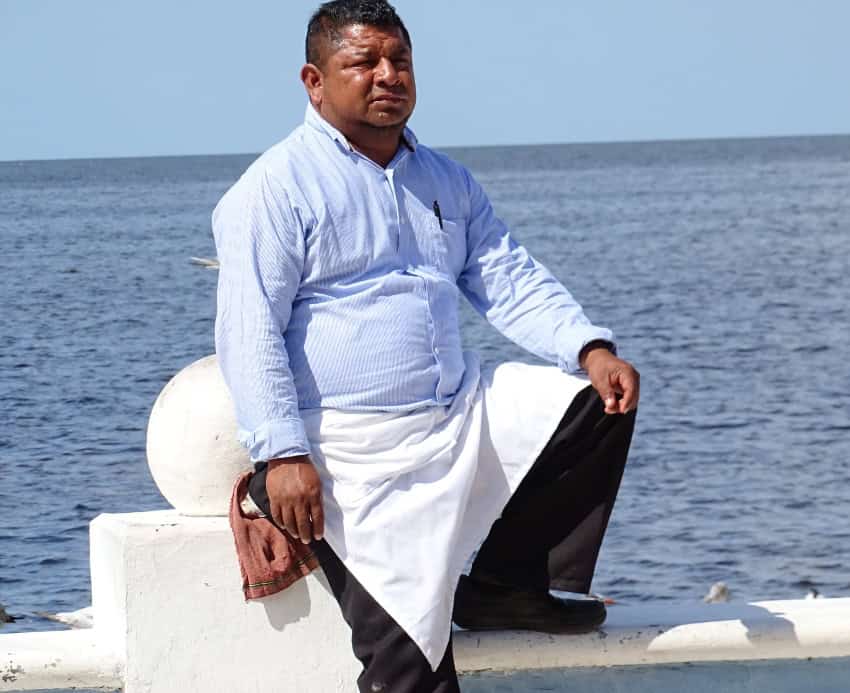
“What?” the wife asked incredulously when I told her how much waiters make (and how ungenerous most tips were). “But people can’t live like that, it makes them depressed!”
I often think about that conversation because of her choice of words: “It makes them depressed.” As if that were reason enough to renounce an entire system.
The school-to-job pipeline in Mexico
The Mexican economy, as Mexico News Daily CEO Travis Bembenek wrote, is at a bit of a standstill.
Part of this, he argues, is because the Mexican education system simply hasn’t kept up. Okay, I’ll buy that. It’s true, our numbers are not fantastic.

However, I really think we’re in a bit of a sad loop when it comes to the school-job pipeline.
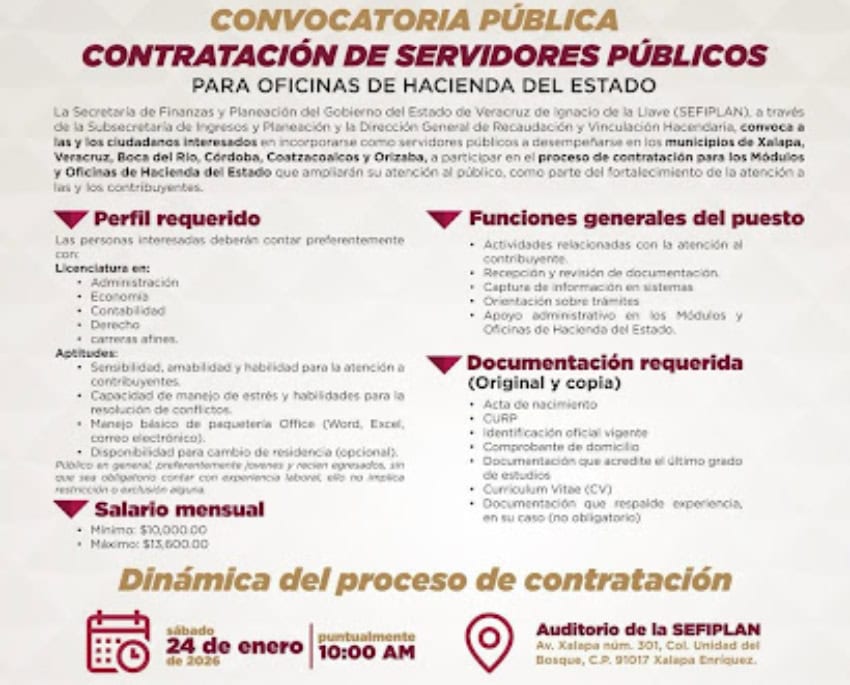
It’s not simply an issue of schools not being good enough. Take, for example, this advertisement for civil service workers at the Veracruz tax office, known in Mexico as the Hacienda, that appeared on Facebook recently.
It’s for open positions as civil servants. If you live in Xalapa or the other cities in Veracruz mentioned in the ad, any hires for these positions will be processing your tax documents. The educational requirement is a college degree in administration, finance or something similar. The salary they’re offering for this full-time job?
Between 10,000 pesos (US $580) and 13,600 pesos (US $788) a month.
A month.
While a few of the comments under the post were by people earnestly interested, most were of ridicule.
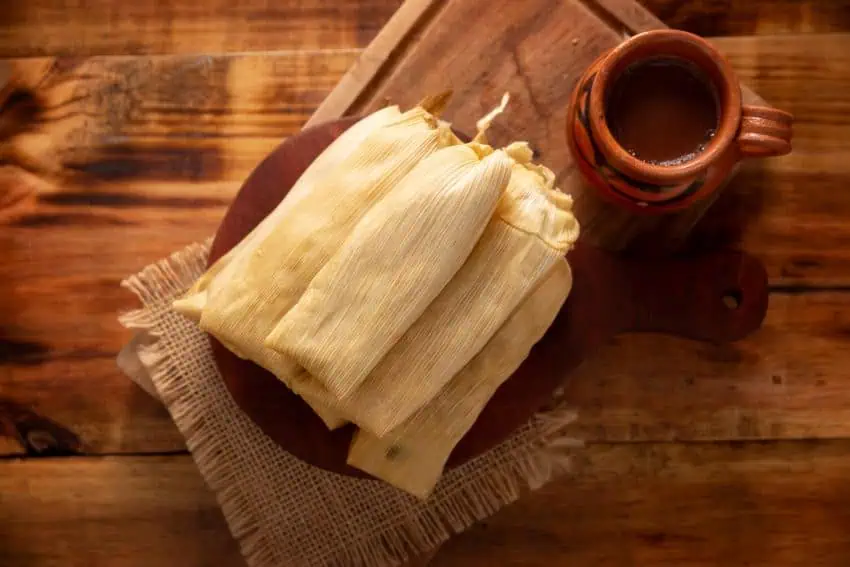
“I make more than that selling tamales on the street!” one said.
“Come on, you can make that much at the Oxxo with no degree at all!” said another.
A few government workers chimed in, too:
“People think you make a bunch of money in the government, but these are truly the wages they pay!”
The disconnect between education and pay
I’ve written about this several times before: the disconnect in Mexico between educational attainment and actual monetary success. So many jobs — even those requiring college degrees and requiring full-time hours — pay little more than 20,000 pesos a month. Many pay, as in the example above, much, much less. With today’s terrifying exchange rate, 20,000 pesos is only a little over US $1,100.
I don’t think I need to tell you that with today’s current costs, 20,000 pesos is not a lot of money; half of that is especially not a lot of money. And while I applaud the government’s increase of the minimum wage, I would certainly not classify anyone making the 340 pesos a day as “middle class.” Yes, they can afford the basic food basket (canasta básica). Does it matter that they likely can’t afford a home in which to prepare the items in that basket?
Mexicans, of course, figure it out — as they always have. They team up, they share resources. They live together. A great number of them work abroad in order to send home remittances.
Remittances are how my current partner’s family survived. He and his siblings didn’t grow up in luxury, by any means, but they had their basic needs met and were able to get an education, at least. The price of all that, though, was steep — it’s been over 20 years since my partner has seen his father, who is still working abroad. Because at what point can one say, “Oh, we don’t need to earn money to meet our expenses anymore”?
Does education in Mexico matter?
So when young people — especially those without upper-class connections — are looking around and thinking about what they want to do with their lives, it’s not hard to see how a few might come to a “what for?” type of conclusion when it comes to advanced schooling.
Many have seen family members give it their all: try hard, do well in school and go to college. And then, if they’re lucky, they might get offered a job where half of their take-home pay will go to rent if they want to live alone.
As things are, though, living alone is not a reasonable expectation. Fine, you might say. Who wants to live alone? Aren’t Mexicans all about the family?
Well, yes. But…shouldn’t one be able to live alone if they’re working a full-time job that requires a college degree?
The fact that you can’t count on an employer to pay you enough to live, even after going to the trouble of getting a long education, sure is depressing. What a disconnect between what even professional jobs pay and what things cost.
Entrepreneurship and starting small businesses
A better bet for many, especially if there’s no family member abroad to supplement one’s income, is to start a small business. Maybe you’ve got a killer tamal or torta recipe. Maybe you’ve got a way to obtain and sell “paca” clothes — those used, imported clothes sold for cheap at a market or tianguis. Maybe you’ve got a taxi, or a motorcycle that you can use to make deliveries — with a major win for workers recently that brought them into the formal sector. Alas, things are not easy, especially for small businesses. Unfortunately, the costs of starting a business formally are downright exorbitant for the average Mexican. Many, I’m sure, would love to be part of the formal economy that makes up only about half of all jobs in Mexico.
As an example, my partner and I officially “constituted” a business last year — artisanal beer. To officially register the name, it was 5,000 pesos. To get the paperwork done, it was 20,000 pesos. And to open a bank account in the business’ name, we had to maintain a minimum of 30,000 pesos in there for the first three months. Don’t even ask me about interest rates for business loans — you’ll literally make me cry. And hiring employees? Add up all the taxes and holiday pay that’s part of the package, and you’re looking at their base salary plus between 35% and 50% per employee.
The conclusion is clear: you can’t start a business without having quite a bit of money to invest already — even if the business is just you.
In my state of Veracruz, the government is trying to make more money from businesses. Especially for restaurants that sell alcohol, pricey certifications galore are now needed. We all also need new license plates this year. The old ones are fine, but the state needs money, apparently.
Now, I don’t think the ruling Morena party is “anti-business,” but I do think it doesn’t have a good grasp of how hard it is to start something around here. Many of the Morena politicians, after all, come from the upper middle classes. And if you’ve never lived paycheck to paycheck, it’s hard to explain what it’s like to not have a pool of savings to pull from.
All that said, the current government seems to think that all businesses, great and small, have gigantic profits they can easily pay lots of taxes from. This is not the case.
The seeds of today
If they really want the economy — and the tax base — to grow, a lot of people need a lot of help. The Chedrauis don’t need help, nor does Liverpool. But our beer business? A new music studio? A café with adorable cats in it? Give them a few years to get off the ground with some tax breaks, Morena. Maybe even some government loans that don’t charge 80% interest.
The seeds you help nurture today will be the money trees of tomorrow.
And maybe those businesses will actually be able to pay decent wages by then.
Sarah DeVries is a writer and translator based in Xalapa, Veracruz. She can be reached through her website, sarahedevries.substack.com.