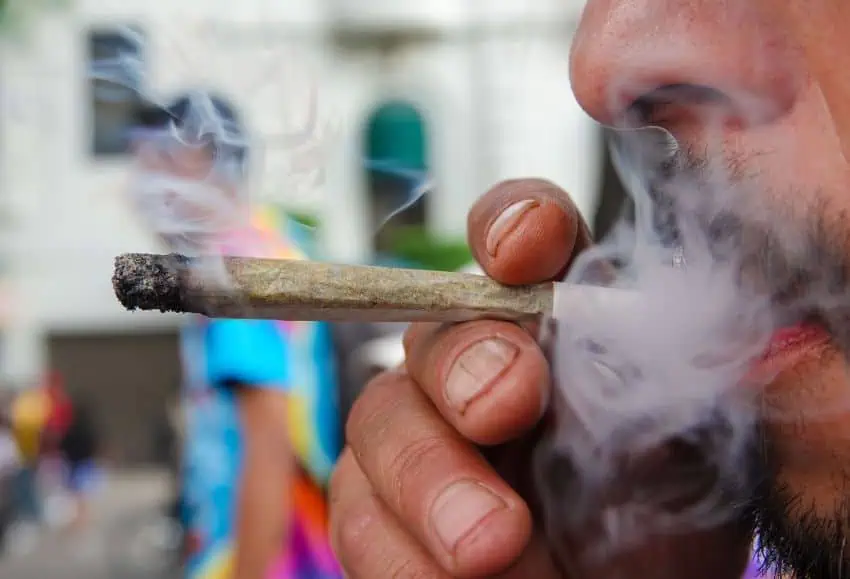
Three major cannabis consumption areas in central Mexico City plazas were relocated this week to new government-designated “420 zones,” igniting a fresh wave of debate, protests and finger-pointing as the capital moves to ready its streets for the 2026 FIFA men’s World Cup.
The uprootings, undertaken on direct order from Mayor Clara Brugada, came three years after pro-cannabis activists “liberated” seven marijuana smoking zones in Mexico City.
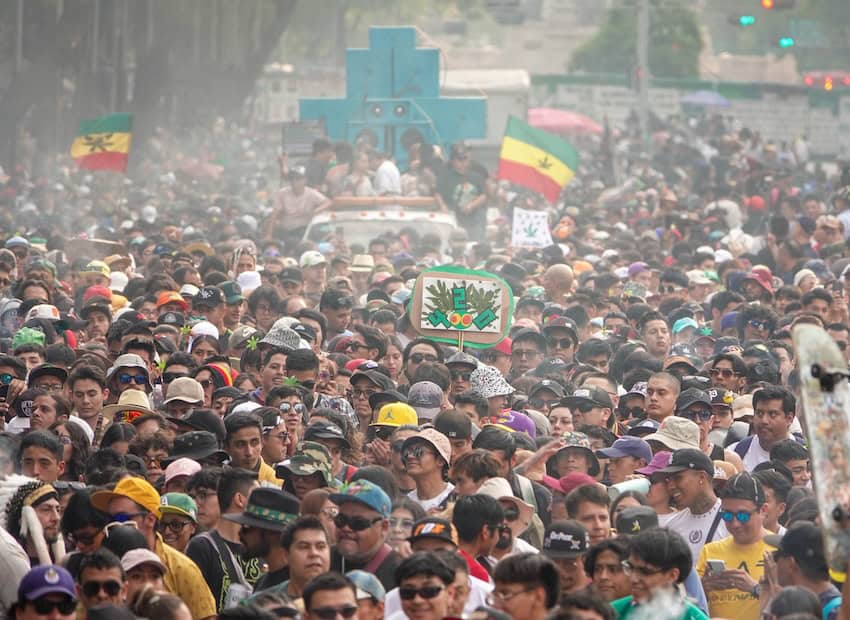
Mexico City authorities — citing complaints about crime, on-site marijuana sales and violence — cleared out consumption camps from Plaza de la Información outside the busy Hidalgo Metro station, the Estela de Luz monument at the entrance to Chapultepec Park, and outside of the Museum of Memory and Tolerance in the city center.
In their place, officials created three state-sanctioned “420 zones” for usage: Plaza de la Concepción in the Historic Center, the Simón Bolívar Monument on Paseo de la Reforma in the Guerrero neighborhood, and the José Saramago Reading Plaza adjacent to Chapultepec Park.
Although the legality of cannabis and consumption in Mexico remains shrouded in uncertainty, each new tolerance space comes with firm rules:
- Cannabis can be consumed only between 8 a.m. and 8 p.m.
- Only the legal amount established for personal consumption is permitted.
- Users are limited to 40 minutes per visit.
- Consumption of alcohol or other substances is not permitted.
- The buying and selling of cannabis is not permitted.
- Taking photographs or recording video is prohibited within the perimeter.
- Violence and harassment will not be tolerated.
- Government staff and police will monitor each site throughout the day to keep order and enforce regulations.
Authorities said the new locations were selected in consultation with advocacy groups like Comuna 420 and Siembra Cultura, and were intended to keep consumption away from high-traffic spots and residential neighborhoods.
But tension simmered as soon as the plan rolled out.

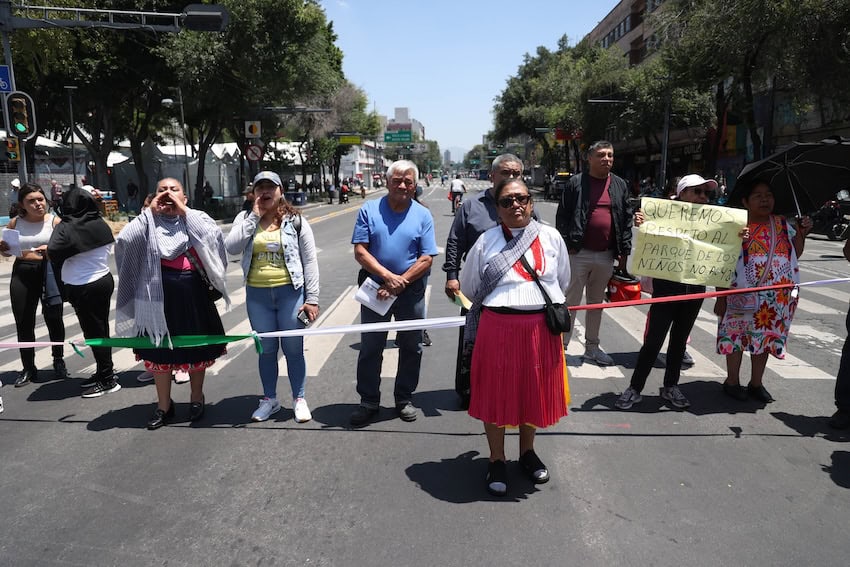
“We don’t want to negotiate; we want them to be relocated,” said Óscar Ruiz, a neighborhood manager in Guerrero, who is spearheading a petition for complete removal of the Simón Bolívar zone.
Some parents said they worry about children being exposed to drug use, especially near schools and public buildings.
“Seeing them here, [children] will think it’s OK to be lazy, doing nothing all day,” said a 45-year-old mother of two who gave her name only as Vianey.
“It’s a mockery that they’re in front of the Attorney General’s Office,” she added, referring to the smoking zone at the Simón Bolívar monument.
“You can’t even walk around in peace anymore,” said María Elena García, who lives near the new Plaza de la Concepción smoking area. “The smell is unbearable, there are people selling stolen goods and even fighting among themselves. This is no longer a safe place.”
Activists, however, defend the new zones as an overdue step toward destigmatizing cannabis use.
“We have to get rid of the label that all marijuana users are criminals,” said “Popeye,” a Comuna 420 organizer at the Simón Bolívar site.
Zona de tolerancia cannabica. Sancionado por el @GobCDMX. Con esto la ciudad da un paso adelante en política de drogas. Falta mucho, claro. Pero esto es un avance, cómo no. #cannabis #THC #Políticadedrogas #ReduccióndeDaños pic.twitter.com/b5VUjO5CTs
— Rubén Diazconti (@RubenDiazconti) August 4, 2025
He said the new roundabout was picked to keep smoke and crowds away from main thoroughfares and homes.
At Plaza de la Concepción, Diana, a member of the Daughters of Cannabis collective, said activists have faced open hostility, including threats from residents.
“They thought it was going to be a permanent smoke-out,” Diana said. “They also didn’t know government personnel would be there. What people believe about us is just a stigma.”
While the city is promoting the zones as a solution, some activists view the move as image-polishing for next summer’s World Cup, which will be co-hosted by the United States, Mexico and Canada.
“It’s extremely discriminatory that instead of legislating and changing the laws for marijuana users, they prefer to move us or hide us,” Diana said, calling the relocation “an attempt to whitewash the city.”
Mexico’s Supreme Court ruled prohibition of recreational cannabis unconstitutional in 2021, yet a full regulatory framework has yet to be implemented.
For now, the new city-run 420 zones (named for a common slang term of cannabis users) operate as a live experiment, monitored by police and watched closely by neighbors.
Officials said the new rules and strict oversight may be updated in coming weeks as the city evaluates the program.
With reports from El Universal and El País