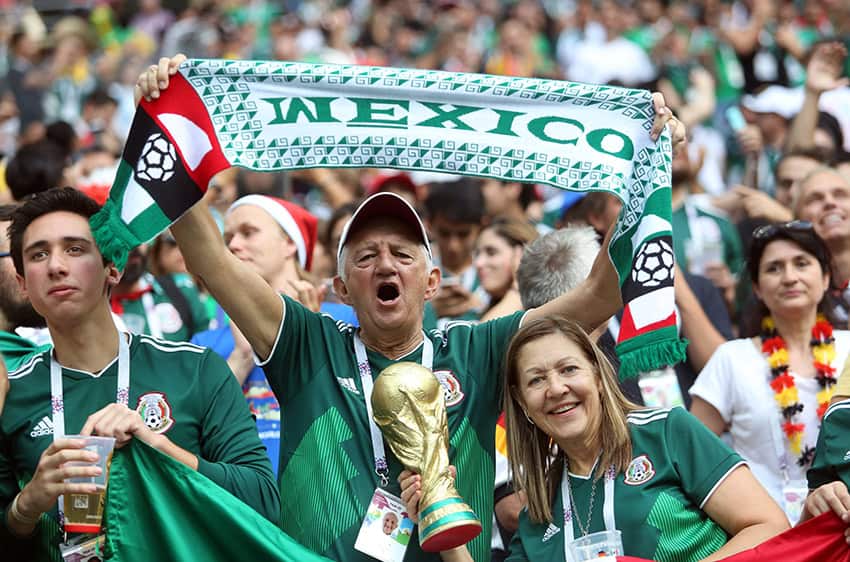
With World Cup opening day matches set to kick off in Mexico City and Guadalajara on June 11, a new study warns that young Mexicans may not be glued to every minute of the action.
The Mexican Internet Association, working with Offerwise of the Norstat group, found that 58% of Mexican adult internet users surveyed have a lot or some interest in following the tournament, with enthusiasm peaking among Generation X at 61%.

(Unsplash)
But 24% of respondents report little interest and 18% say they have none.
Zero interest is even higher among younger adults: 21% of Gen Z respondents and 20% of millennials say they have no interest in following the 2026 World Cup at all.
In general, Gen Xers are now in their late 40s and 50s, millennials are roughly 30 to early 40s, and members of Gen Z (for this survey) are 18-year-olds through 20-somethings.
Though the survey spotlights those three generations, it is based on 1,200 interviews of 18-and-older men and women — including baby boomers — across all socioeconomic levels in urban Mexico.
The survey finds that enthusiasm for El Tri, the Mexican national team, is strongest among Gen X, where roughly seven in 10 respondents express high or moderate interest. However, only 24% of the Gen Z respondents say they are keen to follow El Tri.

Overall, 62% of respondents say they have a lot or some interest in following the national team.
“The challenge lies in connecting with younger generations, who experience football more through digital means than through traditional formats,” said Magda Orta, business director at Offerwise.
The study underscores how the sports viewing experience is shifting.
Free-to-air TV remains the top choice, with 50% planning to watch there, but social networks are close behind at 43%, ahead of streaming internet platforms (36%) and pay TV (32%).
More than a quarter of users say they will constantly use their phone or another high-tech device during matches, rising to 30% among millennials, mostly to check social media, chat, order food, or scroll memes and stats.
Mexico’s trend sits within a broader global shake-up in fandom.
A Global Fan Study by audience-insights firm GWI, based on data from over 50 markets, finds 74% of sports fans now use social media to watch or follow sports and 61% consume highlights and clips.
Among Gen Z, 72% use social platforms for following sports and often jump across five or more apps a day.
In Mexico, one example of this shift is Layvtime, a digital platform on YouTube and social media that turns key plays and moments into the main event instead of the full 90 minutes.
Launched last year by ex‑El Tri defender Miguel Layún, it also streams selected Liga MX matches and other events free. Its younger, social‑media‑savvy crew breaks down key plays with casual, meme‑driven analysis — closer to a creator stream than to old-school TV play‑by‑play.
With reports from EFE and Globe News Wire