As I was writing a piece on the best vintage libraries in Mexico City, I couldn’t help but wander around Avenida Ámsterdam, in the heart of the Hipódromo neighborhood, to walk its elliptical, tree-lined pedestrian walking path: I wanted to catch a glimpse of the long windowpanes, heavy ironwork and organic forms mixed with geometric patterns characteristic of the most beautiful Art Deco buildings to be found in Mexico City.
As is the case in the Roma area, Mexico City’s Hipódromo neighborhood, carved out of the older La Condesa neighborhood, is one of the inheritors of the Art Deco architectural movement in Mexico City.
Some of the best examples of this design style still stand in Hipódromo, even after withstanding some of the most devastating earthquakes the capital has ever experienced. Here are just a few of the highlights.
Edificio Hipódromo
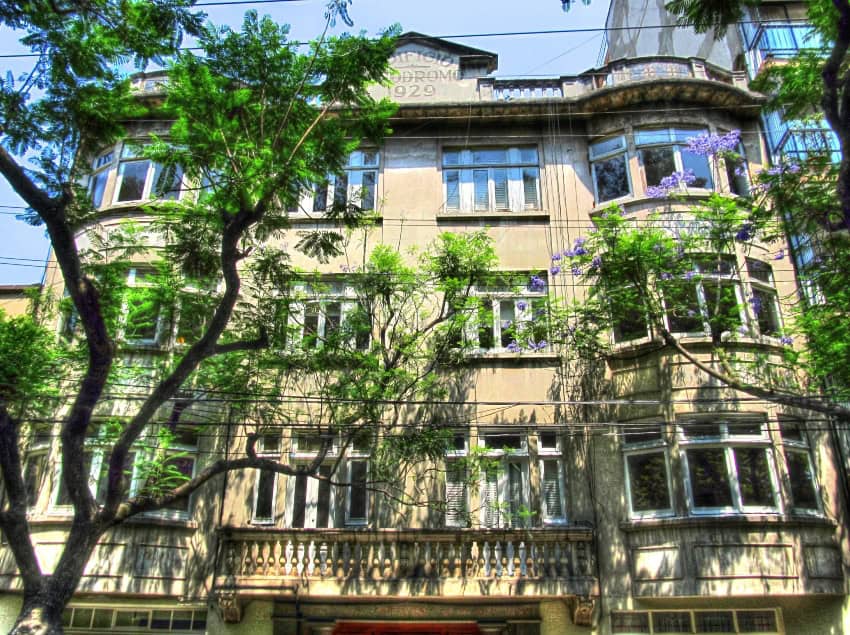
The Hipódromo neighborhood still follows its original design: a racing track. Yes! Present-day Avenida Ámsterdam saw horses run for first place for over a decade, according to the Museo del Objeto’s (MODO) records.
Founded by the Mexican Jockey Club in 1910 as entertainment for the city’s elite, who preferred more European-style sporting events to the popular bullfighting events, the Hipódromo de la Condesa racetrack only lasted 15 years, ceasing to function in 1925. The area soon became purely residential, with Parque Mexico being built on the racetrack site in 1927 and residential lots popping up for sale around it in the years following.
This new neighborhood within Condesa retained its original name, however,
Hipódromo, now often still referred to by people as Hipódromo Condesa.

The Hipódromo Building on Avenida México, an apartment building constructed in 1929 as part of the change to a residential neighborhood, remains one of the most beautiful examples of Art Deco architecture in this area, featuring broad windowpanes, cantera stone balconies on the first floor, and a marble lobby.
- Where: Avenida México 87, Hipódromo, Cuauhtémoc.
Edificio Tehuacán
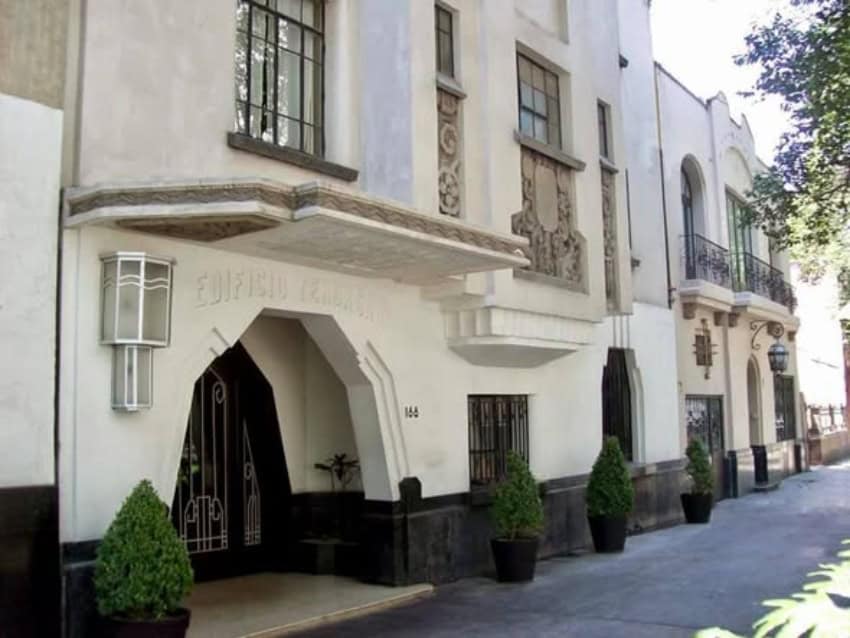
Built in 1937 by Mexican architect Ernesto Ignacio Buenrostro — to whom the neighborhood owes much of its visual identity — Edificio Tehuacán is one of Mexico City’s Art Deco jewels.
This building is probably as old as the neighborhood itself: Originally a 14-story apartment building, its facade features typical Art Deco-style geometric patterns. With its name written on its marquee, its main entrance is framed by two matching stylistic iron lamps of the period.
Today, Edificio Tehuacán is open to the public as the Hippodrome Hotel, where visitors can enjoy its world-class suites and terraces.
- Where: Avenida México 188, Hipódromo, Cuauhtémoc.
Edificio San Martín
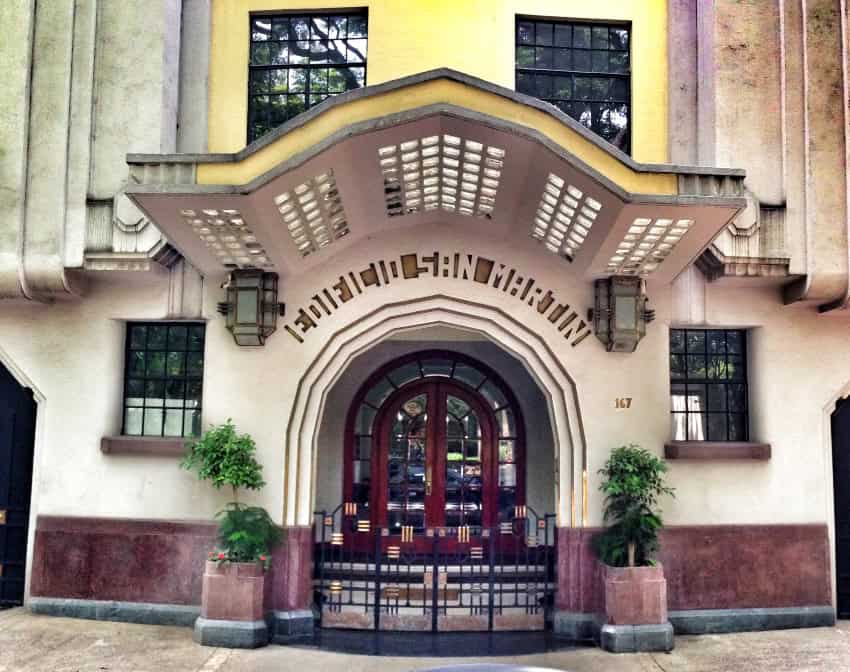
Also built by Ernesto Ignacio Buenrostro, the apartment building Edificio San Martín displays a seemingly perfect symmetry, which particularly stands out when you look at its stunning main entrance. With concrete reliefs and heavy ironwork on its exterior lamps, the original iron canopy still covers the main entrance.
Built in 1931, the building fell into disuse in the 1940s. It underwent extensive renovation and restoration in the modern era, finished in 1999. To date, it remains an apartment building, housing roughly 216 very lucky families.
- Where: Avenida México 167, Hipódromo, Cuauhtémoc.
Plaza Popocatépetl
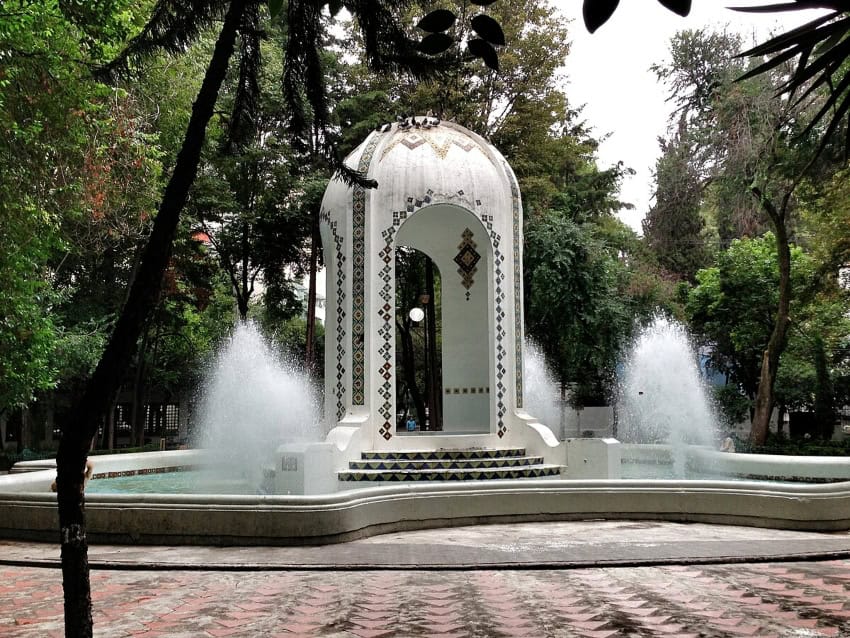
Also known as “Glorieta Popocatépetl,” this plaza, built in 1927, is located on the northern curve of the old Hipódromo de la Condesa. Although this is not exactly a building, it certainly is one of the emblematic examples of Mexico City’s Art Deco movement.
Originally designed as a fountain, passersby can enjoy it today as a tiny park, as it has been left dry for over a century, only coming alive with water on special occasions. Delightfully decorated with Talavera mosaics from Puebla, its centerpiece is also a testament to the late Symbolist movement in Mexico.
- Where: Plaza Popocatépetl, Hipódromo, Cuauhtémoc.
Andrea Fischer contributes to the features desk at Mexico News Daily. She has edited and written for National Geographic en Español and Muy Interesante México, and continues to be an advocate for anything that screams science. Or yoga. Or both.