The goal of our “From the Archive” series is to revisit popular stories that capture the unique history and culture of life in Mexico. This Andrea Fischer article — originally published in Sep. 2025 — is a perfect example, as it beautifully balances personal reminiscences with the historical legacy of some of Mexico City’s most important markets, while also pointing out the charms (and challenges) associated with visiting the iconic La Lagunilla market in Tepito.
I’ve had a very close relationship with Mexico City’s Historic Center ever since I was a child. From my first time at Mercado de Sonora, at the early age of 7, to learning how to ride a bike in Avenida Paseo de la Reforma, some of my dearest childhood memories were collected in the Cuauhtémoc borough.
When I was in middle school, my mother started teaching at Universidad del Claustro de Sor Juana, so I often accompanied her to work and took two-hour-long strolls to the Zócalo and back. On Sundays, after attending mass at some 17th-century Baroque church, my family never missed the chance to visit La Lagunilla market.
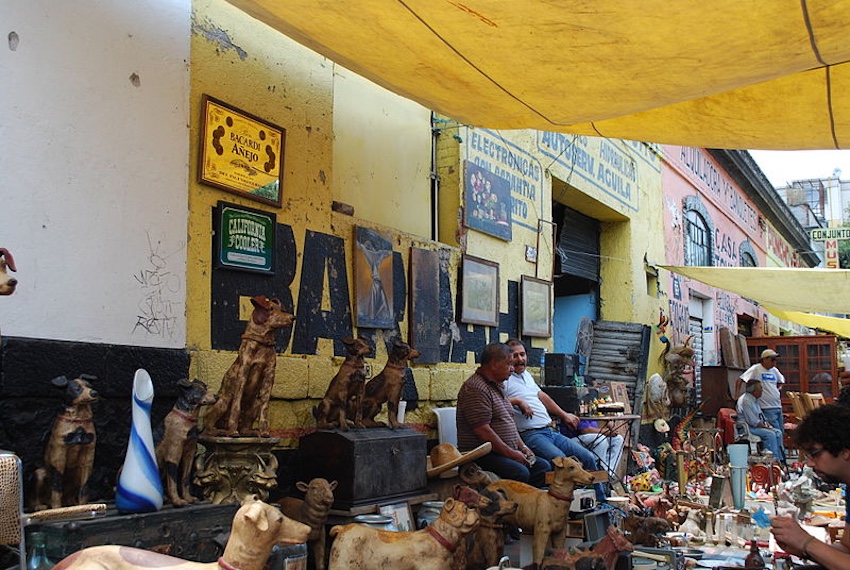
My father was rather reluctant to go, but he almost always gave in. Everyone falls for the mysterious charm of a market selling Bauhaus furniture and pieces by Rafael Coronel (potentially real, potentially fake) side-by-side, scattered on the street, eventually. But what exactly is La Lagunilla, and what can you find there?
What exactly is La Lagunilla market?
Present-day Mexico City was built on a lake — actually, on a set of five lakes. In pre-Columbian times, what is now known as the Valley of Mexico was divided into several ancient bodies of water: Texcoco, Chalco, Xochimilco, Xaltocan and Zumpango. Although “their boundaries were fluctuating and unstable,” notes the UNAM Institute of Historical Research, “they did not constitute a single body of water but rather distinct basins.” This is also why Mexico City is so prone to flooding during the rainy season.
La Lagunilla — or “little lake,” in Spanish — was a distinct, separate lake from the greater ones in the Valley of Mexico. That’s where she got her name, originally. Today, however, it could easily be described as the Mexican version of a flea market, or tianguis.
Tianguis and traditional Mexican markets have, indeed, been around for a long time, especially in the area. Archaeological remains show that the present-day Plaza de las Tres Culturas held one of the largest markets in Mesoamerica, dating back to 1337. La Lagunilla market, however, is not as ancient as the “little lake” after which it was named.

Underground ruins suggest La Lagunilla was established as a residential and working-class neighborhood around the 16th century. At that time, the area was “used to receive and unload canoes arriving at the giant and famous Tlatelolco market, just to the west (of the area).”
Once the Tlatelolco marketplace dissolved, merchants migrated to this place, right in the vicinity of their previous workplace. Impressively enough, La Lagunilla continued to receive merchant canoes and trajineras until the early 20th century. In the 1950s, however, the last lake was artificially dried up, and the ancient merchant families moved in to found their own residential neighborhood.
What can one find at La Lagunilla market?
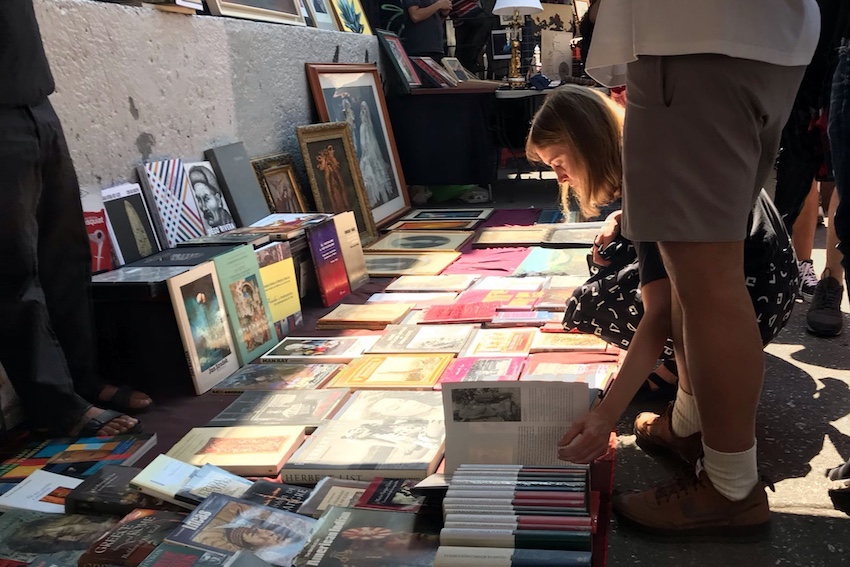
There is no official area or square footage that defines La Lagunilla. In fact, there are parts where the barrio bravo of Tepito and the antiques market not only adjoin, but also merge and blend into one another.
However, what locals often refer to as Mercado de la Lagunilla is bordered by Avenida Paseo de la Reforma, República del Perú and Tenochtitlán (of course, Tenochtitlán) streets, in the Colonia Centro neighborhood of Mexico City. On a Sunday morning, one can easily take the Reforma route on a bike and get there in 30 to 40 minutes. One block east of the monument to José de San Martín, on Paseo de la Reforma, you’ll find the heart of this Sunday flea market.
La Lagunilla encompasses over 5,000 stands, per La Jornada, with roughly 17,000 people earning a living from the Sunday market. On a regular weekend, merchants in the area receive 100,000 clients from Mexico City and abroad. What exactly can one find at the Sunday market? Honestly, the sky’s the limit.
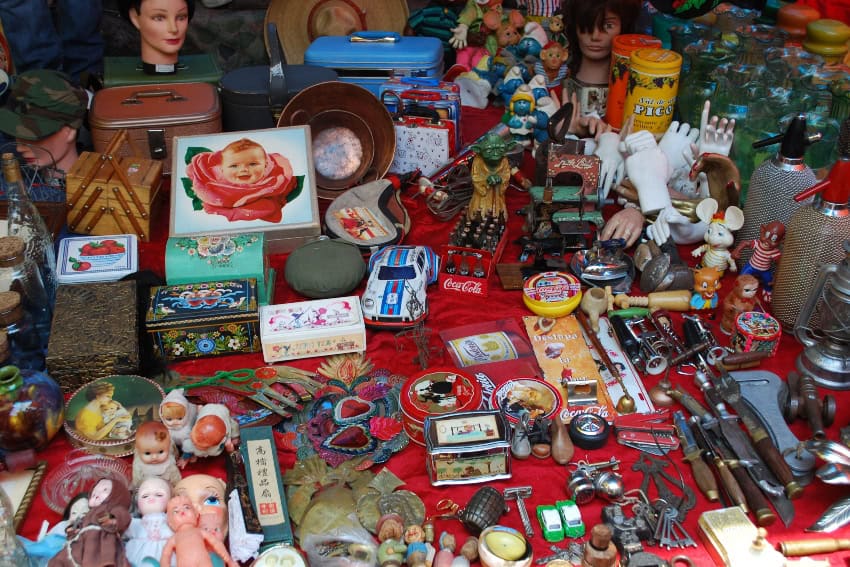
First edition books, lithographs allegedly signed by Leonora Carrington, LP records, Van Beuren desks and mid-century bedroom sets: all of this (and really, so much more) is available at La Lagunilla market. Everything and anything that screams antiquities is on sale. I even remember finding a Space Age dining room set, which my grandmother must have seen at a department store when that style was fashionable. You can also find Fender bass guitars and jukeboxes from the 1960s, if you’re lucky.
Is it safe to visit La Lagunilla market?
My mother used to say that even Mexico City natives are foreigners when it comes to Tepito and its neighboring areas. And it’s true. It is called barrio bravo for a reason, after all. It is also “common knowledge” that local merchants take care of their customers, especially on Sundays, when they can sell entire living room sets — or “authentic” Diego Rivera paintings — for 12,000 pesos on average.
There is no sugarcoating it: Tepito and the surrounding areas can be very dangerous. Although there has been a heavy tourism wave to the area in recent years, visitors should not arrive after dark. La Lagunilla market is really a sight to be seen, but try arriving before noon — to avoid the crowds — and leaving before dusk.
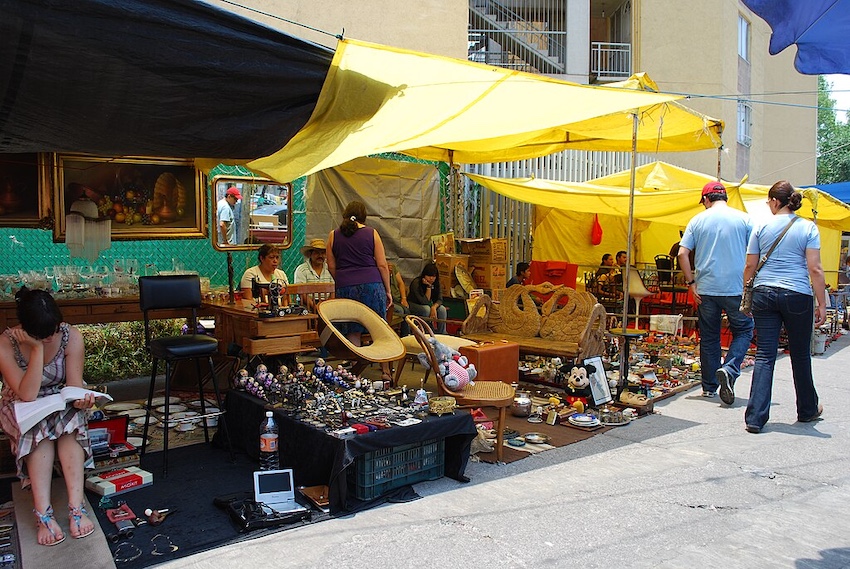
Also, try not to wear anything fancy. Sweatpants and a simple T-shirt will do. No jewelry, of course, and no iPhone 18 (or whatever this year’s model is). All of these warnings could suggest that the La Lagunilla market is not safe to visit.
This is not the case: again, merchants take care of their customers. However, to visit consciously and responsibly, avoid diving too deep into the Tepito area. This way, you’ll be able to focus on refurbishing your new CDMX apartment, or buying a magnificent Kodak Brownie camera that still works.
Andrea Fischer contributes to the features desk at Mexico News Daily. She has edited and written for National Geographic en Español and Muy Interesante México, and continues to be an advocate for anything that screams science. Or yoga. Or both.