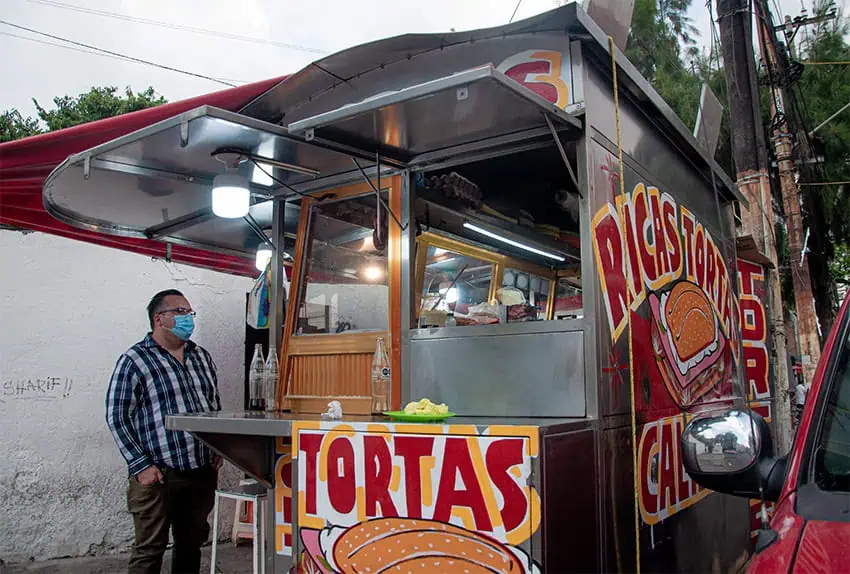
Make Cuauhtémoc colorful again.
That’s effectively what the new mayor of the borough that includes Mexico City’s historic center said Thursday when she announced that rótulos — colorful hand-painted signs — would return to Cuauhtémoc.
In 2022, Mayor Alessandra Rojo de la Vega’s predecessor, Sandra Cuevas, ordered the removal of rótulos on street stalls as part of a program ostensibly aimed at cleaning up and organizing Cuauhtémoc, which also includes neighborhoods such as Condesa, Roma, Santa María La Ribera and Juárez.
It was a controversial move that triggered a fierce backlash on social media, protests, and open defiance from some street stallholders, many of whom sell food such as tacos and tortas to hungry chilangos.
More than two years after Cuevas’ polarizing program began, Rojo offered an apology for the removal of rótulos and murals that added color to the streets and markets of Mexico City’s busiest borough.
“It’s time to make an institutional apology,” the mayor said Thursday outside the historic center’s San Juan-Arcos de Belén market, which now has a new rótulo.
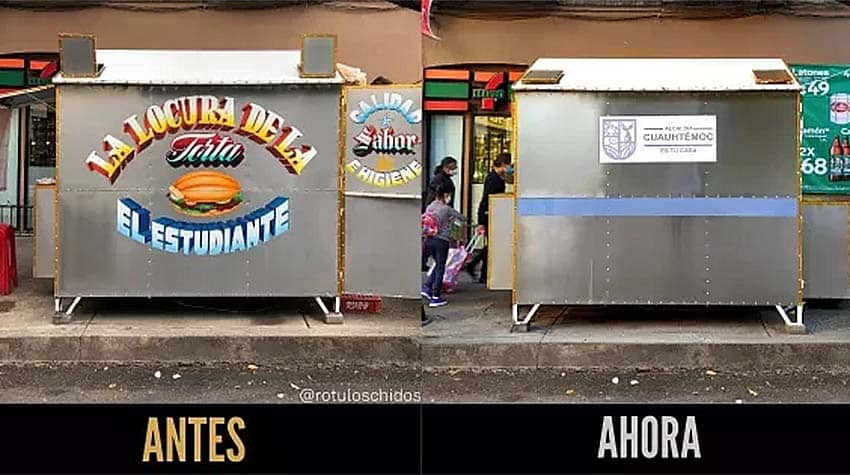
Speaking to rotulistas (rótulo painters), activists, reporters and others, Rojo described Cuevas’ order for rótulos to be removed as “an attempted murder against culture.”

The former mayor’s decision was taken “without studies, without social conscience” and deprived Cuauhtémoc-based rotulistas “of the right to work,” she said.
“… There was a violation of cultural rights … and civil society resisted, with a lot of strength and resilience. We don’t want more abuses of power,” Rojo said.
The mayor — elected in June on a PAN-PRI-PRD ticket — said that her government is seeking partnerships with the private sector to hire rotulistas so that vendors don’t have to cover the cost of making their stalls colorful again.
Llegó el gran día, en mi gobierno: 𝑳𝒐𝒔 𝒄𝒐𝒍𝒐𝒓𝒆𝒔 𝒓𝒆𝒈𝒓𝒆𝒔𝒂𝒏 𝒂 𝒍𝒂 𝑪𝒖𝒂𝒖𝒉𝒕𝒆́𝒎𝒐𝒄 después de años de prohibición, los rótulos volverán a las calles de nuestra alcaldía. Este es un triunfo para el arte popular y la identidad cultural urbana para llenar… pic.twitter.com/pfxS1cY0Od
— Alessandra Rojo de la Vega (@AlessandraRdlv) October 24, 2024
Vendors interested in having new signs painted on their stalls should express their interest at the Cuauhtémoc government headquarters, said Rojo, who has given the green light for rotulistas to recommence work in the borough.
“Today, finally, color is returning to Cuauhtémoc,” Rojo said.
The mayor conveyed the same message on social media, adding that “after years of prohibition, rótulos will return to the streets of our borough.”
“This is a triumph for popular art and urban cultural identity,” Rojo wrote.
“… We want a borough that celebrates the creativity of its people and recovers its identity, putting an end to policies that attempted to erase the essence of our neighborhoods. Art isn’t prohibited, it’s lived and shared,” she said.
With reports from Reforma, SDP Noticias and TV Azteca