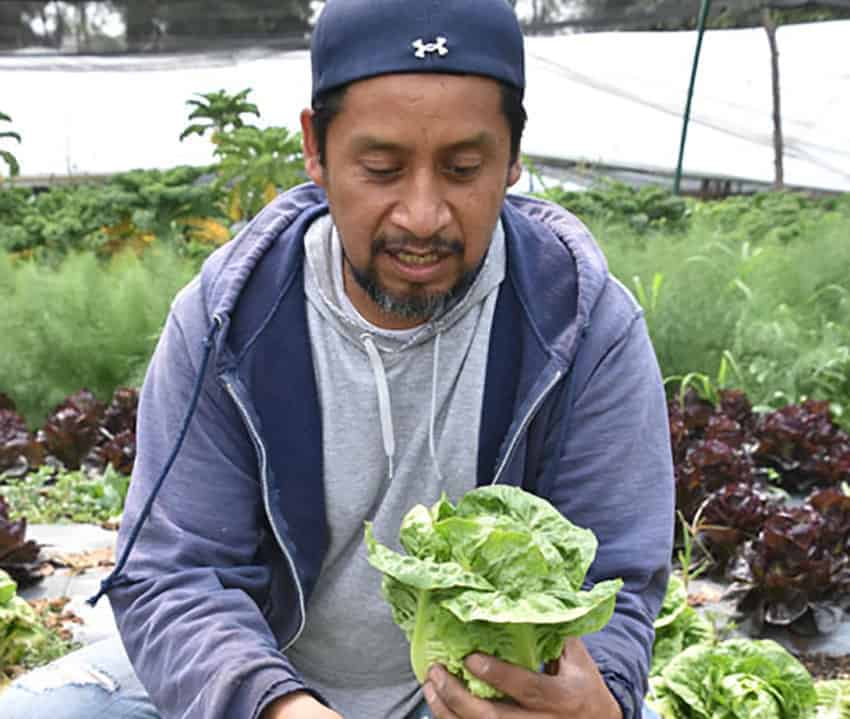
The chinampería, a highly productive agricultural area in the Mexico City borough of Xochimilco, has been providing food for the city for hundreds of years. And before there was a Mexico City, it fed indigenous groups for thousands of years.
The chinampería has now taken on additional importance since much of the city has been locked down. Chinamperos, as the people who farm the land are called, have recently been driving into the city to sell their produce directly to residents who are under government orders to Quedaté en Casa (stay at home).
Coat Rufino and Minerva González, his wife, are chinamperos who usually sell their produce to restaurants in Mexico City, but almost all restaurants have closed and the handful that remain open have few customers.
“We had the idea to sell to people in the city,” said Rufino. “We knew that many people were staying inside. My wife designed a poster and we put it on Facebook.” Hortalizas Mago, as their business is called, had only five clients the first week they opened for business but that grew to around 20 just a week later.
Every Monday, Rufino and González cram their small car with the produce they’ve harvested just a day or two before: lettuce, bok choy, kale and other vegetables. “People text us what they want,” said González. “Sometimes we have to buy tortillas, sweets, mushrooms and other things that we do not grow.”
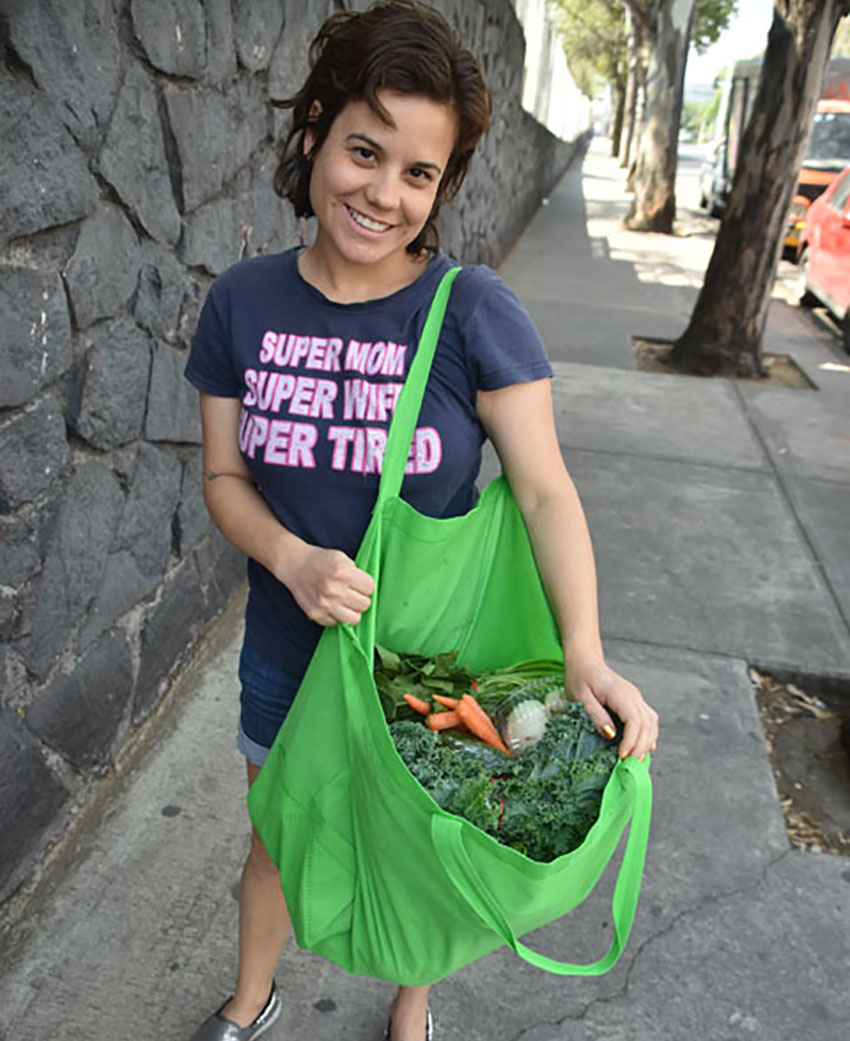
It’s about an hour’s drive from San Gregorio Atlapulco, where they live and work, to the city proper. When they arrive, they park on the street and send text messages to their clients almost all of whom show up, like Rufino and Gánzalez, wearing masks. The two take the extra precaution of wearing gloves.
Raquel Louctalot is one of the customers that has been buying from Rufino and González since they started driving in. “They’re from the chinampa,” she said. “They’re producers so I want to support them.” All of the customers said the food is fresher, keeps longer and is much cheaper; often less than half the cost of supermarkets.

Ana Sofia Villas walked away with a bag crammed with produce that cost her 300 pesos (about US $13). “I am happy with this,” she said. “If they continue to come in after the crisis, I will continue to buy from them.”
Rufino said they always bring extra food in case somebody walking by wants to purchase something and they always give people a little something for free. “I give them a little verdolaga (purslane),” he said. “Maybe they will want to buy some next week.”
He or his wife hand their customers the samples once the order has been filled, saying, “Here is a little gift.”
It’s a long day for the couple. They spend two or three days harvesting their produce, a couple of hours buying the items they don’t grow and then are up at 6:00 Monday morning to organize the orders. It’s then a long day in the city, usually ending around 3:00, and a drive back to their home.
“I think it is worth it,” said Rufino. “We are bringing food to people who need it. We lost an entire area we planted — red lettuce — because there was no one to buy it. So we are not losing everything and we are earning some money.”
• Hortalizas Mago can be reached at 552 949 3115.
Joseph Sorrentino is a freelance writer and photographer currently living in San Gregorio Atlapulco, which is part of Xochimilco. His articles and photographers have appeared in In These Times, Commonweal Magazine, US Catholic and La Jornada del Campo and other newspapers and magazines.
CORRECTION: The earlier version of this story incorrectly identified the woman in the photo above. Our apologies.