
The time has come, my friends: it’s time to talk about cursing and swear words in Spanish, and in Mexico particularly.
Several specific regions of Mexico are well known for their — ahem — colorful language. One of those places is my home state, Veracruz, where curse words flow as freely as the beer from our much-loved caguamas (those liter-sized returnable beer bottles), a mere expansion pack of our casual speech.
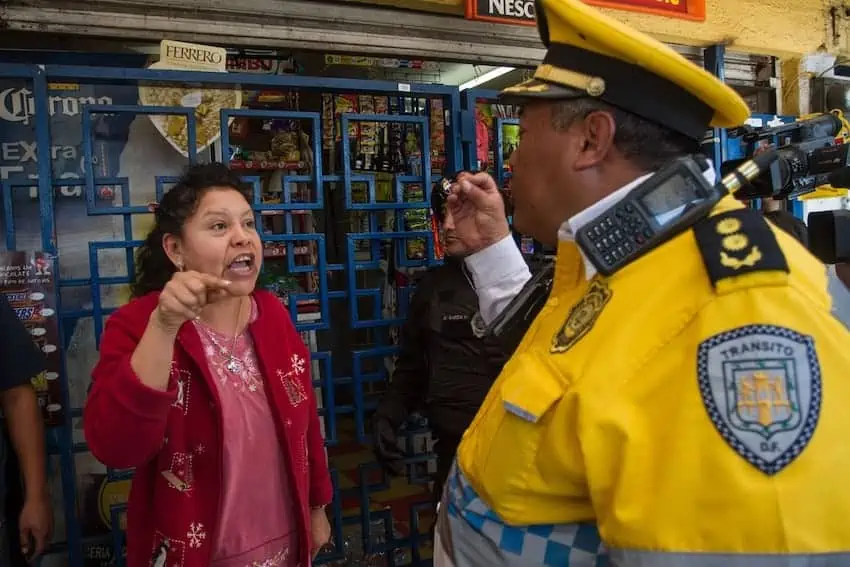
Other places, particularly those closer to the center of the country (save Mexico City), tend to be more conservative and proper in their speech, lest they be seen as crass or vulgar. Coastal cultures, particularly ones that became accustomed quickly to receiving “guests,” have by necessity developed a more open and relaxed attitude, pearl-clutching being something that just holds everyone up.
That’s my theory, anyway.
Anyway, let’s get this show on the road! Though before we begin, the necessary heads up: there are very bad words below; don’t read them if you’re easily offended by off-color language. Below each, I’ve given a non-cursing alternative.
Common variations of chingar
This is the closest Mexican Spanish equivalent to the word “f*ck” in English. And like its English equivalent, it’s both very rude and very common. Common variants include the insults chinga tu madre (“F*ck your mother” — yikes) and vete a la chingada (Go f*ck yourself), the exclamation chingada madre! (Motherf*cker!) and the more tame chingao, whose equivalent might be an emphatic “damn it!” in English. Chin is closer to “darn it” if you want to use something extra tame but still common.
Honestly, an entire book could be filled talking about just this word. It’s complex and varied, with plenty to unpack culturally. But we’ll let someone else write it.
Pendejo/pendeja
This is a common insult for calling someone something between an *sshole and an idiot. Incidentally, idiota sounds about as harsh to the Mexican ear as “*sshole” does to ours, so careful with that one! If you want to say something like “dummy,” tonto or zonzo are safe non-curse options, the latter being closer to “silly.”

No mames
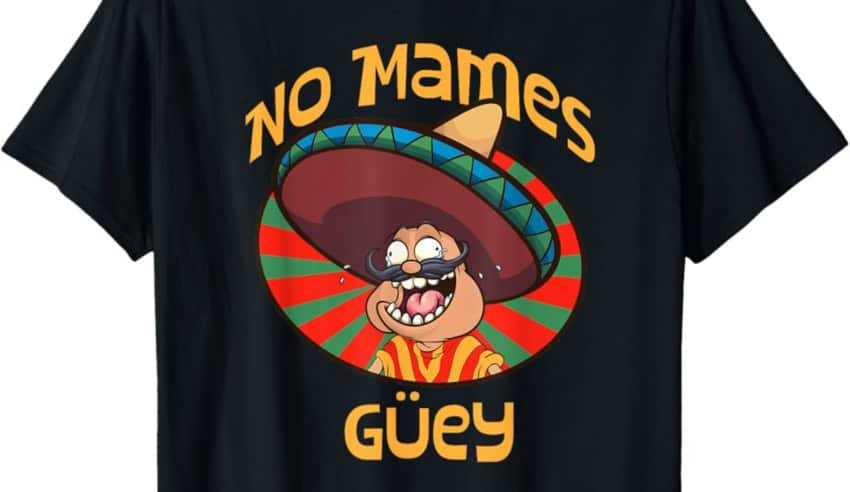
This is also an exclamation you’ll likely hear pretty frequently that means, basically, “Come on,” or “No f*cking way,” or “You’ve got to be kidding me.” It literally means “don’t suck,” and you say it when you’re calling someone out on their bad joke or misbehavior, or when you’re in disbelief (usually disappointed disbelief). One way to take the cursing sting out of it is the more tame No manches (literally, “Don’t stain”), which means the same thing. No puede ser (“It can’t be”) is a good slang-free option. (Funny side-note: my partner, a native veracruzano, saw this list and said, “What? No mames isn’t cursing!” It is.)
Pinche
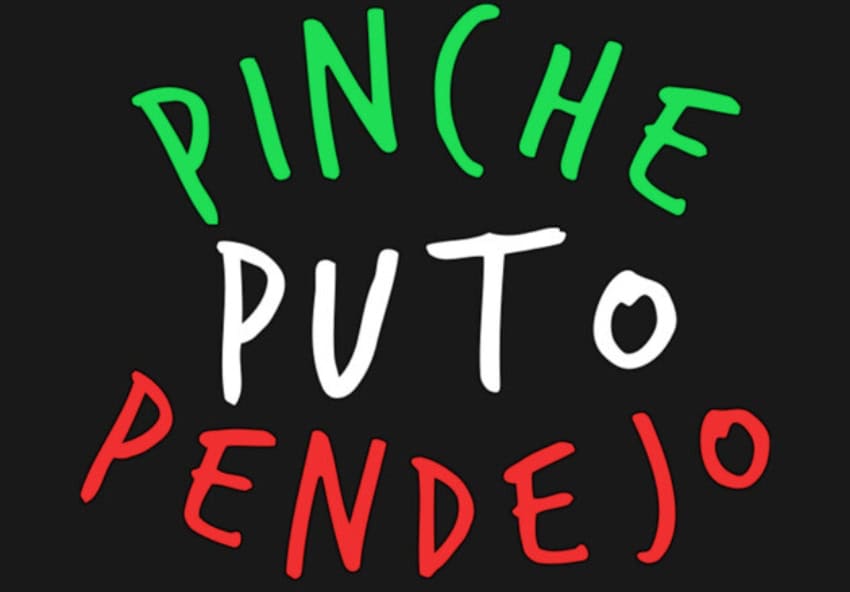
This word is an adjective meaning “bad,” and I’d put it somewhere between “damn” and “f*cking” in terms of rudeness. It typically precedes another word (Pinche comida fea — “f*cking disgusting food”), and is used to emphasize your distaste for something. Alternatives include any other negative adjective or adverb, like terrible or terriblemente, depending on which part of speech you need.
Desmadre
De…mother? Don’t ask me how anyone came up with that. Anyway, a desmadre is a big damn mess, or maybe even “sh*t show,” and can be used both for actual physical messes (Con la construcción el tráfico está hecho un desmadre — “With the construction going on, traffic’s just a big damn mess”) or for some kind of big blow-up fight. A tamer way to say it: desorden (literally, “disorder”).
As I’m sure you know, this isn’t anywhere near a complete list. That said, all the words and phrases above are quite common.
I personally curse quite a lot in both languages — I learned Spanish in Veracruz, after all. I’m neither proud nor ashamed of it; it’s simply part of my vocabulary. Here in Veracruz, nobody bats an eye, but I once said desmadre to a friend in Querétaro and promptly got a speech about how ladies don’t talk like that.
Just like in all languages, who is doing the cursing matters, as does the context. Hanging out with friends and having a few beers, fine; in a job interview or with someone’s grandma, not so smart.
So go forth, my fellow compatriots, immigrants and visitors, and understand more of what people are actually saying!
Just be sure to proceed with caution if you plan to partake.
Sarah DeVries is a writer and translator based in Xalapa, Veracruz. She can be reached through her website, sarahedevries.substack.com.