I was staying at Zenaida and Efraín’s home in San Agustín, a small pueblo somewhere in Morelos. I’d shown up a couple of days earlier, unannounced, with Emilio, who was organizing a meeting there.
I was working on a project to document the lives of campesinos in a few states, and Emilio agreed to introduce me to people in the pueblo. When he announced that I needed a place to stay, Zenaida and Efraín kindly offered to let me stay in their home.
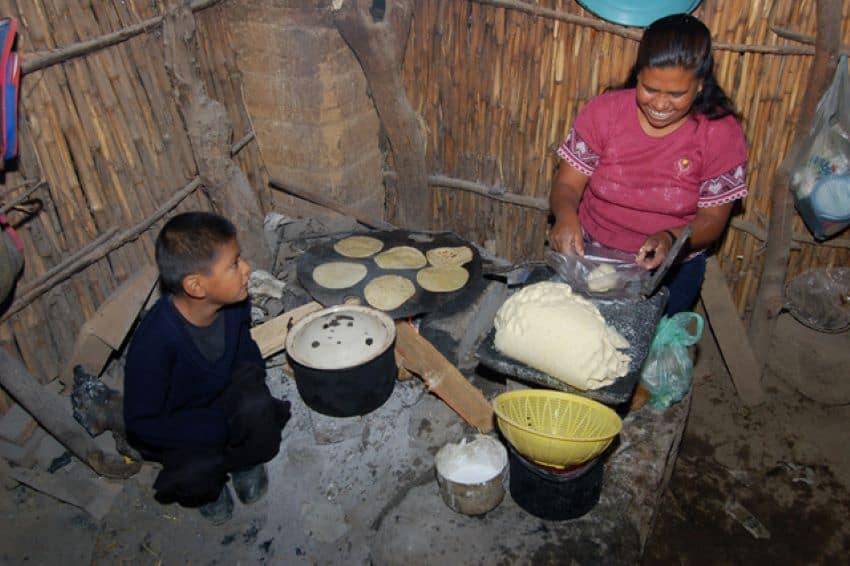
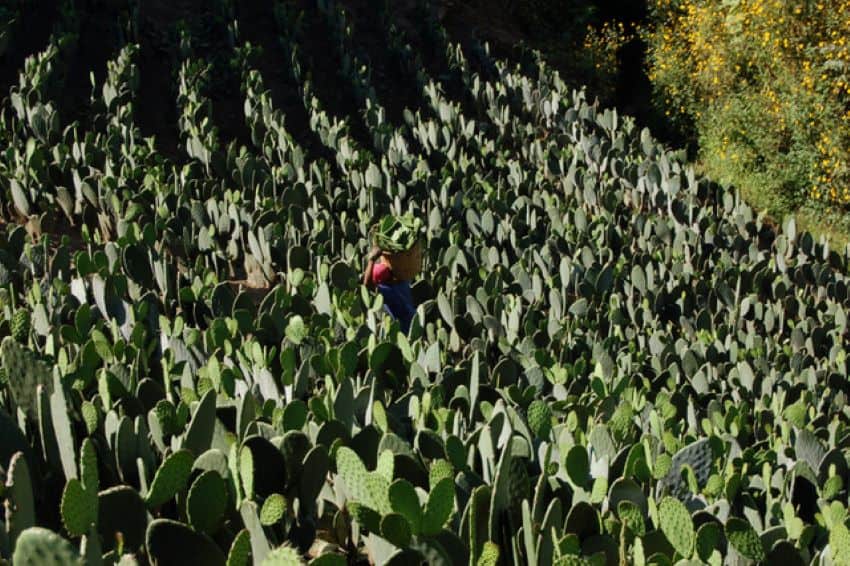
The couple grew and harvested nopal, an edible cactus. Like all campesinos I’ve met, they were very poor but very generous. My living situation was pretty basic: I slept on a beat-up old sofa in a tiny room attached to their home.
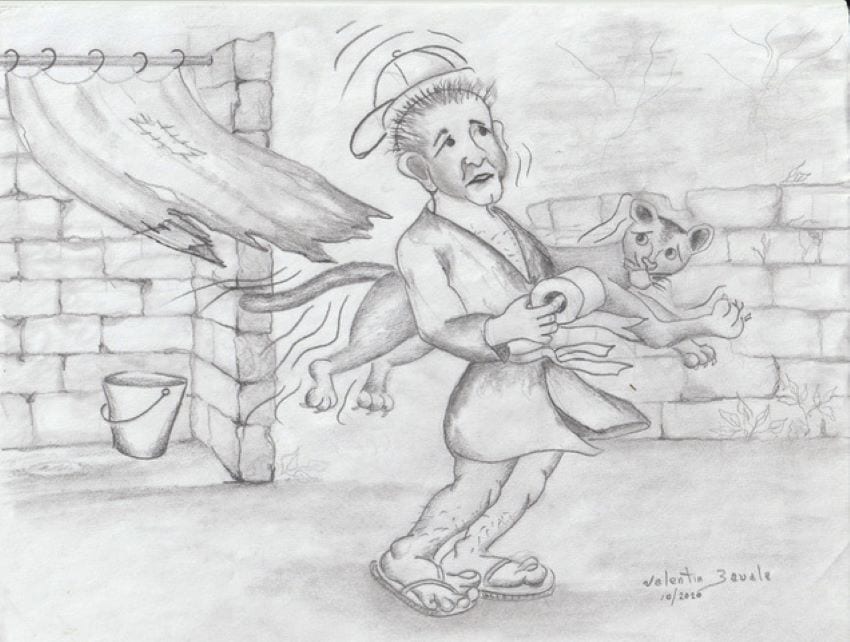
The kitchen, like almost all kitchens in el campo, was set apart from the home and had a dirt floor. The bathroom, such as it was, was a hundred or so feet from the house. The toilet was just a couple of cinder blocks stacked over a hole in the ground, surrounded by a low wall.
The shower was to the left of it, a couple of feet away, and it was just a short stall also constructed from cinder blocks. A torn old curtain hung over its entrance. To shower, you hauled in really cold water from the well and poured it over yourself when you wanted — or needed — to get clean.
I spent a day in the field with them, photographing as they harvested. It’s difficult work, and they wore heavy gloves to protect their hands from the cactus’s needles. Although it was December, it was hot and the sun felt very strong. This didn’t seem to faze them, but after a few hours I began to feel a headache coming on.
I sat in the shade of the truck, but the headache worsened. By that evening, it was so painful that it hurt to simply touch my forehead. All I could do was lie down and hope the pain would go away. Efraín bought some aspirin for me, and I guess they worked — I went to bed early and, happily, when I awoke the next day, the headache was gone.

It was probably my third night there when I got the urge in the early morning to use the toilet. The yard was partially illuminated with a couple of bare lightbulbs. I really couldn’t see much, just enough so that I didn’t bump into anything.
I slowly picked my way across the yard to the toilet. When I was just a couple of feet from it, an animal came bursting out of the shower stall, bolting between me and the toilet. I don’t think it touched me as it passed, but it came awfully close; there wasn’t a whole lot of room between me and that toilet.
I stood there and remember thinking, “That was weird. I wonder what the hell that was?”
All I thought at the time was that it moved like a cat but that it was way larger. Oddly, I didn’t feel afraid. Had this happened back in the States, I’m sure I would’ve run back to bed, pulled the covers over my head and waited until daylight. But hey, I was in Mexico, and I figured this sort of thing happened all the time.
Not knowing what else to do, I used the toilet and went back to bed. I didn’t say anything to Zenaida or Efraín because I thought they’d just laugh at me.
I spent a few more days there and then headed back to Mexico City, where I met a friend for a beer. I was telling her about all the times I’d almost been killed or injured on projects; there have been several.
When I told her this story, I asked her what she thought the animal might have been. She paused a moment.
“Where did this happen?” she asked.
“Morelos,” I replied.
“Morelos?”
“Yes, Morelos.”
She paused another moment then said, “Puma … it was a puma.”
Fortunately for me, either the puma wasn’t hungry or was more afraid of me than I was of it. I actually didn’t feel afraid when it happened back in San Agustín; surprised, but not afraid. That changed when I learned what that animal was.
I had to deal with the knot in my stomach for a couple of days.
Joseph Sorrentino, a writer and photographer, is a regular contributor to Mexico News Daily. More examples of his photographs and links to other articles may be found at www.sorrentinophotography.com He currently lives in Chipilo, Puebla.