Mexico City’s subway is called the Metro, and it’s just amazing. Firstly, it’s extremely easy to use. Even on my very first trip to Mexico, when my Spanish was limited to asking for a cup of coffee to go, I was able to navigate the subway because they made it very easy to identify the various lines and stations.
Each line has a number or letter and is color coded, and each station has a name and a unique symbol, so even someone who’s as directionally challenged as I am can easily get around. To give you an idea of exactly how directionally challenged I am, I once got lost while biking on the Erie Canal towpath in Rochester, New York: the towpath only runs east to west. A Metro ride is very cheap, costing 5 pesos. That’s about US 25 cents.
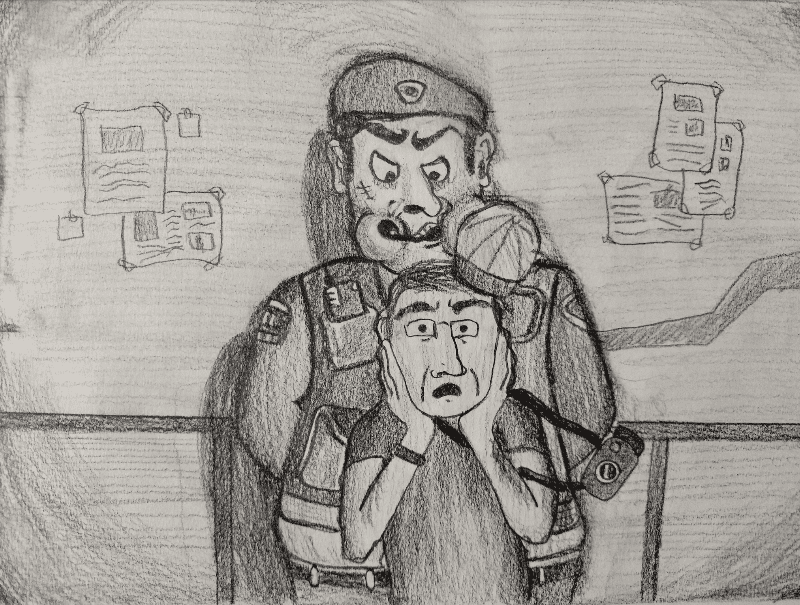
Every station has a cop or two standing on top of a small platform. I don’t think these cops are there to protect people because I’ve never seen them leave their spots. They prefer instead to talk to other cops or, more often, peruse their cell phones.
What they seem to be there for is to blow whistles that are loud. So loud, in fact, that I’m sure most of them are going deaf. On the Metro’s official X account, they claim that “The whistle is used to inform users of the presence of security personnel at the station, so in case you need assistance, you can identify them immediately.” To me, it seems that their job is to blow the whistle to let people know that a train is arriving.
The point of this is unclear to me: they don’t see the approaching train any sooner than anyone else standing on the platform. If anything, they will probably see it later. The trains aren’t exactly quiet, so even if you’re not looking down the tunnel in their direction, you’re going to hear them. And even if you don’t hear or see them, you’ll feel the breeze they create as they approach. But someone decided that there have to be cops blowing whistles to inform people of that fact.
I try to stand as far away from these cops as possible. I’ve lost enough of my hearing to rock concerts and drumming. I don’t want to lose more to some whistle-blowing enthusiast. But sometimes — especially during rush hour when the platform is packed — avoiding them is simply not possible. At those times, I put my hands over my ears, looking like a live version of Edvard Munch’s “The Scream.”
I don’t know for sure, but it seems that each cop has their own special whistle call. They don’t merely blow one note to let you know that a train’s pulling in. Oh, no. They vary in pitch. They blow short notes. Long notes. Trills. For all I know, they’re all frustrated musicians practicing a new composition. Maybe someday I’ll take the time to ask them.

Joseph Sorrentino, a writer, photographer, and author of the book San Gregorio Atlapulco: Cosmvisiones and of Stinky Island Tales: Some Stories from an Italian-American Childhood, is a regular contributor to Mexico News Daily. More examples of his photographs and links to other articles may be found at www.sorrentinophotography.com. He currently lives in Chipilo, Puebla.