
A three-decade-long nightmare that a Oaxaca woman endured after being sold into common-law marriage for a bottle of mezcal at the age of 10 has finally ended.
State Attorney General Arturo Peimbert Calvo said Tuesday that the man who gave Irma Ríos’ father the mezcal in exchange for his daughter in 1991, and proceeded to abuse her for the next 30 years, had been arrested.
The official said in an interview that authorities will prosecute the aggressor — Ignacio Rodríguez Cabrera — for a range of crimes and seek the maximum penalty the law permits.
Peimbert said that Ríos had been notified of her husband’s arrest and was receiving support from the Oaxaca Women’s Ministry and other authorities.
The victim said in a media interview before the arrest that her father sold her for a one-liter bottle of mezcal. Her husband was 20 when the exchange occurred.

“… My dad said, ‘Go with him,’ but I didn’t want to go because I was 10 years old,” Ríos said.

She said she was beaten and repeatedly raped by Rodríguez, who fathered her three children. Ríos also said that she was locked up when her husband went to work and had effectively missed out on several years of her childhood.
“… I want to be happy, and I want to be free. … I want to be happy without violence,” she said.
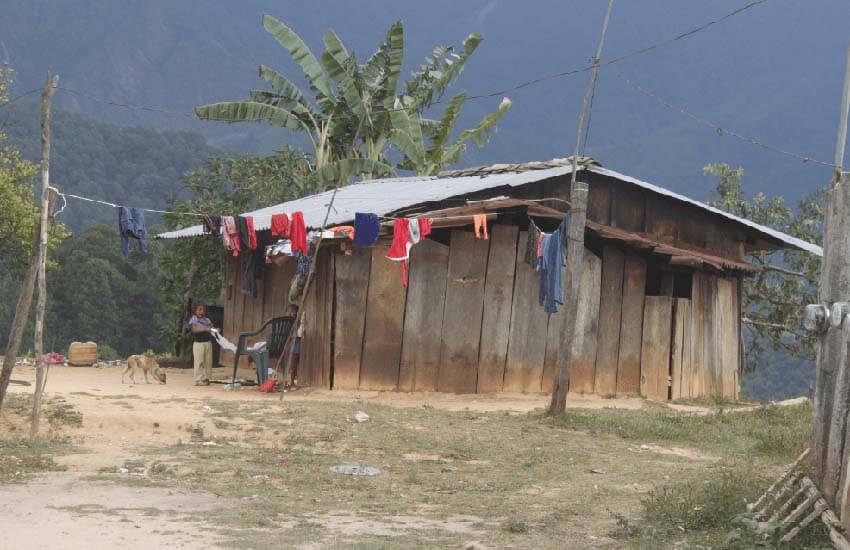
Selling young girls into marriage is relatively common in parts of Mexico, but it’s money, rather than mezcal, that usually changes hands. The practice is particularly prevalent in the Montaña region of Guerrero.
Many of the child brides suffer years of sexual and other abuse, as was the case with Angélica, a 15-year-old girl sold into marriage at the age of 11 who was recently jailed for 10 days after she fled the home of her father-in-law, who allegedly attempted to rape her.
Indigenous girls sold into marriage in the Montaña region are “victims of the lack of attention of authorities,” said Abel Barrera, the director of a local human rights center. Families sell their daughters due to poverty, he told the newspaper Milenio.
President López Obrador said in late October that the media had made the sale of girls for marriage or prostitution appear to be a bigger problem than it really is, a remark that earned him a rebuke from the Network for Children’s Rights in Mexico.
Barrera nevertheless expressed confidence that the federal and Guerrero governments will enact policies to reduce the incidence of child marriage and stop the suffering of hundreds of girls who are the victims of sexual, physical and psychological abuse perpetrated by their husbands.
With reports from Milenio