Three Mexicans are among 15 recipients of National Geographic‘s 2022 Wayfinder Award, which recognizes innovative individuals engaged in groundbreaking work in a variety of mediums.
Mónica Alcázar-Duarte, a photographer and visual artist, Yael Martínez, a photographer, and Carlos Velazco, a biodiversity consultant, are the three Mexican winners. They will join the National Geographic Society’s global community of explorers and receive a monetary prize to support their work.
Alcázar-Duarte, a Mexico City native, is a Mexican-British multidisciplinary artist and photographer whose work acknowledges her indigenous heritage while exploring current ideals of progress, National Geographic said. “In her projects, Alcázar-Duarte mixes images and new technologies, such as augmented reality, to create multilayered work, producing meaning through seemingly disconnected narratives,” the magazine said.
Her personal website features projects with intriguing titles such as Red Mist, Possible Landscapes and Mexico: An Inside Outsider.
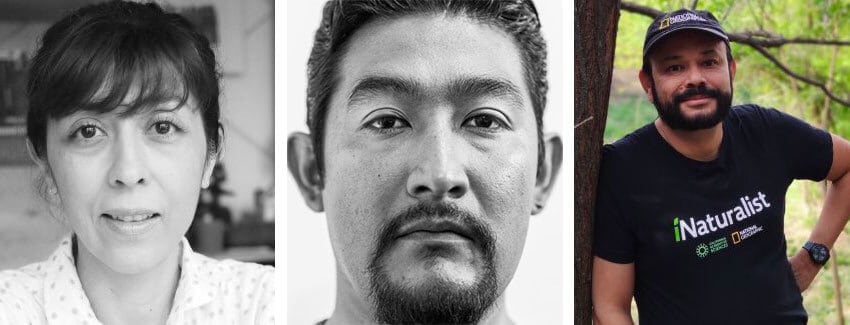
Martínez’s work focuses on “fractured communities” in Mexico, National Geographic said, adding that his images “often reflect the sense of emptiness, absence, pain, and suffering of those affected by organized crime.”
The Guerrero native, a nominee member of the acclaimed photographic cooperative Magnum Photos, showcases projects on his personal website with titles such as La casa que sangra (The House that Bleeds) and La raíz oscura (The Dark Root).
Meanwhile, Monterrey-based Velazco has documented more than 5,600 species (including undescribed species) and logged more than 24,300 observations on nature site iNaturalist while helping other users make more than 131,000 identifications, National Geographic said.
The magazine also said that Velazco’s life goal is to continue to promote biodiversity protection and documentation while empowering local communities and individuals to protect nature through knowledge and respect.
According to National Geographic, the Wayfinder Award “recognizes and elevates a group of individuals who are leading a new age of exploration through science, education, conservation, technology and storytelling.”
“These individuals have proven themselves as the next generation of influential leaders, communicators, and innovators whose critical work demonstrates the power of science, and inspires us to learn about, care for, and protect our world,” it said.
Recipients of the award – previously called the Emerging Explorer Award – are “engaged in groundbreaking work that challenges the most entrenched stereotypes in the animal kingdom, focuses on inclusive and community-based conservation, blends social justice with ecological scientific research, and promotes racial literacy in education.”
Information about all 15 of the Wayfinder Award recipients is available here.
Mexico News Daily