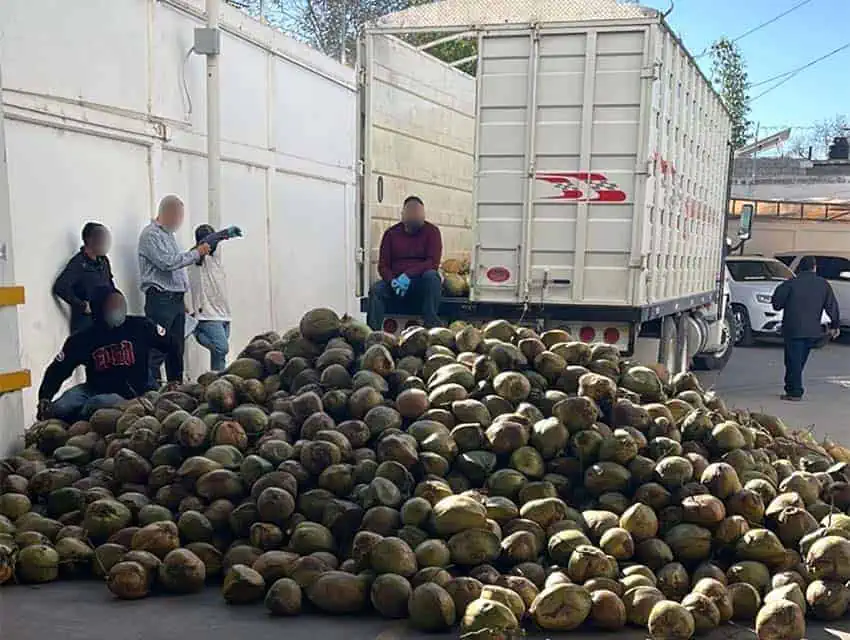
A load of coconuts on a truck being driven in the northern state of Sonora contained approximately 300 kilograms of pills believed to be laced with fentanyl, according to the agencies that made the seizure on Thursday.
Thousands of blue pills were found in plastic bags hidden inside hundreds of coconuts, which had been cut in half, scraped out and glued back together, a video posted by the Attorney General’s Office (FGR) indicates. In one image, an officer can be seen busting open a coconut by hitting it against the ground.
Two people allegedly transporting the cargo were arrested after their truck was intercepted on a federal highway near Pitiquito, a municipality about 90 kilometers south of Mexico’s border with Arizona. The operation was conducted by several agencies both national and regional.
Few details were provided, aside from an FGR tweet stating that “approximately 300 kilograms of a substance with characteristics of fentanyl” was seized “in a truck that was transporting coconuts.” A press release from the federal office offered several pictures but few additional details.
#FGR, adscritos a la @PGR_AIC, aseguraron en Sonora aproximadamente 300 kilogramos de una sustancia con características propias del fentanilo, en un camión que transportaba cocos.
Más información ▶️https://t.co/UW7OCwu6VT pic.twitter.com/1hB3jstpm3
— FGR México (@FGRMexico) December 1, 2022

In this video federal authorities posted on Twitter, images show how the pills were hidden in coconuts.
The newspaper Reforma said the value of the seizure was “about US $60 million,” citing a price of US $200,000 per kilo given recently by Secretary of Defense Luis Cresencio Sandoval.
Fentanyl is “a highly addictive synthetic opioid that is 50 times more potent than heroin and 100 times more potent than morphine,” according to the U.S. Drug Enforcement Agency.
Pills containing fentanyl are “largely made by two Mexican drug cartels, the Sinaloa Cartel and the Jalisco [New Generation] Cartel (CJNG), to look identical to real prescription medications, including OxyContin, Percocet and Xanax, and they are often deadly,” the DEA says on its website.
The two cartels, “using chemicals largely sourced from China, are primarily responsible for the vast majority of the fentanyl that is being trafficked in communities across the United States,” the DEA adds.
Despite being fierce rivals, the Sinaloa Cartel and the CJNG are getting the chemicals to produce fentanyl from the same suppliers, InSight Crime reported, referring to a report from Mexico’s National Intelligence Center cited in the Milenio newspaper.
The DEA cites figures from the Centers for Disease Control and Prevention (CDC) stating that 107,622 Americans died of drug poisoning in 2021, with 66% of those deaths involving synthetic opioids such as fentanyl. The agency says it seized more than 20.4 million fake prescription pills in 2021.
“The pill form is very scary because they’re made to look like legitimate pharmaceuticals,” Greg Millard, an acting special agent with the DEA, told El Paso, Texas, TV station KTSM.
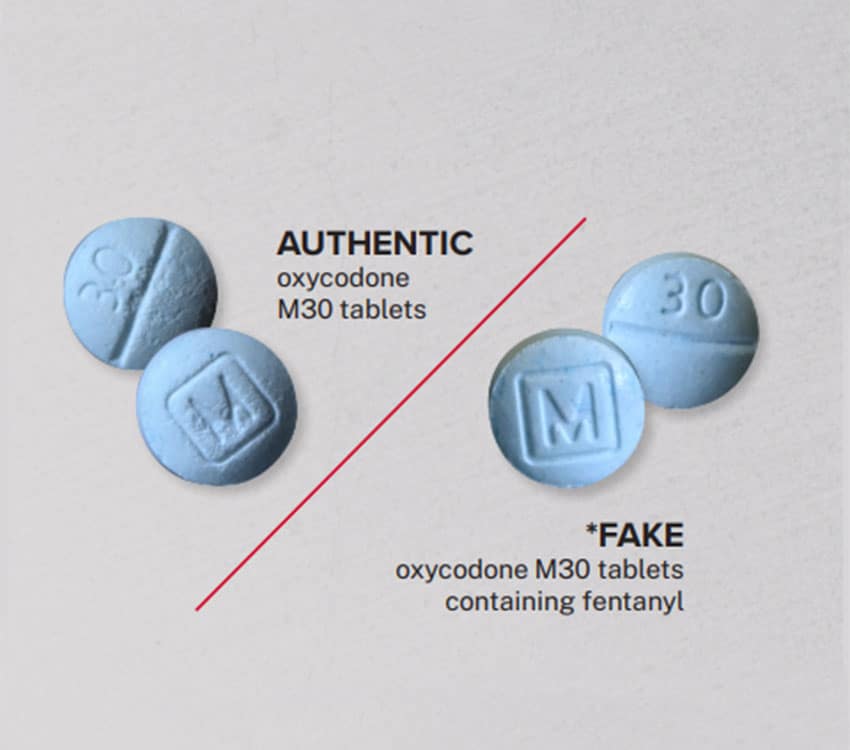
“When people buy the pill on the street, they think they’re getting what maybe [is] a pill bought from a pharmacy prescribed by a doctor but sold on the black market,” he added. “However, they’re not. They’re getting a pill made somewhere south of the border containing fentanyl.”
The DEA conducted a laboratory study this year that found that six out of every 10 such fentanyl-laced pills contain a potentially lethal dose of the drug (an increase from four out of 10 in 2021).
“Just two milligrams of fentanyl, the small amount that fits on the tip of a pencil, is considered a potentially deadly dose,” the agency said in its report.
Large amounts of fentanyl, meth and other drugs have been seized recently in Sonora and elsewhere. Millard told KTSM that “profit and greed are driving the Mexican drug cartels” to push fentanyl-laced pills.
“It’s easy to produce. It’s easy to get the chemicals,” he said. “With the other drugs [heroin, marijuana and cocaine], you have to grow a plant. … But fentanyl is produced in a laboratory, it’s produced clandestinely. It’s just chemicals mixed together.”
With reports from Reforma and Reporte Indigo