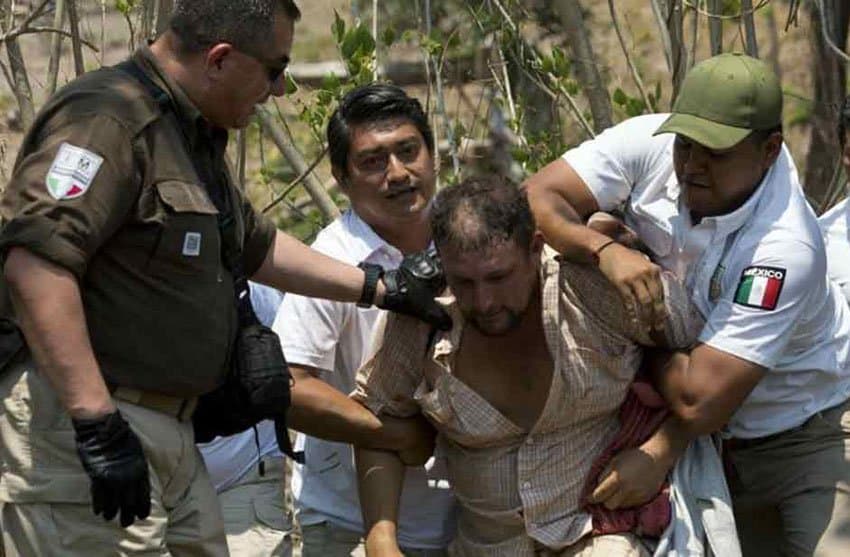
Around 300,000 migrants traveled through Mexico en route to the United States in the first three months of this year, according to the federal interior secretary.
Olga Sánchez Cordero described the migration flow as “unprecedented and “unusual” but acknowledged that a “mother of all caravans” did not appear as she warned last month.
However, “six caravanas madrecitas” (little mother caravans) of around 2,000 people each reached Mexico in recent months, she said.
Sánchez told a press conference that the highest number of migrants have come from Honduras with smaller numbers from Guatemala, El Salvador and Cuba as well as African and Asian nations.
The interior secretary said that Mexico is facing a migration situation unlike any in the past but rejected that the government has changed tack in dealing with migrants.
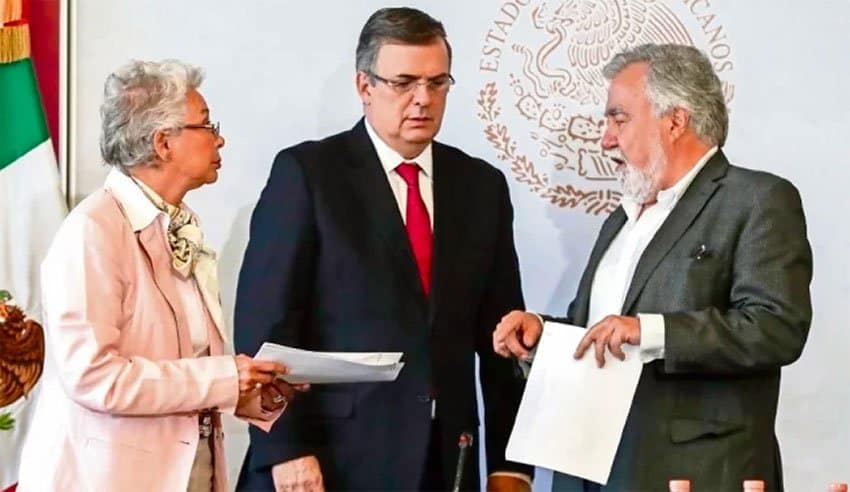
“We’re doing everything that is in the hands of the federal government to attend to these migrants and provide them with humanitarian attention. What we ask for is that they contribute with two basic forms of conducts: firstly, respect our laws and our authorities and secondly, accept registration as a pre-condition in order to decide their migratory situation in our country,” Sánchez said.
The detention of 371 migrants including women and children in Mapastepec, Chiapas, on Monday occurred because people had acted aggressively towards National Immigration Institute (INM) personnel, she explained.

Foreign Affairs Secretary Marcelo Ebrard rejected that Mexican authorities are detaining migrants in response to pressure from United States President Donald Trump to stop flows of people to that country.
Mexico’s migration policy “hasn’t changed and won’t change,” he said.
Ebrard added that he will travel to Washington D.C. next month to discuss bilateral issues including migration.
He acknowledged that the two countries’ “points of view” and “policies” on a range of matters are “different” but explained that one of the main reasons for his trip is to “improve the bilateral relationship.”
Ebrard also said that the Comprehensive Development Plan for Central America, which is designed to address the root causes of migration, is almost complete and will be publicly presented next month.
Also present at yesterday’s press conference was INM chief Tonatiuh Guillén, who revealed that 11,800 migrants were deported from Mexico in the first three weeks of April and 15,000 in March. In April last year, 9,650 migrants were deported.
A large number of migrants remain in the country, in Chiapas and several northern border cities, where most would-be asylum seekers face long waits to file their claims with United States authorities.
Human rights undersecretary Alejandro Encinas said the government is looking at creating a special fund to deal with the historically high levels of migration to Mexico.
Source: El Universal (sp), El Economista (sp), Milenio (sp)