Eighty-one locations, 222 hidden graves and 337 bodies: that’s the official count so far since December 1, when the new government took office.
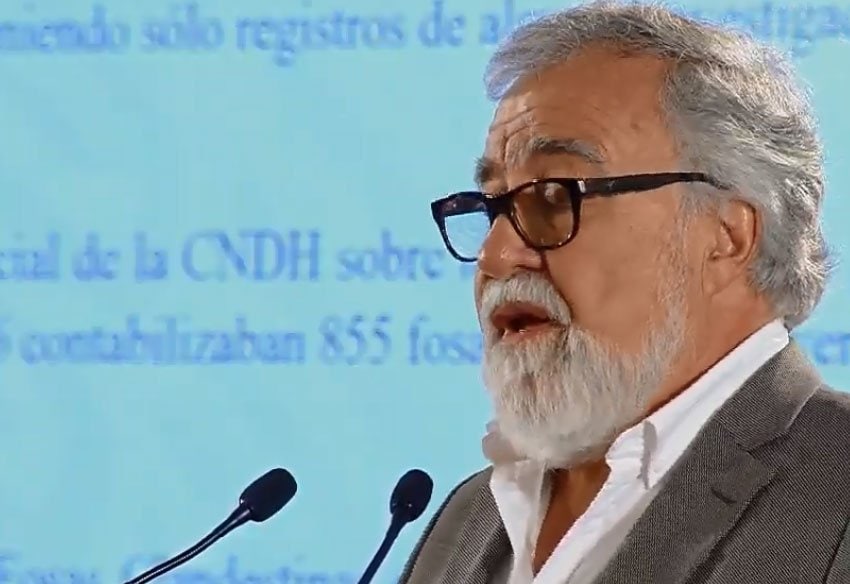
Human rights undersecretary Alejandro Encinas revealed the numbers today at the president’s morning press conference, noting they were current as of Monday. He also said it was the first official government effort to gather and compile such data.
Of the states in which hidden graves have been discovered, Encinas said, Veracruz led the way with 76, Sonora followed with 35 and Sinaloa was third with 23.
Encinas described the hidden graves as “a phenomenon that has existed for many years, but the data was always hidden or minimized. There aren’t antecedents [for this report]. Data on forced disappearances was mixed and hidden away with statistics on common homicides, even though in many of the cases [where hidden graves were discovered] the remains were discovered many years after the victims were killed.”
The data will be continually updated and the numbers will be presented every 15 days to the federal government’s security cabinet.
In previous years, families and friends of missing persons headed up efforts to search for hidden graves, relying on tips from witnesses about where to dig.
The graves themselves have been described as a mechanism used by criminal gangs to instill terror among citizens, and demonstrate their power and impunity and the limited capacity of the state to fight them.

Source: El Financiero (sp), La Política Online (sp)