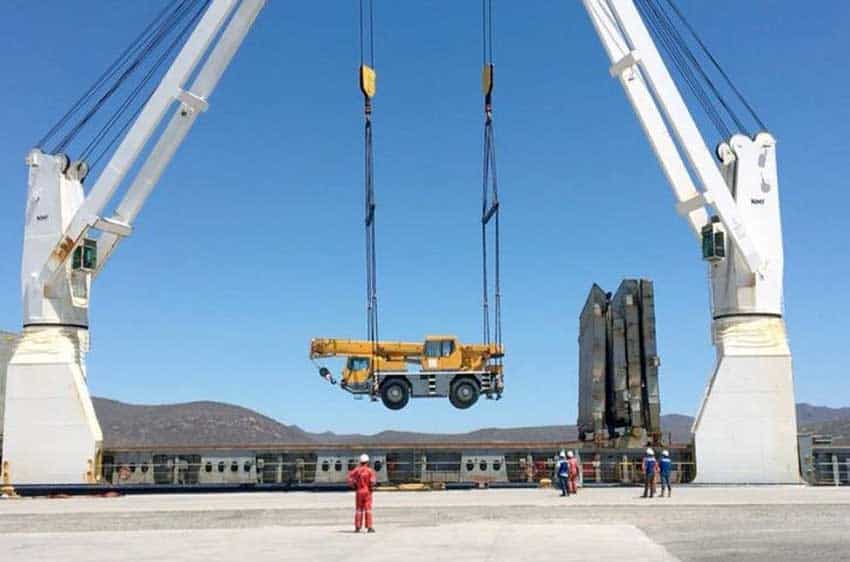
The “world’s safest and most modern” fertilizer plant is under construction in Topolobampo, Sinaloa, although a campaign was launched earlier this month to stop the project.
State Economy Secretary Javier Lizárraga Mercado told a press conference yesterday that US $1 billion will be invested in the first stage of the project, which will allow the plant to produce 770,000 tonnes of ammonia and 700,000 tonnes of urea per year for state and national markets.
The 202-hectare plant will represent a $5-billion investment by the Swiss-German engineering, procurement and construction group Proman AG and its Mexican subsidiary, Gas y Petroquímica de Occidente.
The project was first initiated several years ago but was shut down by the environmental protection agency, Profepa, in 2015 following complaints that a wetlands area — three coastal lagoons around Topoloambpo — was being damaged. The wetlands have been declared a Ramsar site, a World Heritage Site and a UNESCO biosphere reserve.
But Profepa re-approved the plant in April last year.
Now there is opposition once again. An organization called Citizen Vigilantes for Transparency in Sinaloa has begun an information campaign called “Aquí no!” (Not here) to advise the public it believes the project has risks.
President Guillermo Padilla Montiel said Topolobampo bay is already polluted by discharges from plants operated by Pemex and the Federal Electricity Commission (CFE) and insufficient sewage treatment. “They tell us that there will be no pollution but that’s what they told us about the Pemex and CFE plants,” he said, charging that dead fish and dolphins are being found on the beach.

Lizárraga said the plant represents the largest industrial investment ever seen in the state “and perhaps one of the most biggest in the country.”
Local production of high volumes of fertilizer, which can represent up to 40% of a farmer’s costs, will bring those costs down, he continued.
“This is a strategic project because the yield and competitiveness of the agricultural sector will go up. Our country will stop importing [fertilizers] and will become a net exporter.”
The plant is expected be operating at full capacity by 2021 and sell fertilizers on the international market.
Source: El Universal (sp)