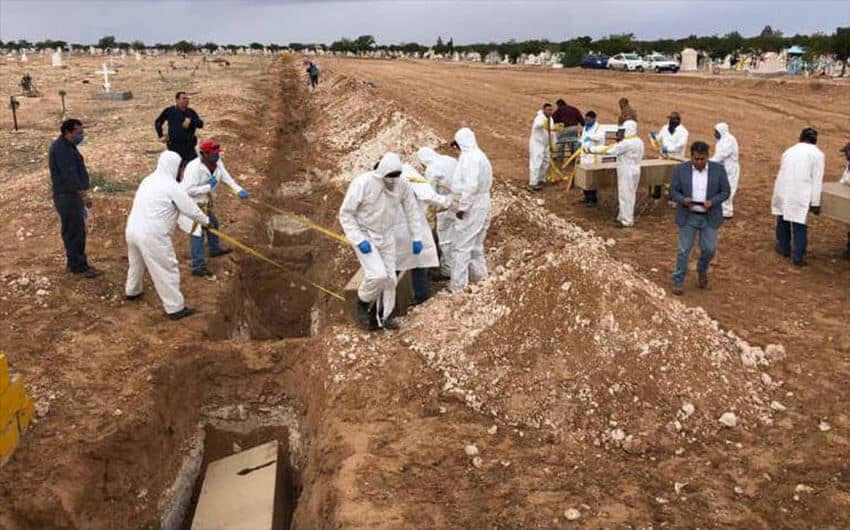
The federal government has acknowledged that Mexico is facing a “forensic crisis,” with an estimated 52,000 unidentified bodies in common graves and the nation’s morgues.
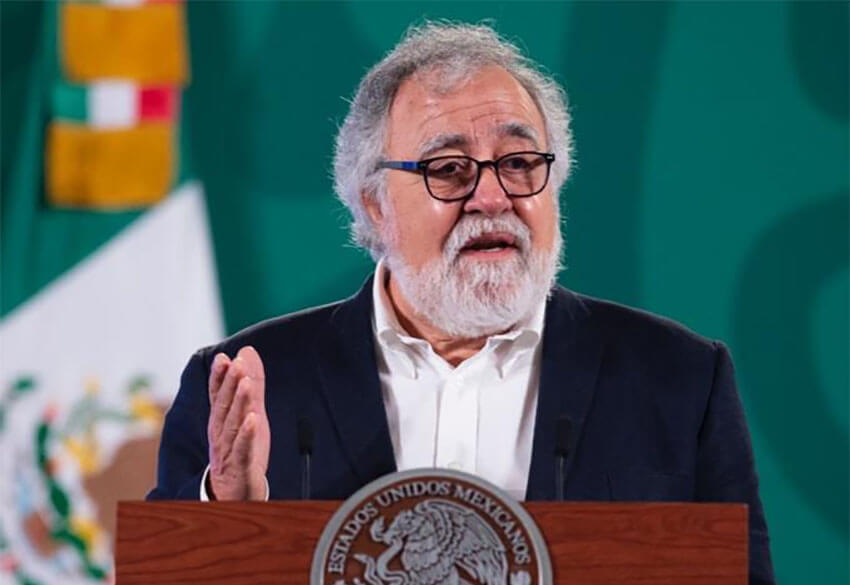
Speaking at President López Obrador’s morning press conference on Thursday, Deputy Interior Minister Alejandro Encinas conceded that the government doesn’t have the capacity to guarantee the identification of bodies and ensure they are returned to their families.
“… According to estimations of both public institutes and non-governmental organizations we have about 52,000 unidentified bodies in common graves and morgues,” he said.
Encinas also acknowledged that there are more than 95,000 missing people in Mexico, most of whom disappeared in the last 15 years.
He said that authorities are discussing the possibility of establishing a national human identification center to attend to the vast backlog of unidentified bodies. Three regional identification centers are already in operation, including one in Saltillo, Coahuila, where hundreds of bodies have recently been exhumed from common graves.
Encinas’ remarks came a month after the United Nations Committee on Enforced Disappearances (CED) finished a 12-day visit to Mexico to assess the country’s capacity to respond to the missing persons crisis.
CED president Carmen Rosa Villa Quintana declared that 52,000 unidentified bodies constituted a “forensic crisis,” while the committee she leads concluded that an inadequate security strategy, poor investigations into missing person cases and impunity were key factors in the persistence of abductions in Mexico.

Data for 2006 to 2019 shows that the number of bodies that entered morgues and remained unidentified increased sharply in the second half of the 2006-12 presidency of Felipe Calderón, who launched a war on cartels shortly after he took office. The numbers remained high – over 2,000 – during the first four years of 2012-18 government led by Enrique Peña Nieto before spiking in 2017 and increasing again in 2018.
The forensic crisis has only worsened since López Obrador took office just over three years ago, with the total number of unidentified bodies increasing from about 34,000 to 52,000, a 53% jump. The majority of unidentified corpses are male but thousands of female bodies also lie anonymous in morgues. They are among more than 350,000 people who have been murdered in Mexico in the past 15 years.
Data for 2006 to 2019 also shows that 56% of unidentified bodies were located in just five states: México state, Mexico City, Baja California, Jalisco and Chihuahua. There were more than 5,000 unidentified corpses in the first two states at the end of 2019.
The high number of unidentified bodies has overwhelmed morgues in numerous states. Meanwhile, members of thousands of families – frustrated and angry with the authorities for their failure to locate or identify thousands of missing persons – continue to search for their missing loved ones, digging up land where hidden graves might be located and seeking access to morgues.
The government has promised to allocate more resources to the search and identification of missing persons, and there is a National Search Commission and local search commissions in every state.
But “most of the burden continues to fall on family members, search groups and other non-governmental organizations, which face bureaucratic barriers, corruption and government negligence,” InSight Crime, a foundation dedicated to the study of organized crime, said in August.
With reports from El Universal and Quinto Elemento Lab