Theme park operator Grupo Xcaret is set to open its latest attraction in Yucatán: a circuit of eight of the natural sinkholes called cenotes, which are unique to the region.
Called Xibalbá, the new attraction is being developed with an investment of 1 billion pesos (US $50.3 million). The 250-hectare park will open its doors on December 12 of this year.
Grupo Xcaret president and general director Miguel Quintana Pali presided over a presentation ceremony on a nearby hacienda.
“This is the biggest project that Grupo Xcaret has developed until now. It’s the most lavish, grandiose, the most beautiful,” he said.
He said that the project has encountered some difficulty due to the site’s distance from major tourist centers in the region. It is 189 kilometers from Mérida, 140 kilometers from Cancún, 120 kilometers from Playa del Carmen and 39 kilometers from Valladolid.
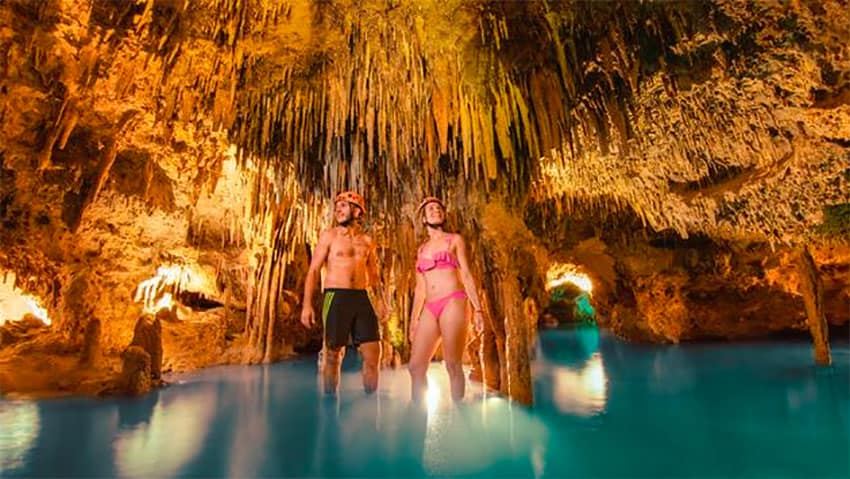
The five-to-six-hour tour will consist of a trip through the eight cenotes on the property, which are of several types: closed, open and semi-open.
It will begin in a cenote called Zopilotes (Vultures), with a gift shop, ticket booths, bathrooms and changing rooms nearby. From there, visitors will be able to reach the other cenotes via a canal aboard a kayak.

One of the cenotes is different from all others in the Yucatán peninsula.
“Normally a cenote with really nice water has little light, because light is what turns the water green or cloudy, but this one has a very crystalline color … and it has a lot of light. It’s a very pretty cenote, with many rock formations, and it has a kind of beach, which, from what we know, is the only cenote with a beach that exists,” said David Quintana Morones, the company’s director of development.
Another cenote will be given over to quiet meditation. It is open to the air above and has lots of lush vegetation hanging down its rock walls.
One cenote will be a venue for a show of traditional Mayan dancers and musicians.
Visitors will be able to move through the park via ziplines, kayaks or on foot. Snorkeling equipment may be used to view the interesting rock formations under the water.
There will also be a Mayan town with vendors selling souvenirs of hand-carved stone and wood, hammocks and leather goods, as well as a traditional Mayan medicine workshop.
“The idea is to steep visitors in the culture of Yucatán,” said Quintana.
Other features of the park include a food court, an area constructed in the style of a small colonial town and the largest aviary in the Xcaret park system.
The developers did not announce how much the park would cost, but they said they expect to see 1,500-2,000 visitors per day. It will generate 150 direct jobs once in operation, and residents of the state of Yucatán will receive a 50% discount on admission.
Yucatán Tourism Minister Michelle Fridman Hirsch said at the ceremony that the park is the state tourism board’s flagship project in its push to create more products that will attract more visitors and revenues to the state.
Source: Diario de Yucatán (sp)