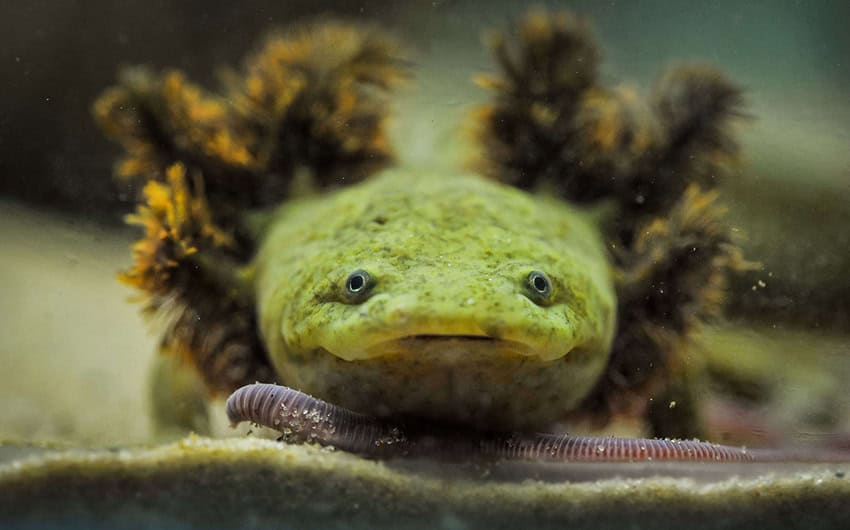
The Michoacán Fisheries Commission (Compesca) released 1,000 Lake Pátzcuaro salamanders this week, marking a historic conservation effort for the critically endangered species.
The salamanders, known locally as achoques (Ambystoma dumerilii), are close relatives to the axolotls (Ambystoma mexicanum) found in Xochimilco, Mexico City.
In Pátzcuaro, achoques are seriously threatened by habitat pollution, drought, invasive species like the Asian carp and even human consumption, as residents of the region believe that axolotls have healing properties. In 2018, experts estimated that there were fewer than 100 left in the wild.
“Today is an important day for Lake Pátzcuaro,” Ramón Hernández Orozco, head of the Michoacán State Fisheries Commission (Compesca) said during the release event. “We hope this is the beginning of the recovery of this endemic and mystical creature here in Lake Pátzcuaro.”
Meanwhile, Armando González, resident of La Pacanda island in Pátzcuaro and head of the Kurucha Urapiti farm where the specimens were bred, said the released achoques were 4 to 9 months old. From that age onwards, the amphibians are able to defend themselves against their natural predators.
Reintroduction, however, has strict rules: Only specimens collected directly from the water as eggs can be released. Those born to captive-bred parents cannot return to the wild, as their domesticated state means they should not be released.

Releasing the achoques is part of a wider strategy that combines controlled reproduction and reinforcement of endemic species. González said that the Kurucha Urapiti farm also breeds two other endangered species found only in Lake Pátzcuaro: the pike silverside, also known as pez blanco de Pátzcuaro, and the Pátzcuaro chub, known locally as acúmara.
“We are working on the Pacanda island, where we have this small farm and where we have these three species and their full cycle,” he said.
For the past ten years, environmental authorities have been working on a strategy to reintroduce endemic species to Lake Pátzcuaro. In 2025, they released 40,000 silversides and chubs, while in 2016, they released 3,000 fish.
The Compesca’s goal is to repopulate the area with one million juveniles.