The vulnerability of Mexico’s petroleum pipelines to theft is well known but the country’s natural gas lines are also cause for concern.
The National Gas Control Center (Cenagas), the federal agency responsible for the surveillance and maintenance of Mexico’s 12,678-kilometer-long natural gas pipeline network, has detected that 70% of the ducts have been in operation for 35 years or longer and have deteriorated to such an extent that they don’t meet current safety and regulatory requirements.
On average, natural gas pipelines function at an optimal level for 30 years, after which they should undergo extensive maintenance to extend their lifespan or be replaced.
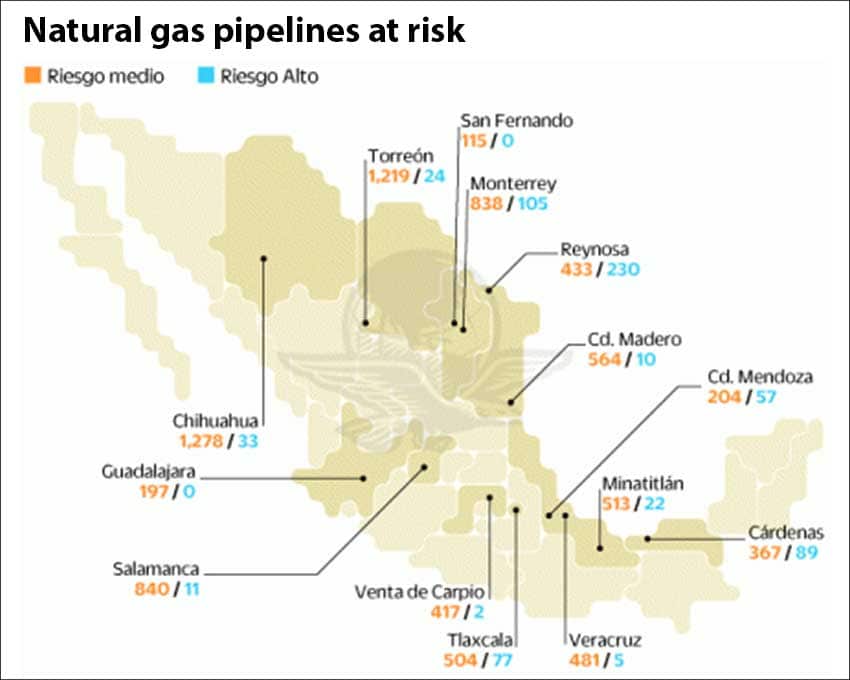
Some sections of the pipeline network, including parts located in the cities of Reynosa, Monterrey, Torreón and Chihuahua, have been identified as requiring urgent attention because they could create “dangerous conditions” for residents and the environment.
Their state of disrepair could also threaten the continued supply of fuel to customers, Cenagas said.
The agency, a division of the Secretariat of Energy (Sener) that was created in 2014, inherited responsibility for the outdated gas pipeline network from Pemex.
Two years ago, it requested almost 200 billion pesos (US $10.4 billion at today’s exchange rate) to carry out maintenance and modernization of the pipeline network including its monitoring and control systems.

But despite the importance of the projects and the inherent risks of out-of-date pipelines, the modernization work, which should have been completed last year, has not even begun, the newspaper El Universal reported.
Just under 666 kilometers of pipelines in the natural gas network — or 5% — are considered to be high risk and 8,166 kilometers — 64% — are classified as medium risk, according to Cenagas.
Source: El Universal (sp)