The accommodations platform Airbnb now has more than 30,000 listings in Quintana Roo, according to a provider of data and analytics for the US $140 billion dollar short-term rental industry.
AirDNA data shows that there are 31,134 Airbnb lodgings in the Caribbean coast state, compared to the 107,128 hotel rooms there were at the end of last year, according to Tourism Ministry statistics. Airbnb properties account for 22.5% of the combined offerings across the state, and considerably higher percentages in some popular destinations.
They represent 43.5% of the combined accommodation offerings in Tulum, 43% in Bacalar, 35.5% in Lázaro Cárdenas, which includes Isla Holbox, and 31.5% on Isla Mujeres.
Their share of the Playa del Carmen market is a more modest 21.8%, while it’s just below 20% in Cozumel and Cancún, 12.7% in Puerto Morelos and 10.2% in the state capital Chetumal.
There are a broad range of Airbnb listings including single rooms, apartments, houses, bungalows and more.
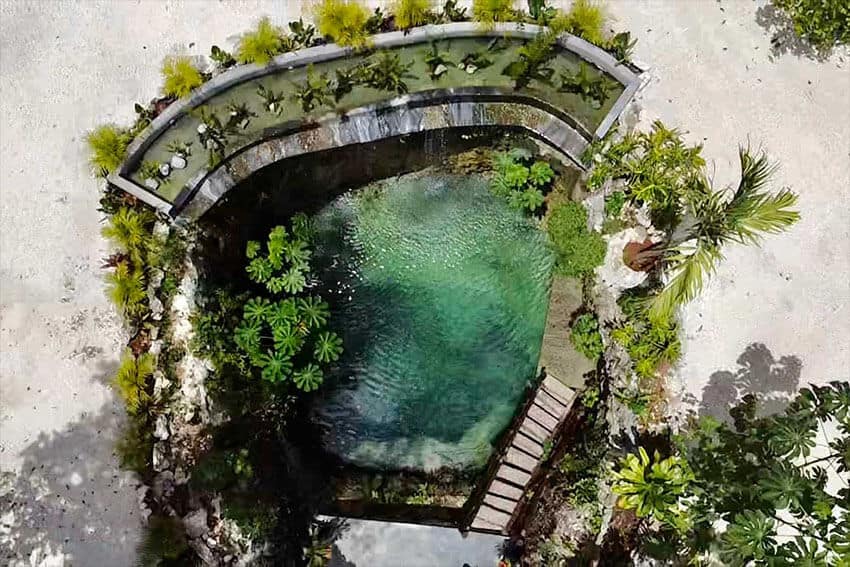
One luxurious Airbnb property ensconced in jungle near Puerto Morelos has its own cenote, or natural swimmable sinkhole.
Another with five separate villas and a private beach on the other side of the country in Punta Mita, Nayarit, goes for US $38,000 a night and is touted as the world’s most expensive Airbnb stay.

One of Quintana Roo’s Airbnb entrepreneurs is Rafael Solís, who rents out rooms in a residential building on the main tourist strip of Playa del Carmen.
“The new mode of workers is to be a digital nomad,” the former hotelier told the newspaper Milenio.
“In other words, people who are working remotely during the pandemic and who decide to move continually to work in a tourist destination,” Solís said.
In Tulum, where there are more than 6,200 Airbnb listings compared to just over 8,100 hotel rooms, the growth of offerings in the former category has been spurred by new construction.
The number of residential developments in the municipality, located in the southern portion of Quintana Roo’s Riviera Maya, increased from 123 to 625 between May 2020 and July 2021, according to the Mexican Association of Real Estate Professionals.
David Ortiz Mena, president of the Tulum Hotel Association, said that the rapid growth has caused problems.
Due to a lack of planning, growth in Tulum has been “complicated,” he said, explaining that sustainability has been threatened by the increased number of residents and visitors. Providing the services needed by the growing number of visitors has also been a challenge, Ortiz said.
Rodrigo, an Airbnb host with four apartments in Tulum, told Milenio that demand for short-term accommodation has increased in the resort town during the pandemic, and that the number of people seeking to buy a property and rent it out on Airbnb has also risen.
“A lot of people want to work in Tulum. For some reason they want to go to the beach … so they generally book long stays,” he said. “We get a lot of reservations for two months … a lot of them are foreigners from Europe.”
Rodrigo said the price of Airbnb accommodation makes it more attractive than hotels for a lot of travelers.
“Airbnb apartments are extremely cheap, … the average price for an apartment for seven people with a private pool is about 3,000 or 4,000 pesos [US $145-$195 per night], when … it would be a thousand times more expensive in a hotel,” he said.
Ortiz said the increase in violence and drug trafficking in Tulum could be related to the Airbnb boom.
“All this comes … from demand. If nobody buys drugs of course we wouldn’t have this sequence of problems. In the case of Tulum I think it’s important that this makes us reflect about the kind of tourism we’re promoting. … If one bets on party tourism, logically this type of consequence will follow,” he said.
“If on the other hand, we seek to promote sports, leisure, wellbeing, gastronomic or cultural tourism, I think it would be very difficult for this kind of [violent] atmosphere to permeate.”
With reports from Milenio, Travel + Leisure and Luxury Launches