President López Obrador on Wednesday took aim at large businesses that have laid off workers due to the coronavirus pandemic, charging that they should put the wellbeing of their employees before profits.
“Small businesses … are resisting the crisis … small business owners, men and women, are acting very responsibly, heroically, because they’re the ones who are taking greater care of the employment of their workers, [the small business sector] is where there have been fewer dismissals,” López Obrador told reporters at his morning news conference.
In contrast, the president continued, some large companies – “not all of them, of course” – have dismissed workers despite the government’s directive to maintain their workforces and continue paying their full salaries even if they been ordered to close.
López Obrador called on large employers to avoid dismissals and show solidarity with their workers as Mexico faces a growing public health and economic crisis.
“Let’s all behave well. These are times for fraternity, solidarity, humanism, not selfishness, not for only thinking about material things,” he said. “It cannot be that our god is money, that is not what characterizes the majority of Mexicans,” he added.
“We don’t want the bad behavior of a few [companies that are dismissing workers] to be copied by others. We still have time to make a respectful call … to those who are doing this: correct [your decision], it’s wise to change your opinion.”
López Obrador claimed that some of the recent dismissals from large companies and a large number late last year are related to outsourcing.

“This is wrong, now that we are going through this health crisis it’s doubly wrong that … they’re acting in this way. How is it possible that from one day to the next, a company is left without a single worker [because] they dismissed 800? It’s incredible,” he said.
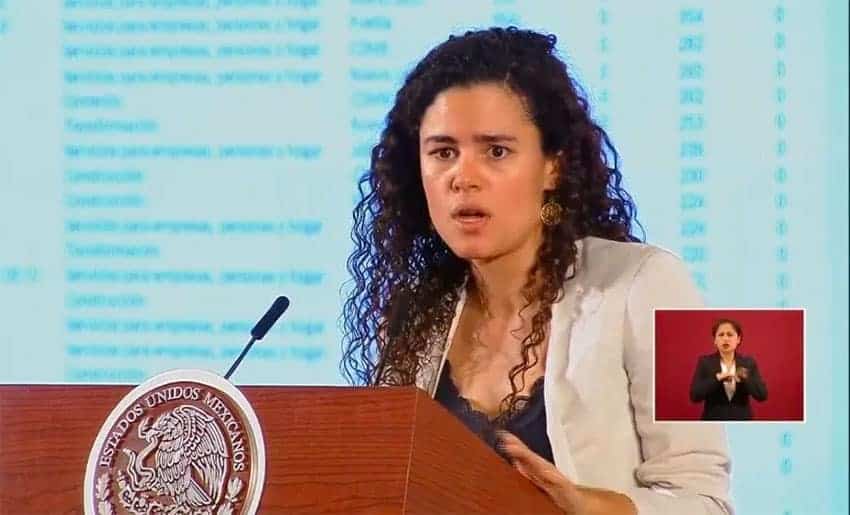
Labor Minister Luisa Alcalde said that almost 347,000 workers lost their jobs between March 13 and April 6, and that dismissals by businesses with more than 50 employees accounted for 85% of the total.
Quintana Roo, whose tourism industry has been decimated by the coronavirus pandemic, recorded the highest number of job losses in the period, with almost 64,000, followed by Mexico City, Nuevo León, Jalisco, México state and Tamaulipas. A total of 193,000 jobs, or 56% of the total, were lost in those six states, Alcalde said.
She said that there is no legal justification for companies to dismiss workers during the month-long health emergency period or not pay their full salaries. Foreign Minister Marcelo Ebrard said last week that employers that don’t comply with the government’s directive to keep workers on their books will face administrative sanctions or even criminal penalties.
For his part, the director of the Mexican Social Security Institute (IMSS) said Wednesday that those dismissed have already lost, or will soon lose, their IMSS benefits, including access to medical care.
“Small businesses have withstood [the crisis]; they have greater solidarity with their workers but large companies are always doing their [profit margin] calculations,” Zoé Robledo said.
Dismissing workers and and consequently taking away their medical benefits could place lives at risk, he added.
Source: Reforma (sp), La Jornada (sp)