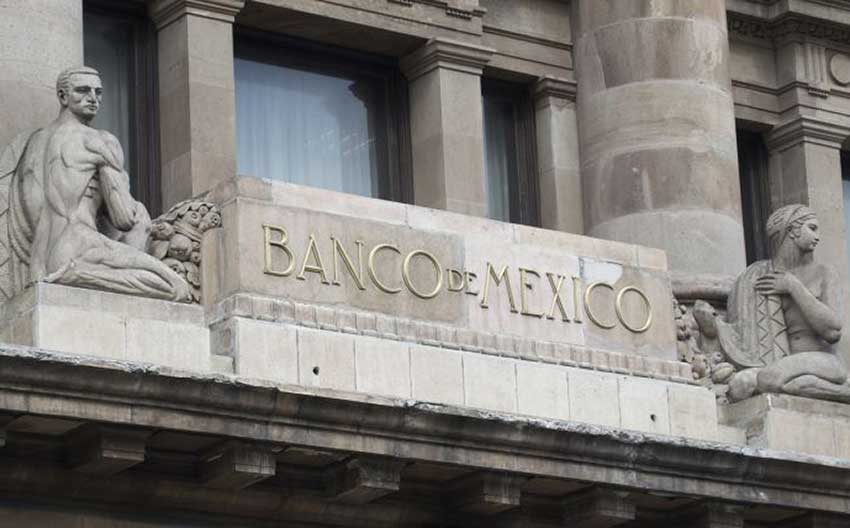
Private analysts consulted by Mexico’s central bank have lowered their forecasts for both economic growth and inflation in 2019 and 2020.
In the Bank of México (Banxico) March survey, analysts predicted GDP growth of just 1.56% this year, a 0.08% cut compared to their outlook in the February survey.
It was the sixth consecutive time that the financial experts have downgraded their 2019 growth forecast.
Government decisions, internal economic conditions, the security situation, low oil production and external factors such as a slowdown in the United States economy were all cited as factors that could hinder growth over the next six months.
The same analysts also cut their growth outlook for 2020 to 1.82% from 1.91%.
The forecasts for both this year and next are within the range predicted by Banxico itself in a report published in late February that said that an investment slowdown, recent fuel shortages, rail blockades and strikes had all taken a toll on the economy.
The federal government predicted 2% GDP growth this year in its federal budget but President López Obrador has repeatedly promised 4% economic expansion – a pledge widely seen as fanciful.

While private analysts’ latest growth forecasts will be disheartening for the government, their inflation outlook provides grounds for muted celebration.
The inflation forecast for both 2019 and 2020 was cut to 3.65% compared to 3.67% and 3.71% a month ago. The central bank targets 3% annual inflation with 1% tolerance above and below that.
The analysts consulted by Banxico also predicted that the peso will fare slightly better in 2019 compared to their outlook in the February survey.
They said that one US dollar will buy 20 pesos at the end of the year compared to a prediction of 20.13 pesos a month ago.
The peso is currently trading at 19.14 to the greenback, according to foreign exchange rate website xe.com.
Source: Reuters (sp)