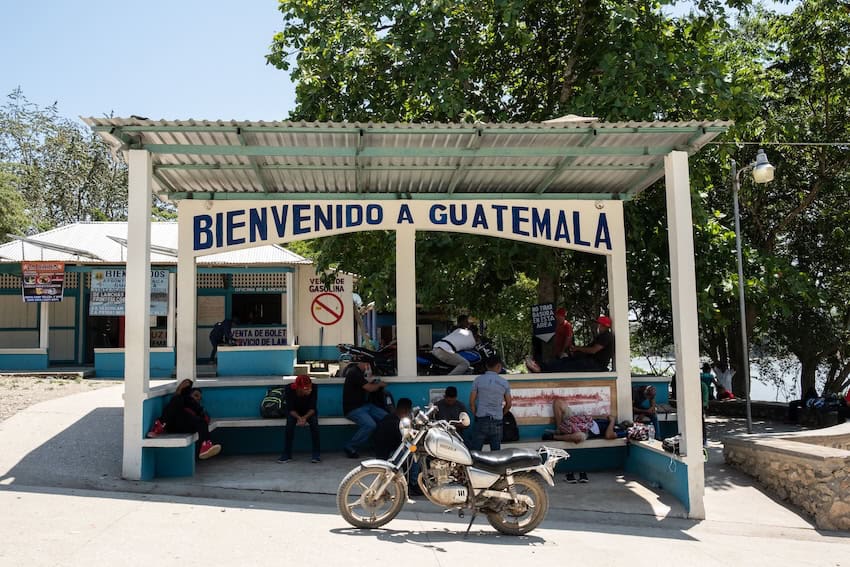
Guatemala granted humanitarian status to 161 Mexicans who crossed into that country last week fleeing organized crime in Frontera Comalapa, a municipality along the Mexico-Guatemala border in the state of Chiapas.
Mostly families, women and children, these individuals were living in rented accommodations, temporary shelters and relatives’ homes in the Guatemalan border town of La Mesilla.
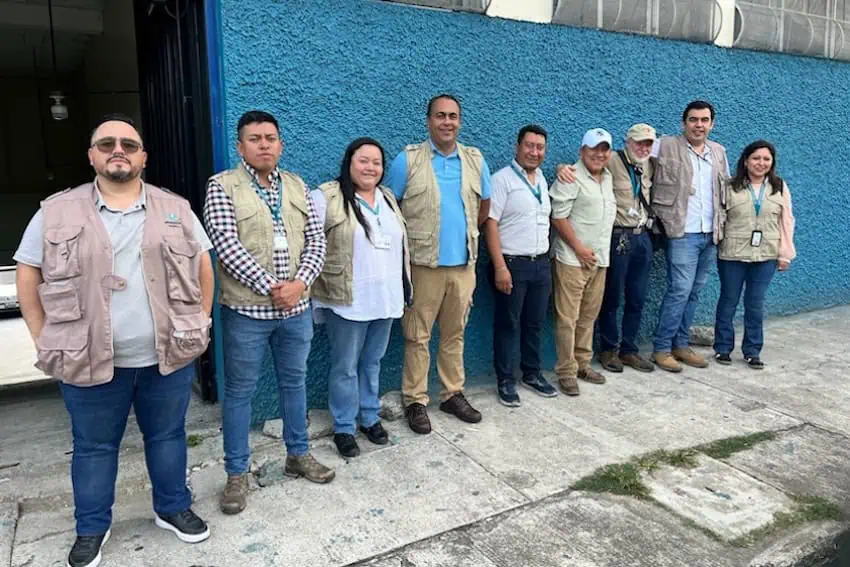
“A total of 39 families were interviewed and received this humanitarian pass, in addition to receiving inter-institutional assistance in the department of Huehuetenango,” the Guatemalan Institute of Migration (IGM) said in a statement.
The pass is typically granted by Guatemala in cases of humanitarian crises, natural disasters, or violent conflicts that put lives at risk. In this case, it allows the displaced families to reside temporarily in Guatemala and access basic services such as healthcare and education. It was granted for a period of 30 days, with the possibility of extension.
Guatemalan authorities have provided medical, psychological, food and hygiene assistance to the displaced, as well as inter-institutional security in the area.
Meanwhile, Chiapas Governor Eduardo Ramírez denied there were any forced displacements.
#AsistenciaHumanitaria | El equipo del IGM se encuentra en Huehuetenango, brindando asistencia humanitaria junto a diferentes instituciones y ha otorgado estatus de Permanencia por Razones Humanitarias a las familias mexicanas desplazadas en nuestro país. pic.twitter.com/ght8ABOvlF
— Migración Guatemala (@MigracionGuate) August 21, 2025

On Wednesday, he wrote on his official X account that the people who fled to Guatemala are not displaced people but rather relatives of alleged criminals, some already detained, who are sheltering in the neighboring country. He accused organized crime operating in Guatemala of wanting to discredit Chiapas’s public security strategy by claiming there are forced displacements.
“I categorically deny that,” Ramírez said.
Despite the governor’s denial of forced displacements, the IGM reports that there has been “communication on the issue” with Mexico’s National Migration Institute. Moreover, both Mexico and Guatemala have acknowledged the security crisis along their border by signing a series of agreements that include initiatives aimed at enhancing security along the border in response to organized crime.
Why did they have to cross the border?
Chiapas, a key link to drug trafficking routes to Central America and the United States, is experiencing a fierce struggle between the Jalisco New Generation Cartel (CJNG) and the Sinaloa Cartel. This violent territorial dispute has plunged the region into a wave of violence that includes armed clashes, roadblocks, extortion, and forced recruitment, causing the internal displacement of hundreds of people.
The Internal Displacement Monitoring Center estimates that in 2024 alone, some 26,000 people were forced to leave their homes in Chiapas, far surpassing the estimated 11,000 people that fled the previous year. Many of the displaced are fleeing to Guatemala, as roadblocks imposed by criminal groups prevent them from moving to other regions of the state.
This unusual flow of Mexicans into Guatemala reverses the usual northbound migration route and puts the Central American nation in the role of host country, testing its humanitarian response capacity and protocols for handling forced displacement crises.
With reports from El Tiempo, BBC and The Associated Press