
A legal battle between two celebrities is inspiring a new bill in Mexico that seeks to prevent absent parents from blocking their children’s travel, paperwork or passports by using legal consent as a control tool.
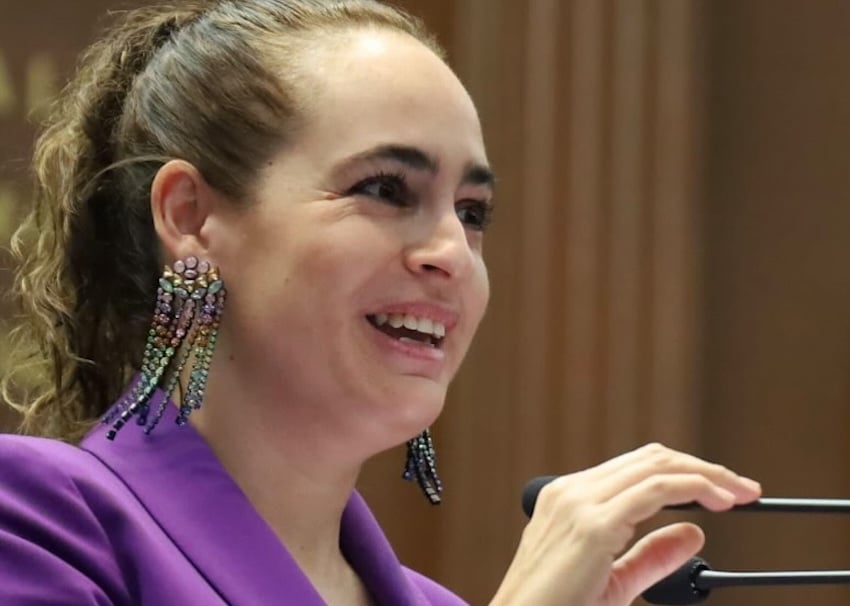
Dubbed “Cazzu’s Law” and promoted by Deputy Sandra Arreola Ruiz from the Green Party (PVEM) in Michoacán, the proposed law aims to guarantee the right to mobility of children and adolescents in cases of parental abandonment.
The bill’s name takes after the case of Argentine singer Cazzu (Julieta Cazzucheli) over travel restrictions upon her daughter following her separation from the child’s father, Mexican singer Christian Nodal.
The case gained momentum following Cazzu’s appearance on the “Se regalan dudas” podcast, where she said she was unable to bring her daughter with her on her international tours because Nodal wouldn’t allow the child to travel with her.
Both in Mexico and Argentina — where Cazzu and her daughter live — the rule of thumb is that a minor requires authorization from both parents to travel abroad when they share parental authority over the child.
In the “Se regalan dudas” episode, Cazzu revealed her frustration after Nodal’s lawyer said in a mediation meeting that Nodal had “control” over her and her daughter.
“It’s well known that I do the same job as him [Nodal] and I need to travel, right? The permit hasn’t arrived since then,” she said. “And it’s been over a year now and I still don’t have that permit.”

In an interview with Billboard en Español, Arreola Ruiz said that Cazzu’s story “brings attention to a social issue impacting Mexico but also the broader region, where we unfortunately have a culture of paternal abandonment,” she said, noting that over 1.3 million women in Mexico are mothers, many of them single, and over 410,000 men are child support debtors.
A similar bill has been drafted in Argentina to allow for the provisional suspension of parental responsibility in cases of serious non-compliance.
According to Deputy Ernesto Núñez Aguilar, the PVEM leader in Michoacán, the bill “is not directed against anyone, but rather in favor of those who do fulfill their obligations — and, above all, in favor of children — so that their development is never again compromised by abandonment.”
Cazzu’s Law is now being analyzed by Congress in Mexico, where it is in the initial discussion phase.