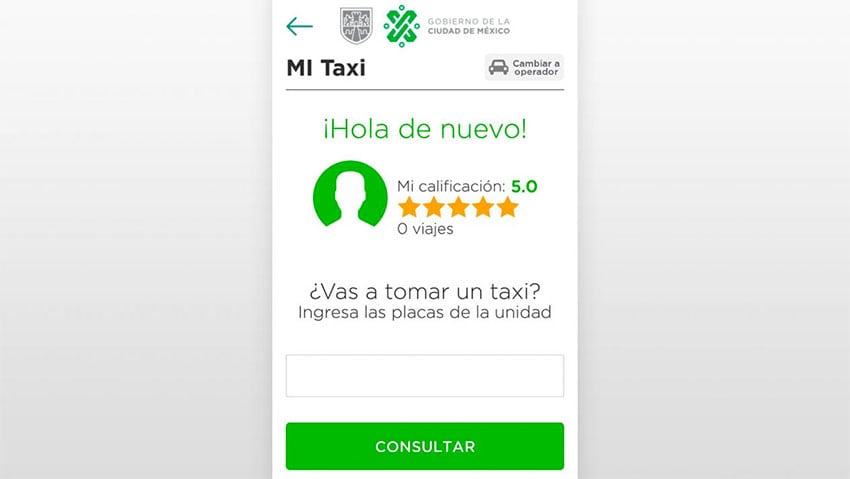
A new mobile application offers security features for taxi passengers in Mexico City.
Mayor Claudia Sheinbaum presented the new app on Thursday as a tool to improve security for taxi users through geolocation monitoring and a panic button.
Called “Mi Taxi,” the app allows the city’s C5 security command center to monitor a person’s location while traveling in a taxi on the streets of the capital.
The app features a C5-linked panic button that passengers can use if they require urgent police or medical assistance, and they can also use “Mi Taxi” to rate their driver and to advise family or friends of their location in real time.
Sheinbaum said that taxi drivers have until September 10 to register their details on the platform so that passengers can identify who they are traveling with. Failure to register will result in a fine, the mayor said.
By November, the Mexico City government says, it will be possible to use “Mi Taxi” to request to be picked up at a designated location as users of ride-hailing services such as Uber and Didi can currently do with those companies’ apps.
At a later date, taxi passengers will also be able to use the government app to pay their drivers using credit or debit cards, PayPal and QR codes.

Compatible with both Android and iOS mobile operating systems, “Mi Taxi” was developed by the Mexico City government’s Public Innovation Digital Agency.
People interested in using it must first download and register their details on the CDMX government app Alameda Central, which is available free of charge in the Google Play and Apple app stores.
Source: El Financiero (sp)