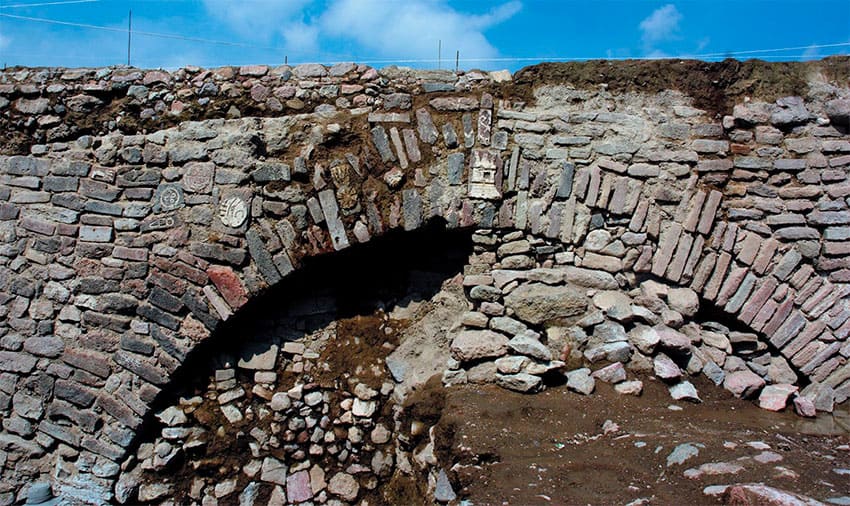
Archaeologists from the National Institute of Anthropology and History (INAH) have found 11 pre-Hispanic images in a tunnel in Ecatepec, México state, that is part of a dike system that dates back to colonial days.
Among the images discovered on the sides of the 8.4-meter-long tunnel are petroglyphs and stucco relief panels, INAH said in a statement.
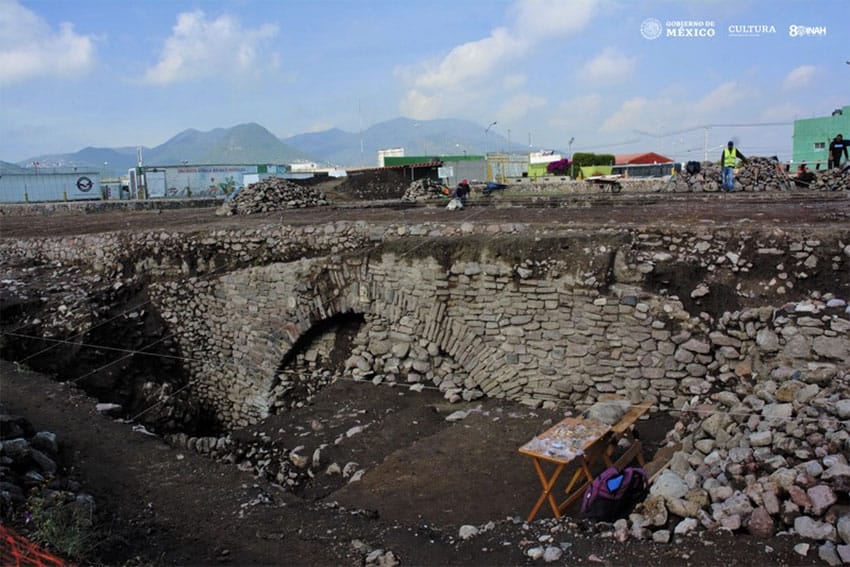
The tunnel is part of the four-kilometer-long 17th-century dike system known today as the Albarradón de Ecatepec.
A war shield, the head of a bird of prey and a “paper ornament” are among the images carved into the walls of the tunnels while a teocalli, or temple, is etched into the central stone of the arch entrance. The temple is dedicated to the rain god Tláloc, the INAH archaeologists concluded.
Some of the images are still being studied to determine their exact nature and meaning.
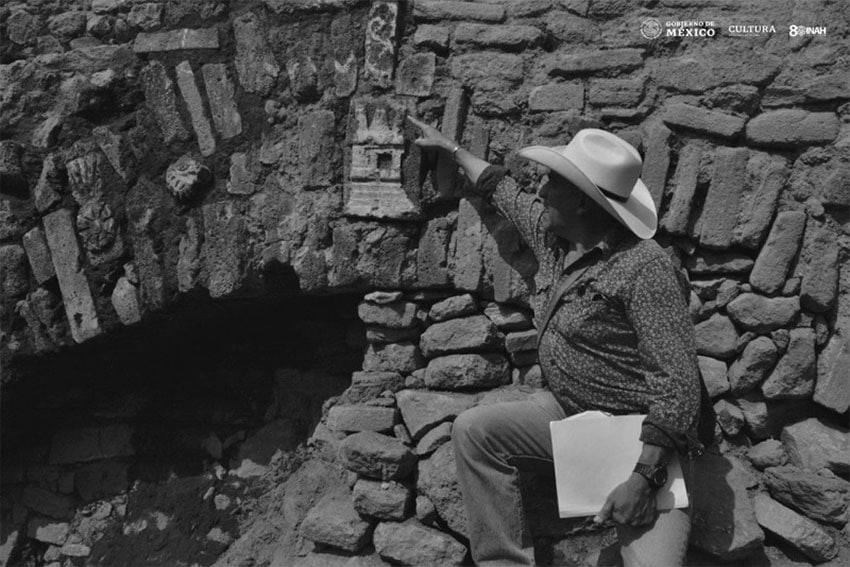
Raúl García, coordinator of a project to preserve the archaeological treasures of the dike system, said that one hypothesis is that the images were made by indigenous people who lived in the pre-Hispanic towns of Ecatepec and Chiconautla. Residents of both towns worked on the construction of the dike, he said.
The archaeologist explained that the tunnel where the images were discovered is in a section of the dike known as the Patio de Diligencias.

The glyphs and stucco panels, all of which have been damaged by hundreds of years of rain, will be covered for protection, García said.
The Albarradón de Ecatepec was declared a historical monument in 2001 and will soon be incorporated into a public park.
México state INAH director Antonio Huitrón said the opening of the park will allow people to enjoy the “cultural heritage to which they are heirs.”
The tunnel where the images were discovered will also be open to the public although the originals won’t be on display.
Huitrón said the stones featuring the petroglyphs and stucco panels will be removed and transferred to the Casa Morelos Community Center in Ecatepec. Stones with replicas of the images will be installed in their place, he explained.
Ecatepec, Mexico’s second most populous municipality, is located just north of Mexico City and is part of the Valley of Mexico metropolitan area.
Mexico News Daily