An estimated 70 migratory bird species travel every year to the wetlands of the Colorado River delta but the wetlands are running out.
The delta is considered one of the most important migration regions in the world due to the number of species but an estimated 80% of the original delta wetlands have been lost.
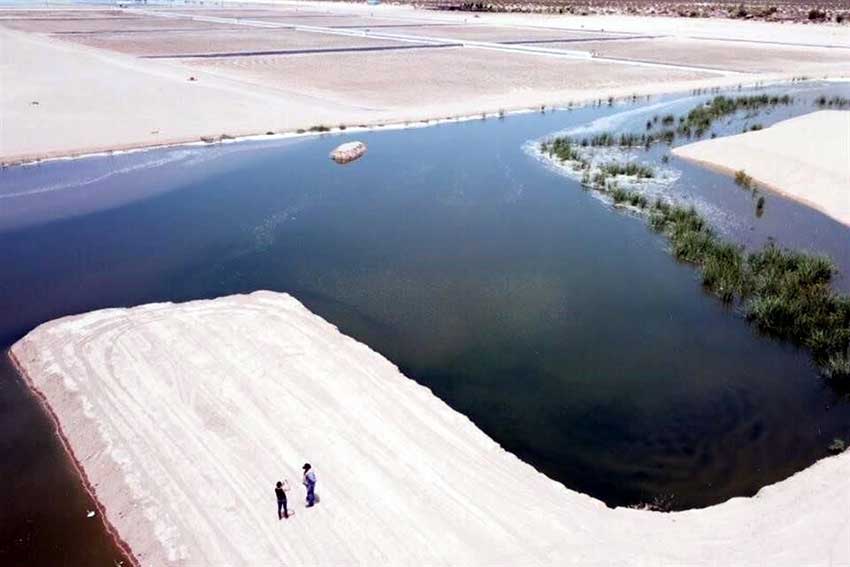
Now, government officials and environmentalists are hoping to give migratory birds from Central and South America a second chance with the Cucapá artificial wetland in Sonora.
“A big majority of birds that will benefit are aquatic, and northern shoveler ducks are the most numerous,” said the biological monitoring director at the northwest chapter of Pronatura, the largest environmental conservation group in Mexico.
Alejandra Calvo added that the peregrine falcon will also find a suitable habitat in the artificial wetland.
The project lies on the sands of the Gran Desierto de Altar, one of the major sub-ecoregions of the Sonoran Desert. Extending over 25 hectares, the wetland adjoins a municipal water treatment plant, source of the water that naturally infiltrates an underlying water table.
The manager of the plant, Raúl Campuzano, explained that the system used to replenish the aquifer is unique in Latin America.

The artificial wetland was officially dedicated by the municipal government of San Luís Río Colorado and Pronatura in March, and specialists affirm that its positive environmental impact can already be gauged.