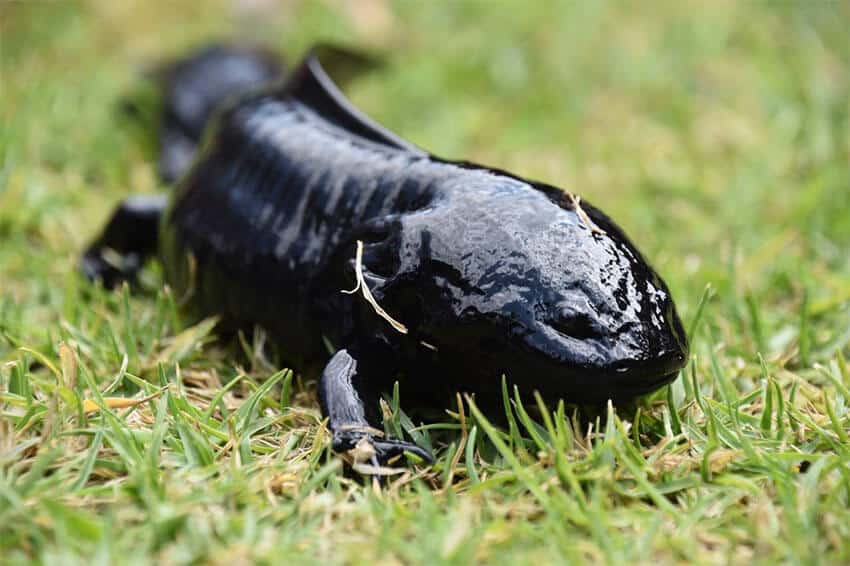
A project designed to ensure the long-term survival of the axolotl was launched in Mexico City on Wednesday.
Called Ajolotón, a name derived from the Spanish word for axolotl (ajolote), the initiative will foster the reproduction of the amphibians in seven Mexico City boroughs currently ruled by the Morena party: Xochimilco, Iztapalapa, Iztacalco, Tláhuac, Venustiano Carranza, Milpa Alta and Gustavo A. Madero.
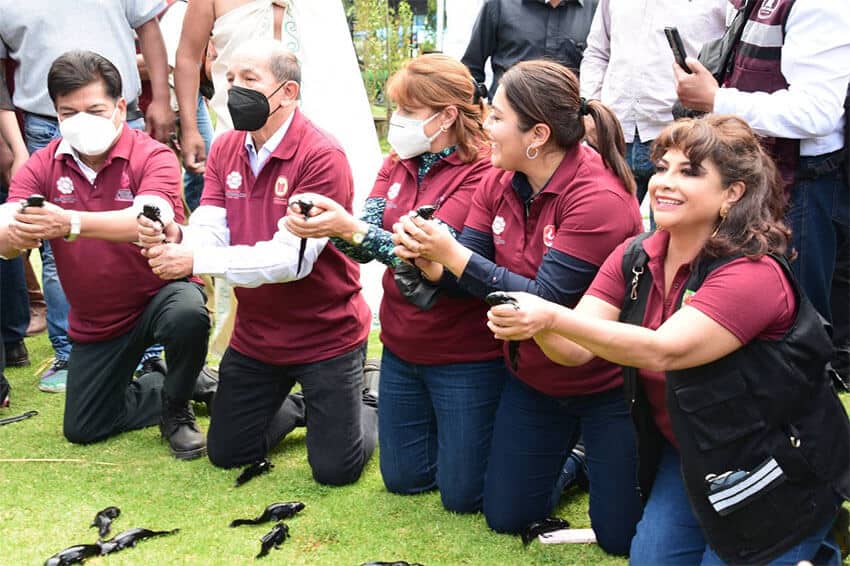
A launch event attended by the mayors of the boroughs was held next to a canal in Xochimilco, where most of the capital’s axolotls live.
Xochimilco Mayor José Carlos Acosta said that one of the main ways the conservation of axolotls – an endangered species – will be promoted is through the creation of ajolotarios, or axolotl habitats, where the amphibians can reproduce and grow in a clean and safe environment.
Two-thousand specimens were released into existing Xochimilco habitats on Wednesday.
Acosta also spoke about axolotl conservation efforts led by the Institute of Biology at the National Autonomous University (UNAM) in recent years.
He said that researchers from UNAM, the Metropolitan Autonomous University, the University of Kent in England and experts from Cuba and Japan have contributed to efforts to protect the species and encourage reproduction in 70 ajolotarios in Xochimilco.

“More canals than streets are cleaned on a daily basis, … the maintenance is more costly in the [Xochimilco] lake [area] than … the collection of household trash,” Acosta said.
With reports from Tu Red Capital, Reforma and Excélsior