The Defense Ministry (Sedena) on Thursday acknowledged that it had authorized overflight and emergency landings for four U.S. aircraft that landed that day in Mexican territory.
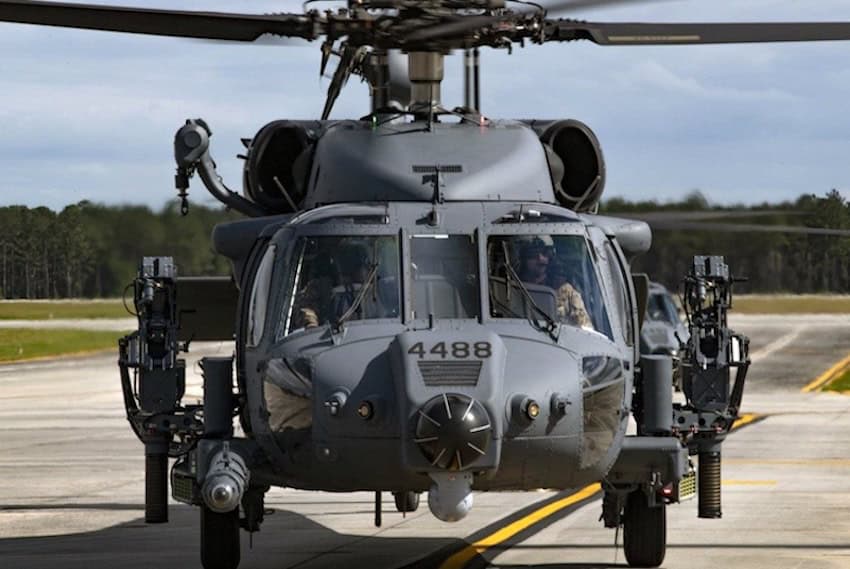
The U.S. Air Force aircraft involved in Thursday’s incident were two Hercules tanker aircraft for in-flight refueling and two HH-60W helicopters.
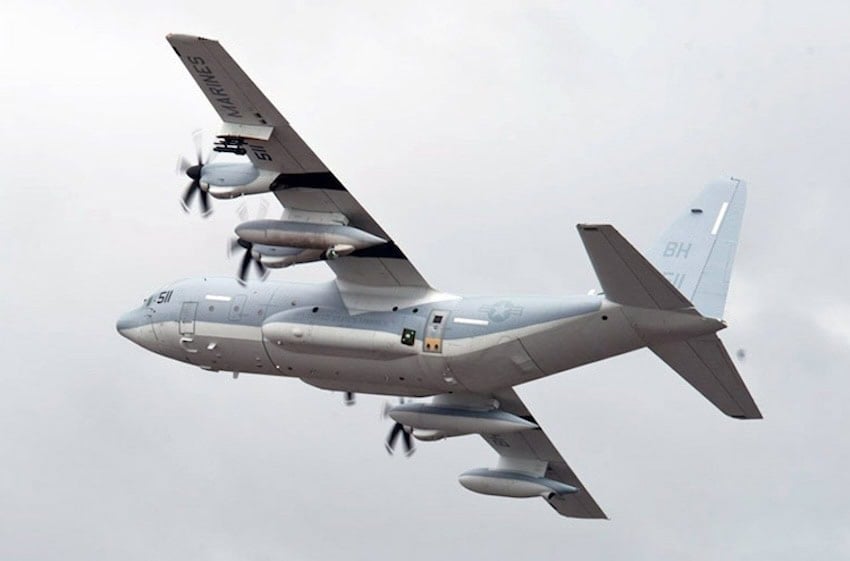
In a social media post, Sedena said it “authorized the overflight in national airspace of two Hercules tanker aircraft and two helicopters from the U.S. Air Force, which were taking part in the rescue of a patient from a vessel at sea 400 nautical miles west of [the Baja Peninsula].”
No details were provided regarding where the planes landed, how long they were within Mexican airspace or for how much time they remained on the ground.
This incident comes a little more than two weeks after the landing of a U.S. Air Force plane in Toluca, just 65 kilometers (40 miles) west of Mexico City. It was allegedly linked to training activities that had not been previously reported publicly, and generated some controversy.
At the time, President Claudia Sheinbaum stated that the entry of U.S. military aircraft into the country would only be authorized under “special conditions.”
Days earlier, the U.S. Federal Aviation Administration urged U.S. aircraft operators to “exercise caution” when flying over the eastern Pacific Ocean near Mexico, Central America and parts of South America, citing “military activities.”

In response, Sheinbaum sought to quell concerns related to the two incidents, saying that the U.S. “wasn’t conducting any military activity in national territory.”
In an official bulletin issued on Thursday, Sedena said that the authorization was granted “in accordance with the Coordination Guidelines for Authorizing Overflights in Mexican Airspace and Landing of Foreign Aircraft.”
Sedena also reaffirmed its “commitment to international cooperation to safeguard the lives of people and regional security,” while citing the principles of “reciprocity, shared and differentiated responsibility, mutual trust and respect for sovereign decisions and territories.”
Authorization for overflights and landings in Mexican airspace must strictly adhere to Federal Civil Aviation Agency regulations, which generally require obtaining permits 48 hours in advance.
With reports from El Universal, Milenio, Sin Embargo and Nación321