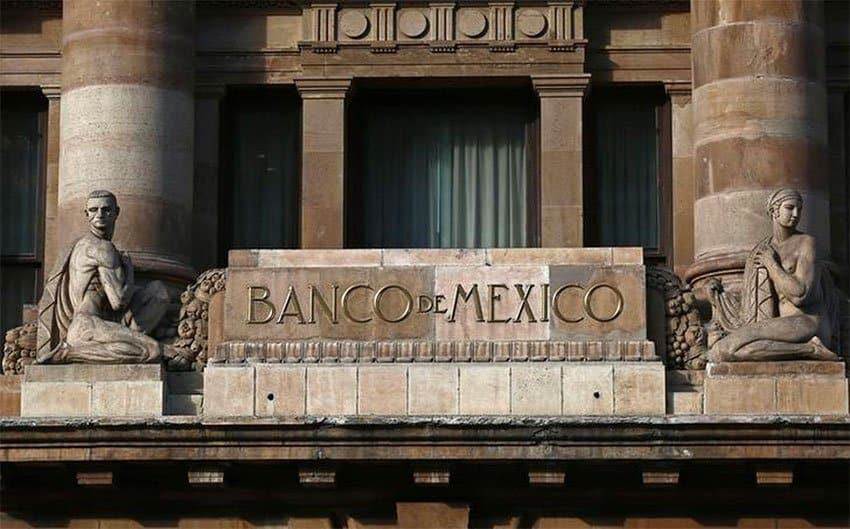
The Bank of México (Banxico) has cut its growth forecast for next year, citing uncertainty over the economic policies the new government will pursue.
In its third-quarter report, Banxico predicts growth of 1.7% to 2.7% in 2019, a 0.1% reduction at both ends of the scale compared to its second-quarter outlook.
It also said it was lowering growth expectations for this year to between 2% and 2.4%, down from a 2% to 2.6% range in its last report.
The forecast for 2020 is slightly better, with economic growth of between 2% and 3% expected.
Banxico cited concerns about “economic activity and the country’s capacity to generate an environment of confidence and certainty that will promote investment.”
A delay in the ratification and implementation of the new North America trade agreement, now known as USMCA, and increasing protectionism at a global level could also pose risks to Mexico’s growth, the bank said.
In addition, volatility in international financial markets, a slowdown in public spending at the start of the new administration due to challenges associated with implementing its policy agenda, insecurity, corruption, impunity and an absence of the rule of law could also affect Mexico’s economy, it added.

Potential for growth in the long term could suffer if “monetary policy decisions generate increased concern in markets and a sustained loss of confidence in Mexico as an investment decision,” Banxico said.
The central bank also raised its inflation outlook for 2019 to 4.7% from 4.2%. Possible policy changes also pose a risk to inflation, Banxico said, explaining that it was necessary to protect economic fundamentals.
Exchange rate pressure and high energy prices could also lead to higher across-the-board prices.
President-elect López Obrador and has transition team have tried to calm markets by promising economic prudence, respect for the central bank and business-friendly policies.
“We’re going to make investors trust us. Those who invest in companies, in stocks, in the financial market, will have their investments assured and obtain good returns,” López Obrador said yesterday.
The veteran leftist’s actions rather than his words, however, have generated concern in markets and the private sector.
López Obrador’s decision last month to cancel the new Mexico City Airport and a predilection for delegating key decisions to the people through public consultations have been cited by financial analysts as factors that have contributed to a loss of investor confidence.
Legislative proposal’s related to the banking and mining sectors presented by lawmakers from the president-elect’s Morena party relating have also led to significant losses on Mexico’s stock exchange.
Last week, private sector forecasts showed that the outlook for the Mexican economy in 2019 in terms of the value of the peso, growth, inflation and interest rates had deteriorated significantly in the space of a single month.
López Obrador, some economists said, is at least partially to blame.
Source: Milenio (sp), El Economista (sp)