Seven people who suffered overdoses in the northern state of Chihuahua had taken an illegal substance containing fentanyl, known as “black apache” or “black fentanyl”, according to state authorities.
Three of the victims were in the city of Chihuahua, while a further four were at the border city of Ciudad Juarez. All victims are in treatment for addiction, but nothing has been released about their current condition.
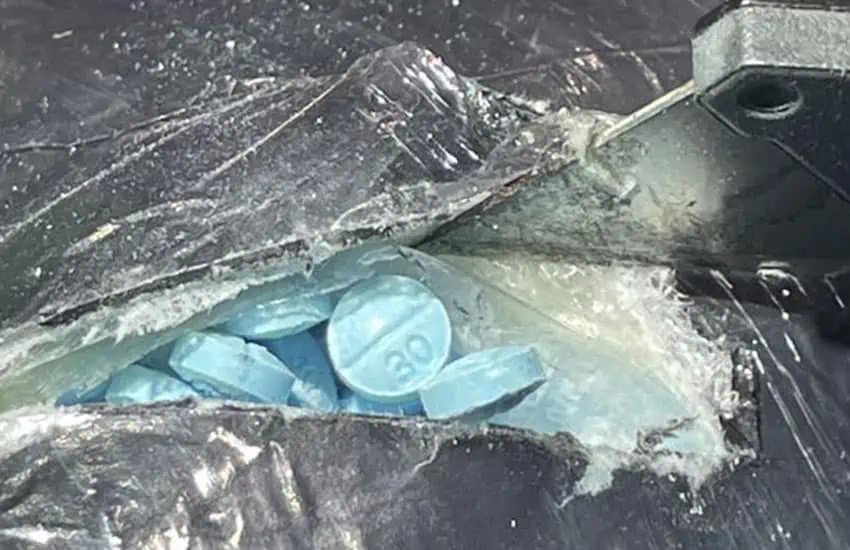
Earlier this month in Ciudad Juárez, the federal Attorney General’s Office seized an unidentified black paste which they later identified as containing fentanyl. The same substance was also discovered by U.S. Customs and Border Patrol agents at the El Paso, Texas border crossing.
“The raw material comes from Asia and arrives through [our] ports, [and once it is] here, [fentanyl] is clandestinely manufactured in laboratories,” State Commissioner for Attention to Addiction, Javier González told a press conference.
While little is known about this new form of the drug, health authorities in the United States have warned that the chemical composition suggests that it is a purer, and therefore more dangerous, form of fentanyl. Other forms of fentanyl that are frequently found in Mexico and the United States are distributed as blue or rainbow-colored pills.
The Public Safety Minister of Ciudad Juárez, César Muñoz Morales, said that while authorities detected its presence and distribution at the northern border, the drug was likely being produced in the states of Michoacán, Jalisco and Sinaloa.
The U.S. has been exerting increased pressure on Mexico to stymie the smuggling of fentanyl into the country, where according to the DEA, nearly 200 citizens die every day from overdoses. In April, the DEA said that the Jalisco New Generation (CJNG) and Sinaloa cartels represent the “greatest criminal threat the U.S. has ever faced.”

President López Obrador has said his government is actively working to combat illegal trafficking of fentanyl, and that the synthetic opioid is not manufactured in Mexico but rather in China, and then smuggled into the country, a claim their government has denied.