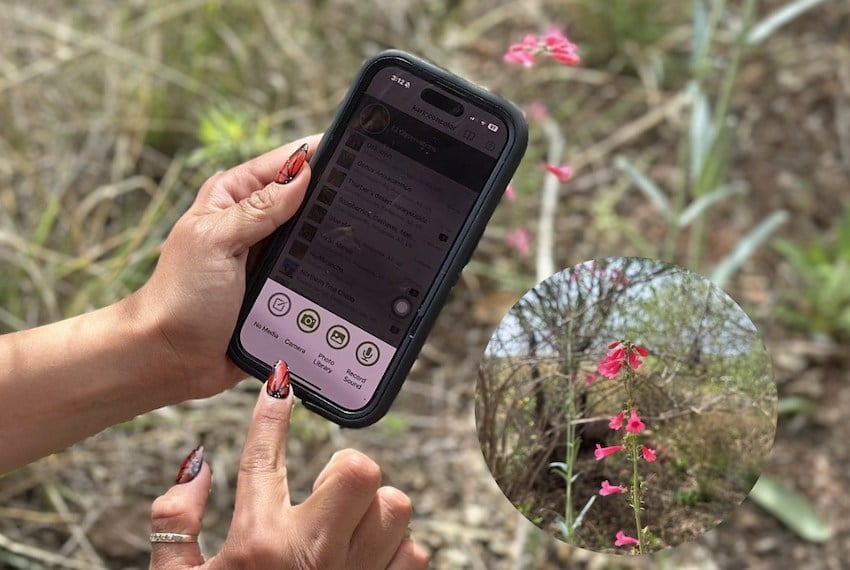
Along a border better known for razor wire, patrol trucks and hundreds of miles of steel fencing, volunteers this spring are fanning out with smartphones to count wildflowers, lizards and birds.
Border BioBlitz 2026 — El BioBlitz de la Frontera in Spanish — is a binational “community science” species survey in April and May taking place in various canyons and desert regions adjacent to the 3,145-kilometer U.S.-Mexico border.
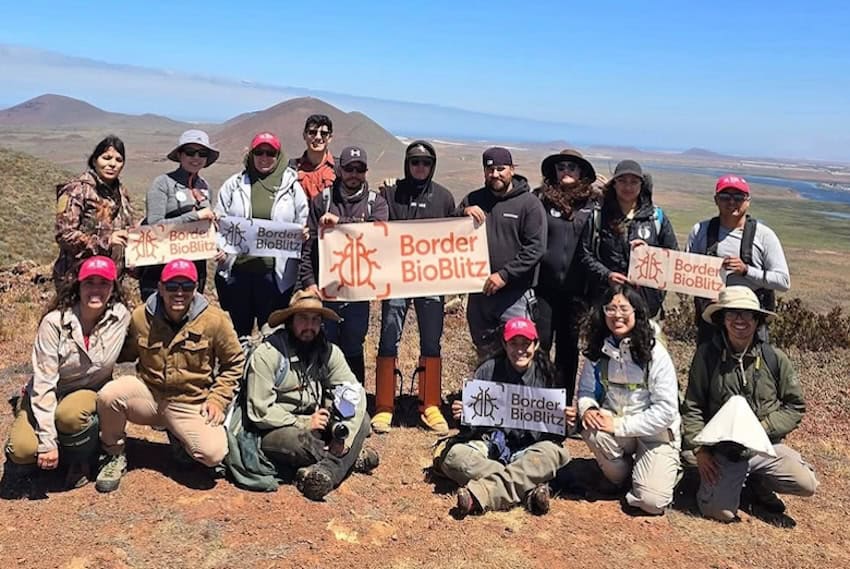
Individuals and teams roam priority areas within 15 kilometers north and south of the international border from the Pacific to the Gulf of Mexico There are also organized events at different points.
Participants use the iNaturalist app to upload photos and GPS-tagged records of plants and animals they find.
Recent observations include a Southwestern speckled rattlesnake and a sweet clover root borer moth, and many people are coming across a rare, mushroom-shaped, parasitic desert plant called “sand food.”
The project’s online “statistics page” includes rankings for most observations and what species (such as saguaro cactuses and California poppies) are spotted most often.
In Ciudad Juárez, tours on April 18 and 26 will send residents into the Muleros/Cristo Rey range and along the Rio Bravo, opposite Sunland Park, New Mexico, and El Paso, Texas, to document borderland species. Similar outings are planned from south Texas to Southern California and from Ciudad Juárez to Tijuana.

The effort is led by the Next Generation of Sonoran Desert Researchers (N-Gen), with the San Diego Natural History Museum and Botanical Community Development Initiatives, in partnership with local groups such as the Sierra de Juárez collective.
“It doesn’t matter if you have experience or not,” said Raymundo Aguilar, coordinator of Sierra de Juárez. “Everyone is welcome. You just need curiosity and a desire to connect with nature.”
Participants are urged to leave rocks, plants and animals undisturbed, and to have their phone loaded with iNaturalist, an app being used in part to build open biodiversity data.
Organizers say the BioBlitz aims to “record as many species as possible,” filling data gaps in an environmentally rich but politically fraught region.
Past editions have discovered rare or little-known plants, such as Tecate cypress and carpets of common goldfields growing right up against a portion of border wall.
The volunteer work dovetails with efforts by botanists who have named dozens of new plant species in the border region and used field data to flag sites that might deserve new protections.
The original U.S.-Mexico Border BioBlitz in 2018 logged more than 800 species at 11 locations along roughly 500 miles of border. In recent years, roughly 1,000 volunteers have participated.
For more information, visit the BioBlitz 2026 home page.
Mexico News Daily