The closure of the Mexico-United States border to nonessential traffic since early last year due to the coronavirus pandemic has caused big economic losses in U.S. border cities but some gains in their Mexican counterparts.
The economies of U.S. border communities have suffered losses of US $10 billion since March 2020 due to the inability of many Mexicans to cross the border to go shopping, eat in restaurants and fill up their cars, according to a study by José Iván Rodríguez Sanchez of the Baker Institute Center for the United States and Mexico at Rice University in Texas.
Meanwhile, Mexicans who would normally shop in the United States have spent an additional 45 billion pesos (US $2.24 billion) in Mexican border cities since the beginning of the pandemic, according to the Confederation of Chambers of Commerce, Services and Tourism (Concanaco).
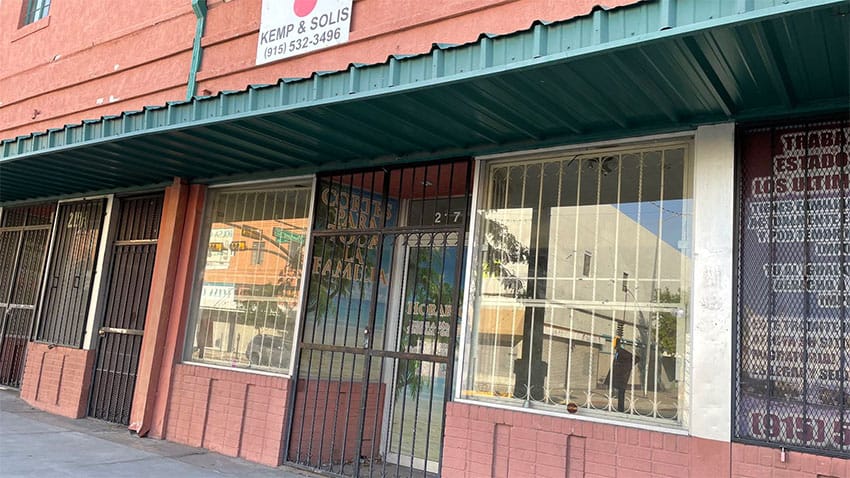
In shopping districts located near border crossing points in towns and cities in Texas, the lack of Mexican visitors has forced many stores to close, reported the news website Al Día Dallas. A large number of the shuttered businesses – many of which sell items such as clothes, shoes, perfume, wedding dresses and 15th birthday dresses – had depended on Mexican customers for years, if not decades.
“To walk around and see businesses closed is very sad,” said Teclo García, director of economic development for the city of Laredo, Texas, located across the border from Nuevo Laredo, Tamaulipas.
“That’s the most painful thing, we don’t know whether they will open again or not.”
The estimated US $10 billion in losses is set to rise as the border between remains closed to nonessential traffic, although there is an expectation that it will open relatively soon as the priority vaccination of young people in Mexican border communities continues.

“Border businesses are facing an unprecedented crisis because thousands of people are no longer crossing to consume and that deals a direct blow to the heart of these border communities,” Rodríguez told Al Día Dallas.
“And the Mexicans are also losing because they used to cross [the border] to buy goods they got more cheaply in the United States and now they have to buy them in Mexico at a higher price,” he said.
His remarks are backed up by United States Department of Transportation data that shows that vehicular traffic from Mexico to the U.S. declined 50% annually to March 2021, while cross-border foot traffic was down almost 61%.
The silver lining for Mexico is that the inability of many Mexicans to cross into the United States has benefited businesses in Mexican border cities from Tijuana in the west to Matamoros in the east, according to Julio Almanza, a Concanaco vice president in the northern border region.
He said the economies of Mexican border cities have also benefited from visiting U.S. citizens, who have routinely been let into Mexico despite the border ostensibly being closed to nonessential travel for most of the pandemic before restrictions on southbound travel were recently eased.
Many Americans first came to Mexico to look for essential items they couldn’t find at home, such as toilet paper, and they have continued to come, Almanza said.
Sales in Mexican border city businesses “have increased 40% permanently,” he said, adding that the flow of U.S. visitors increased further as vaccines were rolled out rapidly north of the border.
With reports from Al Día Dallas and Reforma