As Mexico thirsts for beer and stocks in many states have all but dried up, the economic impact of the closure of breweries due to the coronavirus pandemic mounts.
Negotiations to reactivate the beer industry “are at a standstill,” admits the president of the National Agricultural Council (CNA), Bosco de la Vega Valladolid, who estimates that nearly 5 billion pesos, US $207.1 million, in federal taxes have gone uncollected and export losses each month hover around 400 million pesos, or US $16.5 million.
Despite predictions earlier this week from Ricardo Sheffield Padilla, head of the consumer protection agency Profeco, that beer production in Mexico may start up again in mid-May, the decision lies with the Ministry of Health’s Hugo López-Gatell, who de la Vega says “won’t listen to reason” as far as beer is concerned.
Communication between the Health Ministry and the beer industry has broken down, despite an attempt by Agriculture Minister Víctor Villalobos Arámbula to serve as an intermediary between the beer industry and the Ministry of Health.
“The last answer we had was no,” de la Vega told the newspaper Milenio. “This is a violation of the law! The law allows agribusinesses to operate as essential if they are priority industries, and breweries are a priority industry.”
De la Vega estimates that around 25% of all crops grown in Mexico go to support the beer industry which employees, directly and indirectly, around 600,000 people. Beer is also the lifeblood for 800,000 corner stores where beer makes up 80% of total sales, the CNA leader argues.
“This is bad news for producers, for industrialists, for consumers and for the government,” says de la Vega. “I just returned from Sinaloa and beer is already selling on the black market for double the price.”

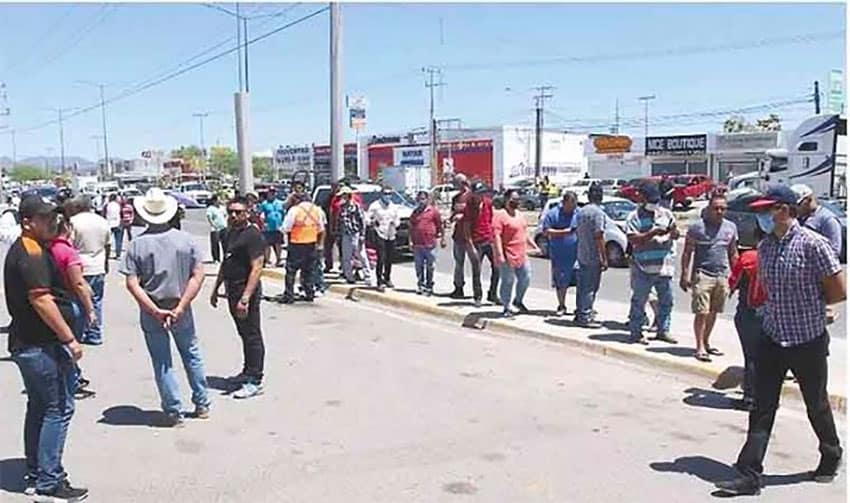
In Hermosillo, Sonora, thousands of people began lining up at dawn Wednesday, waiting for hours in 45 C heat for the chance to purchase one overpriced 24-pack of beer each at 54 stores that still had stock. And Mexico’s beer shortage doesn’t look like it will let up anytime soon.
De la Vega says that the damage to the industry will be lasting. Stocks of barley are beginning to spoil, and even if the green light is given later this month to reopen, it will take time to ramp up production as the fermentation process alone takes between 30 and 60 days.
“The breweries are going to have to start from scratch,” he lamented.
Source: Milenio (sp), El Universal (sp)