Buggies go horseless in Yucatán, gasoline engines take over

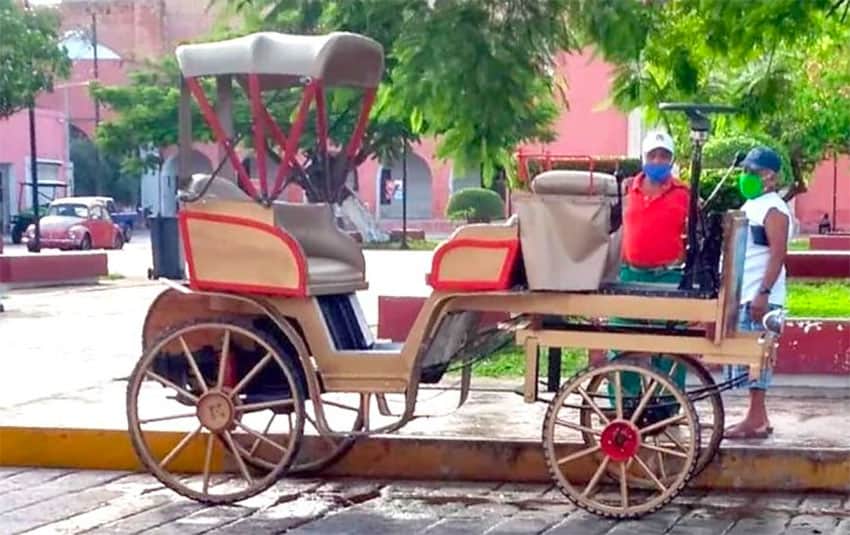
Motul, Yucatán, has become the second city in the state to replace horse-drawn carriages with motorized ones following pressure by animal rights activists to abandon the practice, citing animal cruelty. 

Mérida was the first city in the state to begin using gas-powered buggies, which it did in November 2019. 

Horse-drawn carriages have been banned in Cozumel, Quintana Roo, since May as the practice violates the state’s animal welfare laws. 

They were also banned in Acapulco, Guerrero, this spring after the state decided to begin enforcing animal welfare laws on the books since 2014.

In that city, buggy drivers have taken to pulling the carriages with ATVs provided by the state government. Carriage drivers also received 10,000 pesos (US$ 469) from the government and a year’s worth of free maintenance on the four-wheelers. They were instructed to find a dignified retirement home for the now prohibited horses.

One such sanctuary is Cuacolandia in Puebla, where owner Elena Larrea cares for more than 100 abandoned or abused horses, including 42 former carriage horses from Acapulco that arrived after the ban was put into place, many with open sores and suffering severe malnutrition.

In Guadalajara, horse-drawn carriages were banned in 2017 and replaced with electric buggies equipped with a 10-horsepower motor that can drive the carriage at speeds of up to 25 kilometers per hour. 

“We cannot continue to mistake the idea of tradition with animal abuse. That no longer has a place in Guadalajara; we’ve put a stop to it today,” then-mayor Enrique Alfaro Ramírez said at the time.

Source: El Universal (sp)

Have something to say? Paid Subscribers get all access to make & read comments.
Manzanillo, Colima, México, 13 de marzo de 2026. La doctora Claudia Sheinbaum Pardo, presidenta Constitucional de los Estados Unidos Mexicanos en conferencia de prensa matutina, “Conferencia del Pueblo” desde Colima. La acompañan Indira Vizcaíno Silva, gobernadora Constitucional del Estado de Colima; Omar García Harfuch, secretario de Seguridad y Protección Ciudadana (SSPC); Raymundo Pedro Morales Ángeles, secretario de Marina (Semar); Bulmaro Juárez Pérez, divulgador de lenguas originarias, presentador de la sección “Suave Patria”; Ricardo Trevilla Trejo, secretario de la Defensa Nacional (Sedena); Jesús Antonio Esteva Medina, secretario de Infraestructura, Comunicaciones y Transportes; Bryant Alejandro García Ramírez, fiscal general del Estado de Colima; Fabián Ricardo Gómez Calcáneo; Rocío Bárcena Molina, subsecretaria de Desarrollo Democrático, Participación Social y Asuntos Religiosos de la Secretaría de Gobernación; Efraín Morales López, director general de la Comisión Nacional del Agua (Conagua); Marcela Figueroa Franco, secretaria ejecutiva del Sistema Nacional de Seguridad Pública (SESNSP) y Guillermo Briseño Lobera, comandante de la Guardia Nacional (GN). Foto: Saúl López / Presidencia

Mexico’s week in review: Congress deals Sheinbaum her first legislative defeat

0
The week of March 9 in Mexico was marked by standoffs between allies in Congress and adversaries at the airport. Here's what you missed.
A soldier displays seized handguns

The US and Mexico, growing together and growing apart: A perspective from our CEO

0
From a historic drop in homicides to opposite bets on electric vehicles, Mexico News Daily's CEO breaks down where the U.S. and Mexico are converging — and where they're not.
Veracruz Gov.

Veracruz governor blames private vessel for 200-kilometer Gulf Coast oil spill

1
The spill, which has spread to over 200 kilometers of Mexico's Gulf Coast beaches, has been traced to a private oil tanker off the coast of Tabasco.
BETA Version - Powered by Perplexity