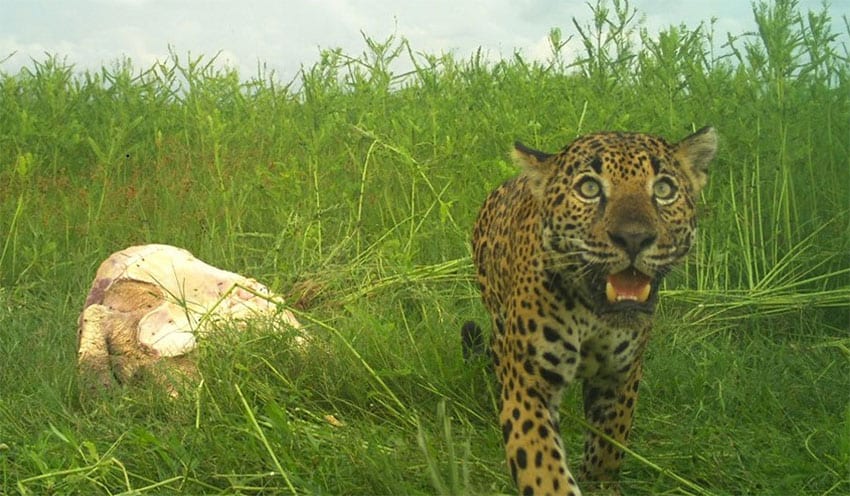
Hidden cameras have caught a jaguar and its cub eating a sea turtle in Nayarit’s Marismas Nacionales Biosphere Reserve.
The Natural Protected Areas Commission (Conanp) captured the event using a camera trap monitoring system.
The adult jaguar is seen dragging the turtle’s remains in order to hide them, then taking refuge in the mangrove trees.
Evidence of predatory behavior and feeding contributes valuable information to the conservation and protection of the jaguars, their prey and their habitat, Conanp said in a press release.
The footage was obtained thanks to the efforts of Francisco López Jiménez, a community monitoring volunteer and head of the Miguel Guardado Pérez turtle camp.

During one of his rounds, he noticed that one of the turtles that had come ashore to lay its eggs had not returned to the sea. After finding coyote and jaguar prints around the turtle’s nest he followed their trail and found the dead turtle, which had been dragged into tall grass about 50 meters away.
He notified Conanp, which sent personnel to the camp, confirmed the kill and set up camera traps. The turtle was gone in the morning, and the researchers had photographic evidence of the jaguars feeding.

Source: Reforma (sp)