On the same day as the new North American free trade agreement came into force, a group of Canadian energy investors wrote to their government to warn that Mexico could already be violating the three-way pact by failing to respect existing contracts.
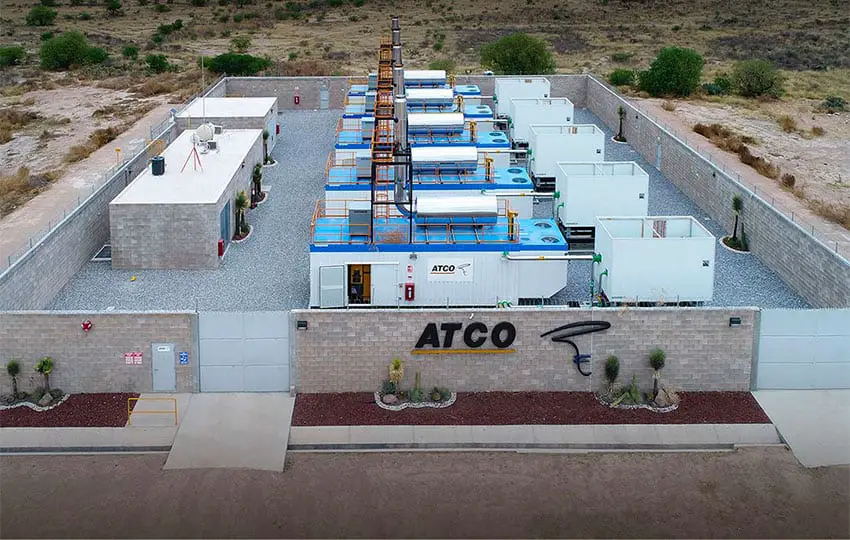
The companies Canadian Solar Inc, Atco Ltd, Northland Power Inc and JCM Power wrote to several senior officials on July 1 to express concern that their investments in Mexico were under threat.
In a letter seen by the news agency Reuters, the companies said that decisions to suspend national grid trials for new renewable energy projects and to limit the development and operation of privately-owned power stations could pose a risk to their projects in Mexico.
The four companies, which have several projects in Mexico including solar and hydroelectric ones, argued that Mexico risked violating provisions in the United States-Mexico-Canada Agreement, or USMCA, and other trade deals to which it is a party.
They urged the Canadian government to take up the issue with officials in Mexico.
A spokesman for Canadian International Trade Minister Mary Ng, to whom the energy companies also wrote, said the government is worried about the issues the energy investors raised.
“Canada shares these concerns, as Canadian companies have invested close to [US] $9 billion in the energy sector, including over $3.1 billion in renewable energy,” Ryan Nearing said.

He said Ng had raised the concerns with Mexican Economy Minister Graciela Márquez in late May and that the two agreed to maintain dialogue. Nearing also noted that Canada’s embassy in Mexico has engaged with the Mexican government on the matter.
The decision of the four companies to write to the Canadian government came six weeks after Canada and the European Union sent letters to the Mexican government to warn that energy policy changes could have an adverse impact on renewable power projects worth billions of dollars.
The Supreme Court has since suspended a new Energy Ministry policy that imposed restrictive measures on the renewable energy sector in response to a complaint filed by Mexico’s antitrust regulator. However, a final decision is still pending.
Energy companies and environmental organizations have also launched legal action against measures that seek to make it more difficult for private and renewable projects to operate in the Mexican energy market.
An energy reform enacted by the previous federal government in 2014 opened up Mexico’s energy market to private and foreign companies but President López Obrador, a staunch nationalist, appears determined to give the state-owned Federal Electricity Commission more control of the electricity sector.
The president has accused former governments of showing bias toward private companies, a situation he says caused electricity rates to rise. López Obrador has sought to renegotiate contracts worth billions of dollars in order, he says, to get a better deal for citizens.
Private companies that operate in Mexico, some of which are Canadian, have denied the claim that they have unduly raised prices, while the antitrust regulator, Cofece, has warned that the government’s actions will cause rates to go up.
Canada has been the third biggest foreign investor in Mexico over the past two decades, according to Mexican government data that shows that only the United States and Spain invest more.
In 2019, Canadian investment in Mexico exceeded $2.9 billion, the data shows, a figure that accounted for almost 9% of total foreign investment in the country.
Source: Reuters (en)