Canceled last year by COVID, Mexico City’s Day of the Dead parade is back

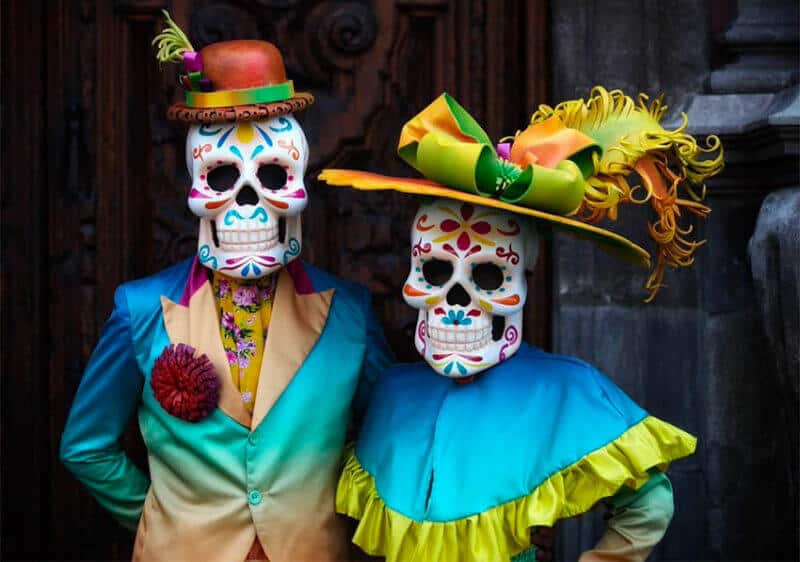
Mexico City’s International Day of the Dead parade will return this year in all its splendor and color after being forced online in 2020.

The festival is one of Mexico’s most important, and is almost universally celebrated by indigenous communities. It is marked by smells of copal, an abundance of marigolds, elaborate altars and cemeteries lit up with candles. Mexico City first hosted a parade to coincide with the holiday in 2016, which was well received by the public.

The parade will start at midday on October 31 and travel 8.7 kilometers from the city’s main zócalo to Campo Marte, a military complex near the Auditorio Metro station. More than 1,000 volunteers will participate, including 150 musicians and 350 dancers and acrobats. The parade will be divided into four themes: Tenochtitlán, Mexico City today, Magic and Tradition, and Celebrating Life.

Mexico City Mayor Claudia Sheinbaum said the parade would be dedicated to victims of the pandemic. “The city is going to celebrate its Day of the Dead festival with sanitary protections. The festivities have two characteristics: one is very sad — what we have lived through recently in our country … which is that thousands of people have died from COVID-19, so the event is dedicated to all those people … so we can pay tribute,” she said.

She explained that 98% of the city’s adult population had received at least a single dose of COVID-19 vaccine, allowing the event to resume, and that the festivities would provide an important economic boost.

Mexico City Tourism Minister Paola Félix said the participants have rehearsed in groups of no more than 40 people as a health measure. There will be sanitary checkpoints and random COVID tests for participants during the event, which attracted some 2.6 million people in 2019.

Meanwhile, the Alfeñique festival in Toluca, México state, has also been given the go-ahead. Eighty-one artisans will convene in the city center from October 15-November 2 to sell chocolate and traditional sugar skulls for Day of the Dead altars.

With reports from Milenio and El Sol de Toluca 

Have something to say? Paid Subscribers get all access to make & read comments.
Manzanillo, Colima, México, 13 de marzo de 2026. La doctora Claudia Sheinbaum Pardo, presidenta Constitucional de los Estados Unidos Mexicanos en conferencia de prensa matutina, “Conferencia del Pueblo” desde Colima. La acompañan Indira Vizcaíno Silva, gobernadora Constitucional del Estado de Colima; Omar García Harfuch, secretario de Seguridad y Protección Ciudadana (SSPC); Raymundo Pedro Morales Ángeles, secretario de Marina (Semar); Bulmaro Juárez Pérez, divulgador de lenguas originarias, presentador de la sección “Suave Patria”; Ricardo Trevilla Trejo, secretario de la Defensa Nacional (Sedena); Jesús Antonio Esteva Medina, secretario de Infraestructura, Comunicaciones y Transportes; Bryant Alejandro García Ramírez, fiscal general del Estado de Colima; Fabián Ricardo Gómez Calcáneo; Rocío Bárcena Molina, subsecretaria de Desarrollo Democrático, Participación Social y Asuntos Religiosos de la Secretaría de Gobernación; Efraín Morales López, director general de la Comisión Nacional del Agua (Conagua); Marcela Figueroa Franco, secretaria ejecutiva del Sistema Nacional de Seguridad Pública (SESNSP) y Guillermo Briseño Lobera, comandante de la Guardia Nacional (GN). Foto: Saúl López / Presidencia

Mexico’s week in review: Congress deals Sheinbaum her first legislative defeat

0
The week of March 9 in Mexico was marked by standoffs between allies in Congress and adversaries at the airport. Here's what you missed.
A soldier displays seized handguns

The US and Mexico, growing together and growing apart: A perspective from our CEO

0
From a historic drop in homicides to opposite bets on electric vehicles, Mexico News Daily's CEO breaks down where the U.S. and Mexico are converging — and where they're not.
Veracruz Gov.

Veracruz governor blames private vessel for 200-kilometer Gulf Coast oil spill

1
The spill, which has spread to over 200 kilometers of Mexico's Gulf Coast beaches, has been traced to a private oil tanker off the coast of Tabasco.
BETA Version - Powered by Perplexity